TEU Global
  • Home
  • About Us
  • Services
    • Ocean Freight Shipping
    • US Handling Agent
    • Freight Forwarding
    • Customs Clearance
    • Customs Compliance Coaching
    • Drayage & Domestic Truck Delivery
    • Warehousing and Distribution
    • Fleet Management
    • Purchase Order Management
    • Logistics Consultants
    • Cargo Insurance
    • TEU Skies by TEU Global
  • Resources
    • Payments
    • FAQs
    • Downloads
    • Knowledge Hub
    • Newsletter
  • TEU Canada
  • Contact Us
  • Blog

Type To Search

Get a Quote
  • Home
  • About Us
  • Services
    • Ocean Freight Shipping
    • US Handling Agent
    • Freight Forwarding
    • Customs Clearance
    • Customs Compliance Coaching
    • Drayage & Domestic Truck Delivery
    • Warehousing and Distribution
    • Fleet Management
    • Purchase Order Management
    • Logistics Consultants
    • Cargo Insurance
    • TEU Skies by TEU Global
  • Resources
    • Payments
    • FAQs
    • Downloads
    • Knowledge Hub
    • Newsletter
  • TEU Canada
  • Contact Us
  • Blog
teu global logo dark
  • Home
  • About Us
  • Services
    • Ocean Freight Shipping
    • US Handling Agent
    • Freight Forwarding
    • Customs Clearance
    • Customs Compliance Coaching
    • Drayage & Domestic Truck Delivery
    • Warehousing and Distribution
    • Fleet Management
    • Purchase Order Management
    • Logistics Consultants
    • Cargo Insurance
    • TEU Skies by TEU Global
  • Resources
    • Payments
    • FAQs
    • Downloads
    • Knowledge Hub
    • Newsletter
  • TEU Canada
  • Contact Us
  • Blog
Logistics
HomeArchive by Category "Logistics"

Category: Logistics

Global shipping container on world map
LogisticsCargoPackage
October 20, 2026 By TEU Global Editorial Team

Container Tracking: How to Track Your Shipment and ETA

Quick answer:
ETA stands for Estimated Time of Arrival. In shipping, it is the expected date and time a vessel, container, or shipment will reach its destination. To track a container, enter its container number, bill of lading (B/L) number, or booking number on the carrier’s website or a multi-carrier tracking platform. Then check the latest milestone and updated ETA.

Table of Contents

  • What Is Container Tracking?
  • What You Need to Track a Container
    • How to read a container number (ISO 6346):
  • How to Track a Container Step by Step
  • Container Journey Milestones Explained
  • ETA vs ETD vs ATA vs ATD
  • Why Your Container’s ETA Changes
  • Container Tracking Tools Compared
  • Troubleshooting: Container Tracking Not Working?
  • Best Practices for Importers and Exporters
  • FAQs
    • What does ETA mean in shipping?
    • How do I track a container without a B/L?
    • How accurate is a container’s ETA?
    • How often is container tracking updated?
    • Can I track a container by ship name?
    • What is a transshipment, and does it affect ETA?
    • Why does tracking show “vessel arrived” but I can’t collect my cargo?

What Is Container Tracking?

Container tracking is the process of monitoring a shipping container’s location and status from the moment it is booked until it is delivered and the empty container is returned. Tracking data comes from several sources:

  • Carrier systems: gate-in, loading, and discharge events reported by shipping lines
  • Terminal and port data: gate movements and yard status
  • AIS (Automatic Identification System): vessel position signals broadcast by ships
  • Customs and trade systems: clearance status in some regions

Together, these tell you where your cargo is, whether it is on schedule, and what happens next.

What You Need to Track a Container

You can usually track a shipment with any one of these three identifiers:

IdentifierWhere to find itExample format
Container numberBill of lading, packing documents, container door4 letters + 7 digits (e.g., ABCU 123456 7)
Bill of lading (B/L) numberIssued by the carrier or forwarderOften starts with the carrier’s code
Booking numberBooking confirmationCarrier-specific

How to read a container number (ISO 6346):

  • First 3 letters: owner code
  • 4th letter: equipment category (U = freight container)
  • 6 digits: serial number
  • Last digit: check digit that validates the number

If a tracking site rejects your number, check for typos first. A wrong check digit is a common cause. The format is defined by ISO 6346.

How to Track a Container Step by Step

  1. Get your reference number from your forwarder, such as TEU Global, or from your shipping documents.
  2. Identify the shipping line. Look at the first three letters of the container number (owner codes are listed in the BIC registry), or ask your forwarder.
  3. Open the tracking page of the carrier or a multi-carrier platform.
  4. Enter the number without spaces or hyphens.
  5. Read the latest event, such as “Loaded on vessel” or “Discharged at port”.
  6. Check the vessel name and voyage number, then look up the vessel on an AIS map such as MarineTraffic or VesselFinder for its live position.
  7. Compare the current ETA to the original. A shift of more than a day or two is worth asking your forwarder about.
  8. Set up alerts for milestone changes if the platform offers them.
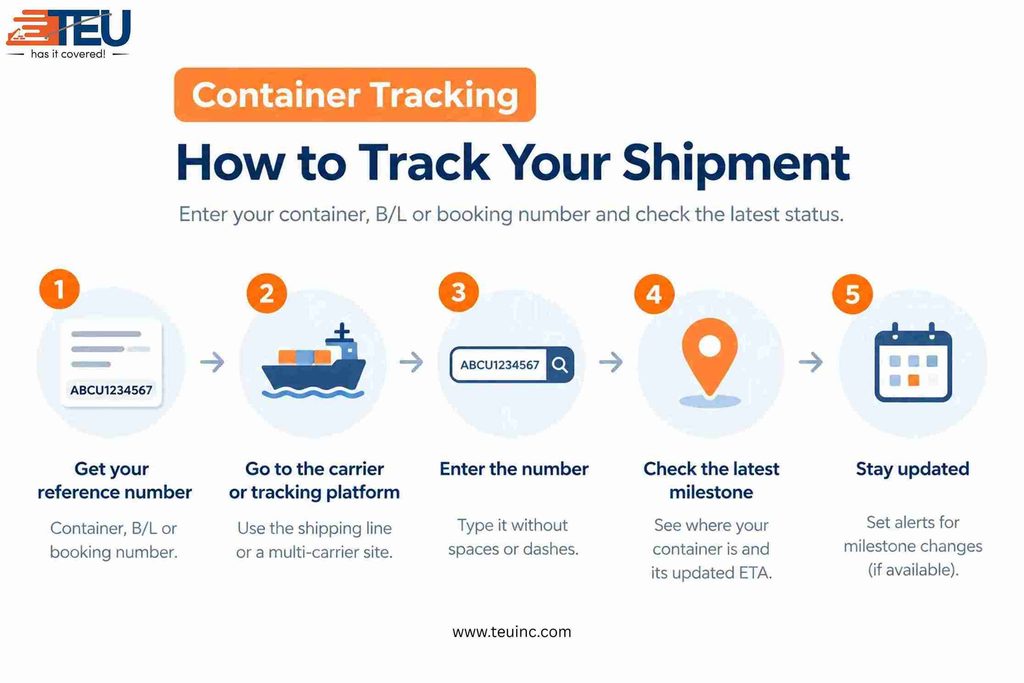
Container tracking steps for checking shipment status and ETA.

Container Journey Milestones Explained

MilestoneWhat it meansWhat you should do
Booking confirmedCarrier has accepted the bookingPrepare cargo and documents
Empty container releasedEmpty box picked up for loadingArrange stuffing
Gate-in at origin portLoaded container entered the terminalConfirm cut-off times were met
Loaded on vesselContainer is on the shipShare the B/L and vessel details
Vessel departedVoyage has begunTrack the ETA
TransshipmentContainer is moved to another vessel at an intermediate portExpect possible delay
Vessel arrivedShip reached the destination portPrepare for clearance
DischargedContainer unloaded from the shipCustoms and delivery order
Customs releasedCleared for pickupArrange trucking
Gate-outContainer left the terminalDelivery in progress
Empty returnEmpty box returned to the depotAvoid detention charges

ETA vs ETD vs ATA vs ATD

TermFull formMeaning
ETDEstimated Time of DeparturePlanned departure
ATDActual Time of DepartureReal departure
ETAEstimated Time of ArrivalExpected arrival
ATAActual Time of ArrivalReal arrival

An ETA is a forecast, not a guarantee. It updates as conditions change.

Why Your Container’s ETA Changes

  • Weather and sea conditions can slow or reroute vessels.
  • Port congestion means ships wait at anchor for a berth.
  • Blank sailings mean the carrier cancels a scheduled voyage.
  • Transshipment delays happen when a connecting vessel is missed.
  • Route changes happen when carriers avoid disrupted waterways, which adds transit days.
  • Customs inspections can hold a container after discharge.
  • Terminal or labor disruptions slow cargo handling.
  • Documentation errors can block release even when the box has arrived.

Tip: ETA at the port is not the same as the date your goods reach your warehouse. Add time for discharge, clearance, and inland transport.

Container Tracking Tools Compared

Tool typeBest forLimitation
Carrier websiteAccurate, carrier-sourced eventsOne carrier only
Multi-carrier trackerSeveral carriers in one placeData can lag behind the carrier
AIS vessel trackersLive ship positionShows the vessel, not your specific container
Forwarder tracking (TEU Global)Full-journey updates plus human supportDepends on carrier data feeds

Contact our team for live milestone and ETA updates.

Troubleshooting: Container Tracking Not Working?

  • “No results found.” Data is often not yet available, especially within 24-72 hours of booking or gate-in. Try again later.
  • Wrong carrier selected. Use the container prefix or ask your forwarder.
  • Number format errors. Remove spaces and dashes, and check the check digit.
  • No updates for several days. The vessel may be mid-ocean, since events are logged at ports, not at sea. Check the AIS position.
  • Status stuck at “Discharged”. Check customs clearance and the delivery order.

Best Practices for Importers and Exporters

  • Share the B/L and container number with all stakeholders early.
  • Check tracking at key milestones, not hourly.
  • Build buffer time into delivery promises.
  • Confirm free time at the destination port to avoid demurrage and detention.
  • Ask your forwarder for proactive delay notifications.
  • Keep documents accurate, since they affect release.

FAQs

What does ETA mean in shipping?

Estimated Time of Arrival, the expected date and time a vessel or container reaches its destination.

How do I track a container without a B/L?

Use the container number or booking number on the carrier’s tracking page.

How accurate is a container’s ETA?

ETAs are forecasts and can shift because of weather, congestion, and routing changes. They are usually more reliable closer to arrival.

How often is container tracking updated?

It depends on the carrier and port. Most updates happen at milestone events, not continuously.

Can I track a container by ship name?

You can track the vessel on AIS maps, but to see your container’s status you need the container, B/L, or booking number.

What is a transshipment, and does it affect ETA?

It is when cargo moves to a different vessel at an intermediate port. It can add delay if connections are missed.

Why does tracking show “vessel arrived” but I can’t collect my cargo?

Discharge, customs clearance, and the delivery order must be completed first.
READ MORE
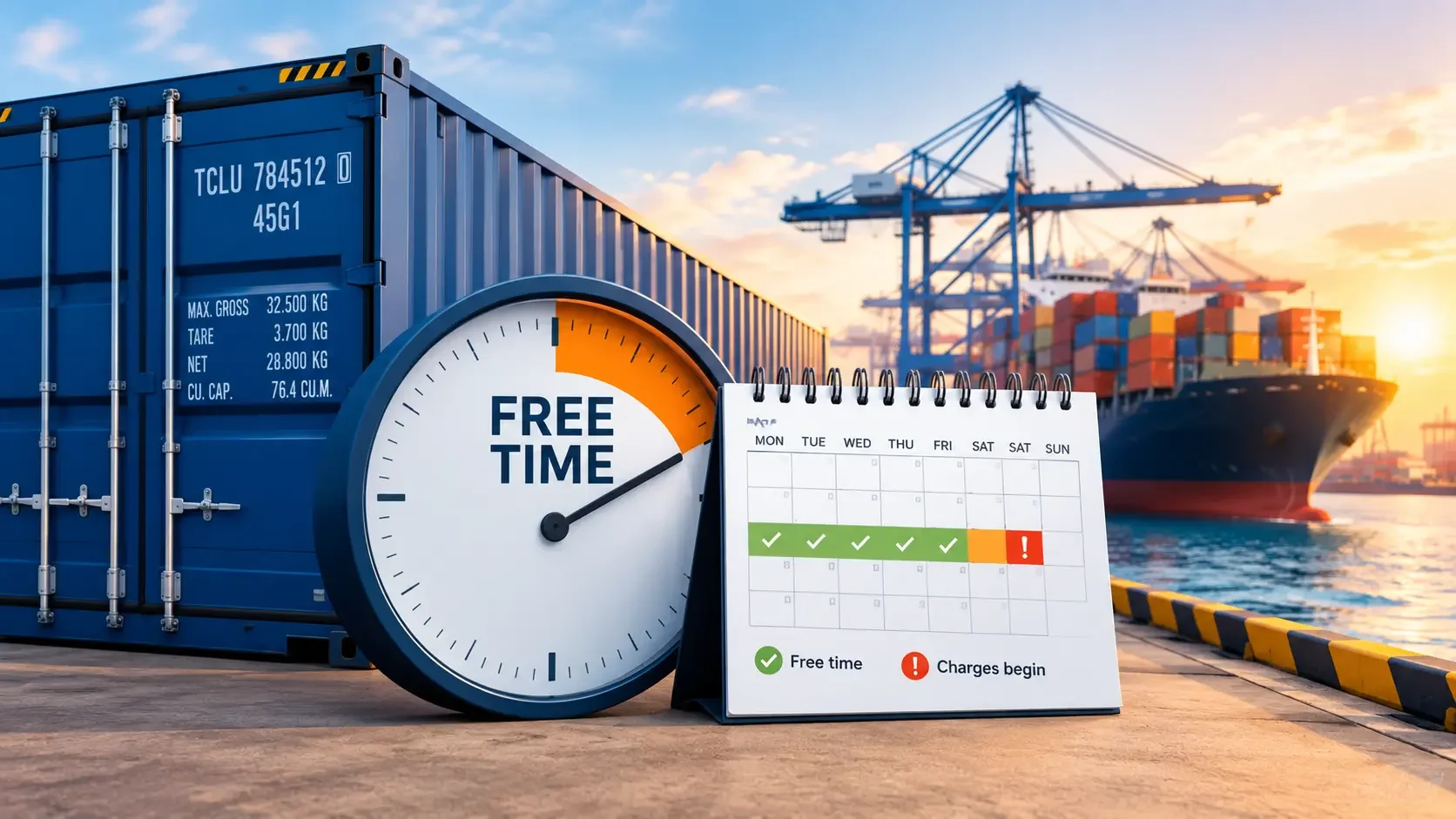
Free time in shipping container and countdown clock.
LogisticsInformational
October 13, 2026 By TEU Global Editorial Team

Free Time in Shipping: Meaning, Free Days & Charges Explained

Free time in shipping is the number of days a carrier or terminal lets you keep a container without paying demurrage or detention. Once free time ends, daily charges begin. Knowing exactly how many free days you have, and when the clock starts, is the most effective way to keep a shipment inside budget.

This guide explains what free time means, the two types of free time, how to count free days, what happens when they run out, and how to get extra time. If you want the full picture of the fees that follow, read our guide to demurrage and detention charges.

Table of Contents

  • What Is Free Time in Shipping?
  • The Two Types of Free Time
  • When Does Free Time Start and Stop?
  • How to Count Free Days
    • Worked Example
  • What Happens When Free Time Expires?
  • What Affects How Many Free Days You Get?
  • How to Get Extra Free Time
  • 7 Ways to Protect Your Free Time
  • Do Importers Have Protection Around Free Time Charges?
  • Frequently Asked Questions
    • What does free time mean in shipping?
    • How many free days do you get in shipping?
    • Does free time include weekends and holidays?
    • What is the last free day (LFD)?
    • Can free time be extended?
    • What is the difference between free time and demurrage?
  • Final Thoughts

What Is Free Time in Shipping?

Free time is the grace period built into a container shipment. During this period you can leave the container at the terminal, move it to your warehouse and unload it, with no daily fee. The carrier or terminal sets it, and it is written into the carrier’s tariff, your booking terms or your service contract.

In simple terms, free time answers one question: how long can this container stay out of circulation before it starts costing money?

It exists because ports have limited space and carriers have limited equipment. Free time gives importers a fair window to clear customs and collect cargo, while the charges after it encourage containers to keep moving.

The Two Types of Free Time

Most shipments carry two separate free time allowances. They run at different stages and are counted separately.

TypeWhere the container isWhat it coversWhat happens after it ends
Demurrage free timeInside the port or terminalTime to clear customs and pick up the loaded containerDemurrage charges start
Detention free timeOutside the terminal (truck, yard or warehouse)Time to deliver, unload and return the empty containerDetention charges start

Some carriers offer a combined free time that covers both stages as one block of days. Others set them separately. Always check which applies to your booking, because a combined allowance and two separate ones behave very differently when a delay hits.

When Does Free Time Start and Stop?

This is where most importers get caught. Vessel arrival does not mean your container is available, so the clock does not always start when the ship docks.

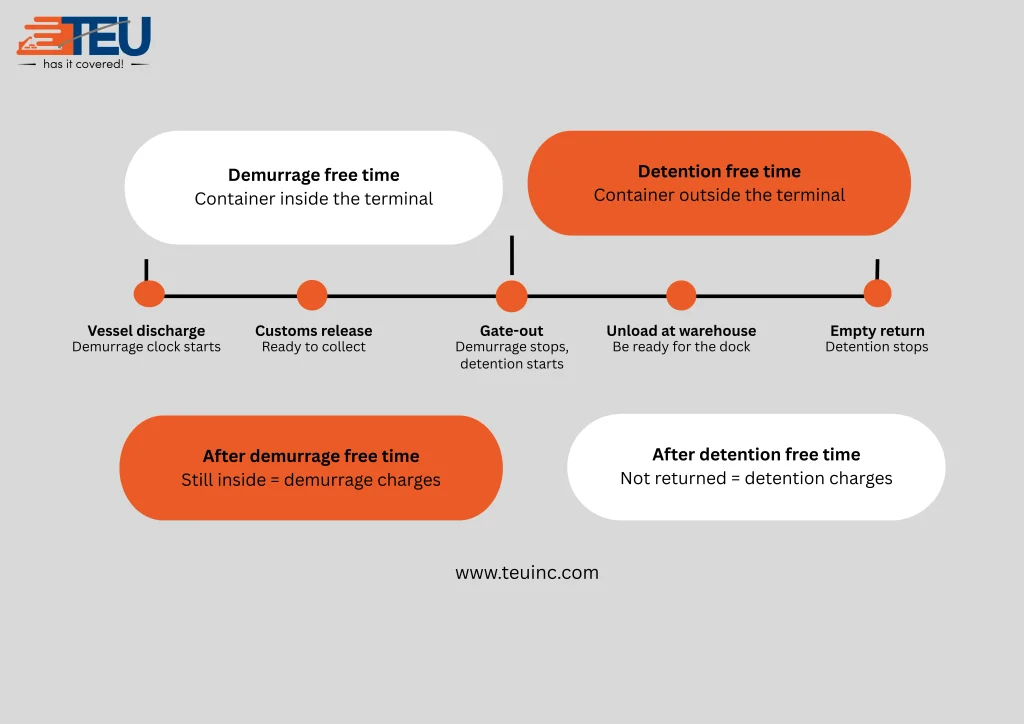
Free timeClock usually startsClock usually stops
Demurrage free timeAfter the container is discharged from the vessel (some carriers count from the arrival notice)When the container leaves the terminal
Detention free timeWhen the container leaves the terminal (gate-out)When the empty container is returned to the designated depot
Free time in shipping: demurrage and detention.

The exact start and stop points differ by carrier, port and contract, so confirm them in writing before the vessel arrives. Ask for the last free day (LFD), which is the final day you can use without a charge. Marking the LFD on your calendar on day one prevents most surprise invoices.

How to Count Free Days

Free days are most often counted in calendar days, which means weekends and holidays are included. Some terminals count only working days, so never assume.

Use this simple method:

  1. Find the start event. Discharge, arrival notice or gate-out, depending on the free time type.
  2. Confirm the counting rule. Check whether day one is the event day or the day after, and whether weekends count.
  3. Add the free days. The last day of the allowance is your last free day.
  4. Note the first chargeable day. This is the day after the last free day.

Worked Example

Assume a container with 5 days of demurrage free time and 4 days of detention free time, both counted in calendar days from the day after the event.

DayEventDemurrageDetention
MondayContainer dischargedClock startsNot started
FridayTruck collects container (day 4)Stops, no chargeClock starts
Saturday to TuesdayUnloading at warehouseNot applicableFree (4 days)
WednesdayEmpty not yet returnedNot applicableFirst chargeable day
ThursdayEmpty returnedNot applicableSecond chargeable day, clock stops

In this case the importer paid no demurrage but two days of detention. The weekend counted as free time, but it also used up two of the four detention days, which is why a Friday pickup with a slow weekend unload is a common trap.

What Happens When Free Time Expires?

Once free time ends, daily charges begin and usually follow a tiered rate that rises the longer the container stays out. A short delay can turn into a large bill quickly. We break down rates, causes and invoices in our full guide to demurrage and detention charges.

A useful rule: free time expires quietly, but the charges do not. There is rarely a warning, so tracking the last free day yourself, or through your forwarder, is essential.

What Affects How Many Free Days You Get?

There is no universal number. Free time varies with:

  • The carrier and its tariff. Each shipping line sets its own allowance.
  • The port or terminal. Busy ports may allow fewer days.
  • Container type and size. Reefer, high-cube and special equipment often differ from a standard dry container.
  • Your contract or volume. Service contracts can include longer free time than spot bookings.
  • The trade lane and season. Peak season and congestion can shorten or tighten free time.

Because of this, comparing free time is as important as comparing freight rates when you choose a carrier or route. A cheaper rate with short free time can cost more overall.

How to Get Extra Free Time

If the standard allowance is too short for your supply chain, you can often ask for more. Importers use these steps:

  1. Ask at booking. Requesting extended free time before the shipment sails gives you the strongest position. Some carriers, such as Maersk, let customers purchase extra days at the time of the import booking.
  2. Negotiate in your contract. Higher volumes and long-term service contracts are the best leverage for more days.
  3. Request an extension early. If a delay is coming, ask before the last free day, not after charges start.
  4. Document the cause. Customs holds, terminal closures or equipment shortages that are not your fault support a waiver request.
  5. Use your forwarder. An experienced forwarder can raise the request with the carrier and often has better results than a direct request.

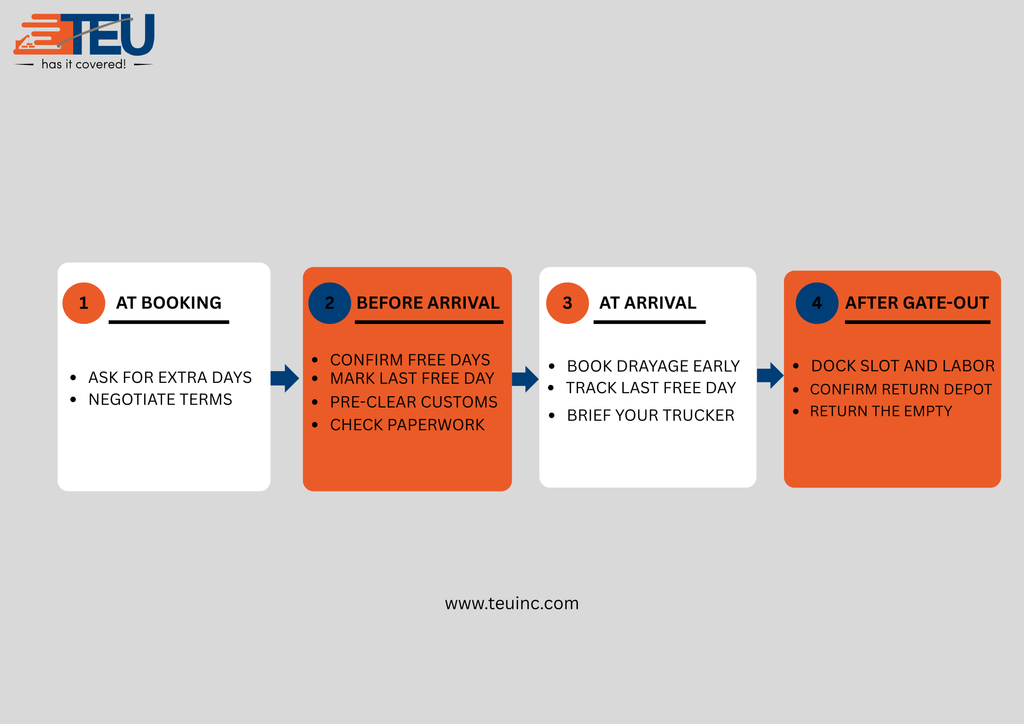
7 Ways to Protect Your Free Time

  • Know your terms before arrival. Get free days, start points and counting rules in writing.
  • Track the last free day. Put it in your calendar and share it with your trucker and warehouse.
  • Pre-clear customs. File entry data early so the container can be released on arrival. Our customs clearance team handles this ahead of the vessel.
  • Check your paperwork. A mismatch on the bill of lading or invoice can hold the release and burn free days.
  • Book drayage early. A confirmed truck and chassis lets the container leave inside demurrage free time. See our drayage and domestic truck delivery service.
  • Be ready to unload. Schedule dock appointments and labor, or use warehousing and distribution so the container is not waiting on you.
  • Plan the empty return. Confirm the depot, its hours and the deadline before you gate out.
Free time in shipping: 4 steps to avoid demurrage and detention charges.

Do Importers Have Protection Around Free Time Charges?

In the United States, the Federal Maritime Commission (FMC) sets billing rules for charges that follow free time. Under the FMC final rule on demurrage and detention billing, invoices must be issued within 30 calendar days, and billed parties have at least 30 calendar days to request mitigation, a refund or a waiver. Check any invoice against your own free time records before paying it.

Frequently Asked Questions

What does free time mean in shipping?

Free time is the number of days a carrier or terminal allows you to keep a container without paying demurrage or detention. When it ends, daily charges begin.

How many free days do you get in shipping?

It varies by carrier, port, container type and contract. The allowance is not standard, so always confirm it in writing before the vessel arrives.

Does free time include weekends and holidays?

Usually yes, because free time is commonly counted in calendar days. Some terminals count working days only, so check the tariff or your contract.

What is the last free day (LFD)?

The last free day is the final day you can keep the container without a charge. The first chargeable day is the day after it.

Can free time be extended?

Often, yes. Ask at booking, negotiate it into your contract or request an extension before the last free day. Extra days may carry a fee, and waivers are more likely when the delay was not your fault.

What is the difference between free time and demurrage?

Free time is the period with no charge. Demurrage is the daily charge that starts after demurrage free time ends and the container is still inside the terminal.

Final Thoughts

Free time is simple in theory and costly in practice. The importers who avoid fees know their free days, confirm when the clock starts, track the last free day and line up customs, trucking and warehouse space before the container arrives.

At TEU Global, our team coordinates ocean freight shipping, customs clearance, drayage and warehousing so your containers move inside their free time and your landed costs stay predictable. Not sure which forwarder to trust with it? Our guide on how to choose a freight forwarder is a good place to start.

Want to keep your containers inside free time? Get a quote from TEU Global or contact our team today.

READ MORE
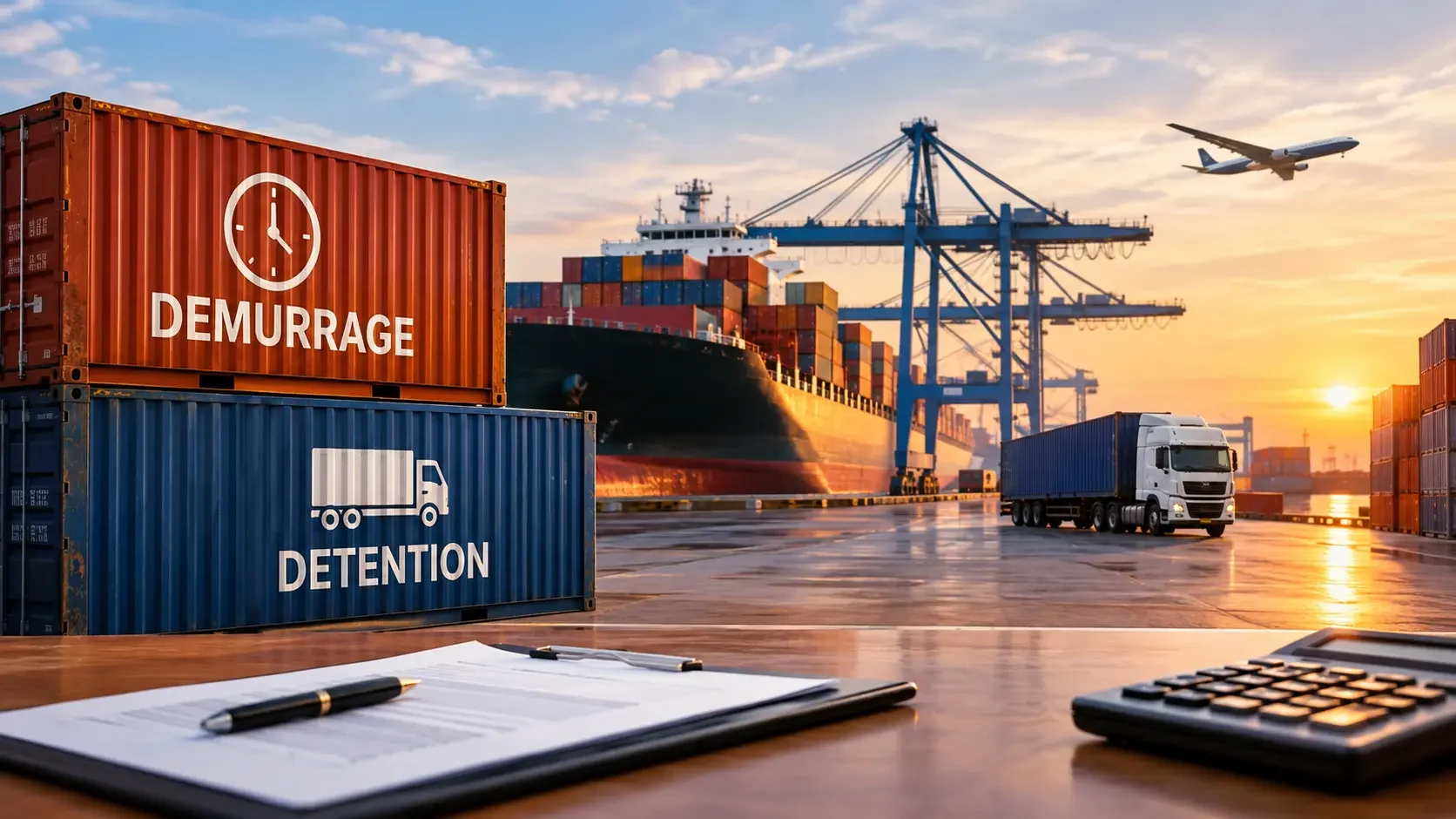
Demurrage and detention charges at a container port with shipping containers, cargo ship, and truck.
Logistics
October 12, 2026 By TEU Global Editorial Team

Demurrage and Detention Charges: What They Are, How They Differ and How to Avoid Them

You booked the shipment, paid the freight and tracked the vessel all the way to port. Then a bill arrives for hundreds or even thousands of dollars in fees you never budgeted for. For many importers, that bill is for demurrage and detention.

Demurrage and detention are the daily penalties carriers and terminals charge when a container stays in the wrong place for too long. Demurrage applies when a container sits inside the port or terminal past its free time. Detention applies when a container stays outside the terminal with you, past its free time, before the empty is returned.

In this guide, TEU Global explains how demurrage and detention work, how the charges are calculated, the key differences between them, and practical steps to avoid them.

Table of Contents

  • What Is Demurrage in Shipping?
  • What Are Detention Charges in Shipping?
  • Demurrage vs Detention: Key Differences
  • How Demurrage and Detention Charges Are Calculated
  • What Causes Demurrage and Detention Charges?
  • How Much Do Demurrage and Detention Charges Cost?
  • Do Importers Have Any Protection? The FMC Billing Rule
  • 8 Ways to Avoid Demurrage and Detention Charges
    • 1. Know Your Free Time Before the Vessel Arrives
    • 2. Get Documents Right the First Time
    • 3. Pre-Clear Your Shipment
    • 4. Pay Freight and Terminal Fees on Time
    • 5. Book Drayage in Advance
    • 6. Have Your Warehouse Ready
    • 7. Plan the Empty Return
    • 8. Work With a Forwarder That Tracks the Clock
  • What to Do If You Receive a Demurrage or Detention Invoice
  • Frequently Asked Questions
    • What is the difference between demurrage and detention?
    • Who pays demurrage and detention charges?
    • How many free days do I get?
    • Can demurrage and detention be waived?
    • Do weekends and holidays count?
    • Is there a difference between demurrage and per diem?
  • Final Thoughts

What Is Demurrage in Shipping?

Demurrage is a charge that applies when a container stays inside a port or terminal beyond its allowed free time.

Detention is a charge that applies when a container has left the terminal but is not returned within the carrier’s allowed free time.

The easiest way to remember the difference:
Demurrage = inside the terminal
Detention = outside the terminal

Both charges can increase daily after free time expires, so knowing your free-time allowance and planning customs clearance, trucking, unloading, and empty-container returns can help avoid unexpected costs.

Demurrage is a charge from the ocean carrier or terminal operator when a loaded container remains in the port or terminal beyond the agreed free time. It exists to keep containers moving, because terminal space is limited and every day a box sits there blocks capacity for other cargo.

Demurrage charges usually start when:

  • The container is discharged from the vessel and the free time clock begins.
  • Customs clearance is delayed, so the container can’t be released.
  • Terminal fees, freight or other charges remain unpaid and the carrier holds the release.
  • A trucker isn’t available to pick up the container in time.

Once free time ends, a daily rate applies for every extra day, including weekends and holidays in most cases.

What Are Detention Charges in Shipping?

Detention charges apply after the container has left the terminal. If you keep the carrier’s container, whether loaded or empty, beyond the free time allowed for unloading and returning it, the carrier charges a daily fee. Detention is the carrier’s way of making sure its equipment returns to circulation.

Detention charges commonly arise when:

  • The consignee takes too long to unload at the warehouse.
  • There is no dock appointment available at the receiving facility.
  • The empty container return location is closed, full or far away.
  • Trucking delays leave the container waiting on a chassis.

Demurrage vs Detention: Key Differences

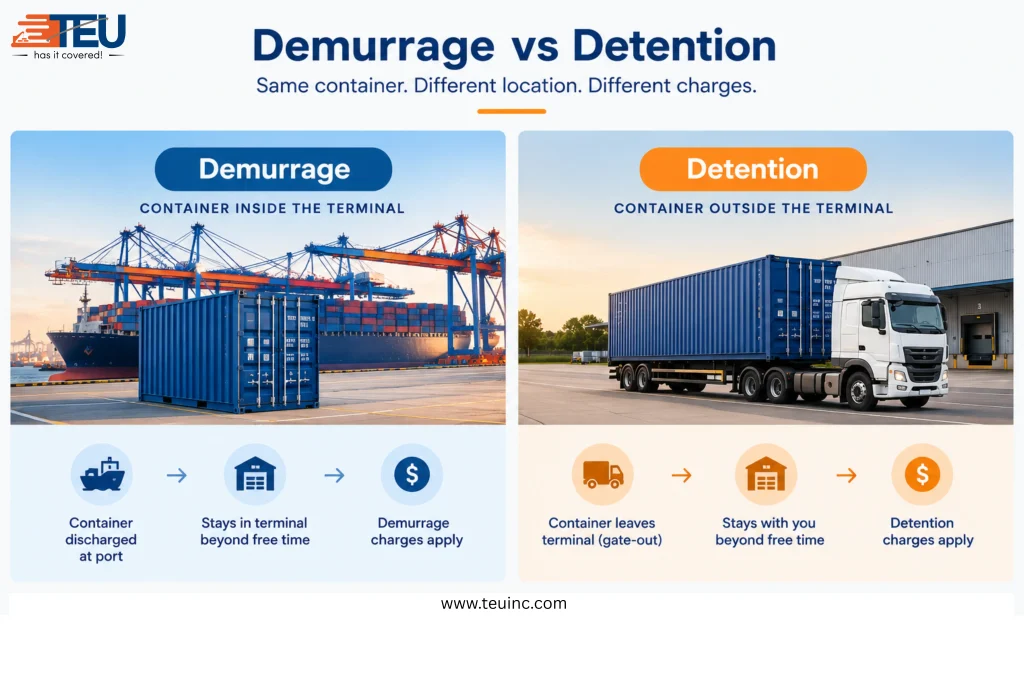
Many importers confuse the two because both are “per day” container fees. The easiest way to separate them is location: demurrage happens inside the terminal, detention happens outside it.

Demurrage vs detention charges showing container inside and outside the terminal
FactorDemurrageDetention
Where the container isInside the port or terminalOutside the terminal (your warehouse, yard or truck)
What triggers itContainer not picked up before free time endsContainer not returned empty before free time ends
Who usually charges itCarrier or terminal operatorOcean carrier
Clock startsAfter vessel dischargeAfter gate-out from the terminal
Clock stopsWhen the container leaves the terminalWhen the empty container is returned
Common causesCustoms holds, unpaid fees, no truckSlow unloading, no dock appointment, return delays

If you’re also new to the terms around container movement, our guide to what is drayage in shipping explains how the trucking leg connects the port to your door.

How Demurrage and Detention Charges Are Calculated

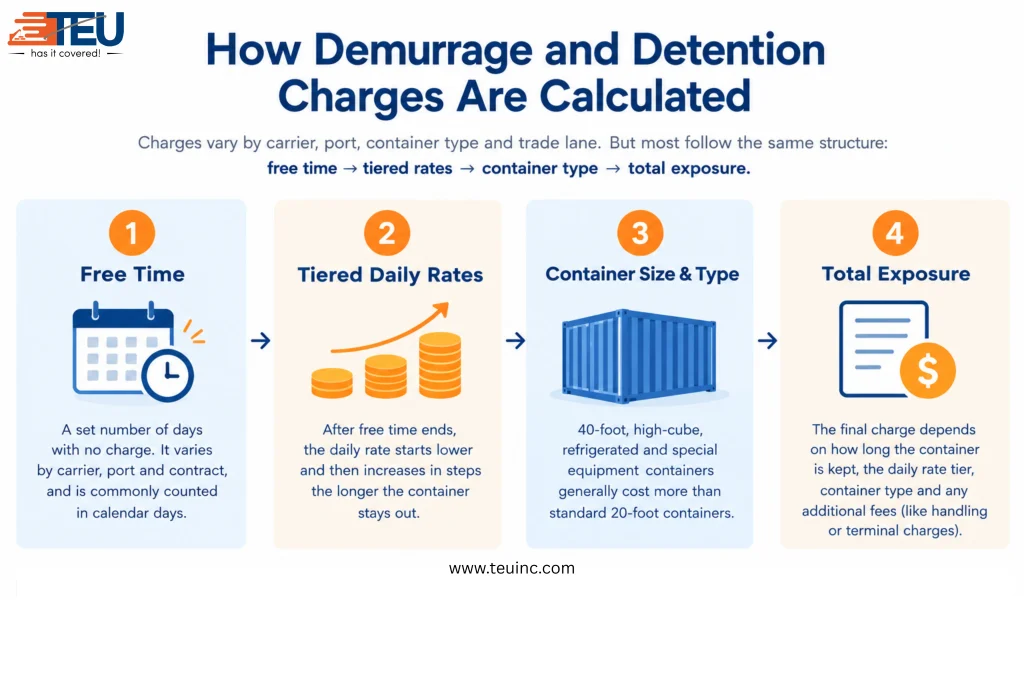
There is no single global rate. Charges depend on the carrier, the port, the container type and the trade lane. Most follow the same structure:

How demurrage and detention charges are calculated
  1. Free time. A set number of days with no charge. It varies by carrier, port and contract, and is commonly counted in calendar days.
  2. Tiered daily rates. After free time ends, the daily rate starts lower and then climbs in steps the longer the container stays out. A later tier can be several times the first-day rate.
  3. Container size and type. 40-foot, high-cube, refrigerated and special equipment containers generally cost more per day than a standard 20-foot box.
  4. Combined exposure. If a container is delayed at the port and then held at your warehouse, you can owe demurrage and then detention on the same shipment.

Worked example (illustrative only): Suppose a 40-foot container has 4 days of demurrage free time. It clears customs on day 7, so three chargeable days apply. If the carrier’s tiers run higher each day, those three days could already add up to a few hundred dollars. Add a missed dock appointment that leaves the container with you for five days beyond detention free time, and the same shipment can pass the thousand-dollar mark.

The exact rates, free time and day-counting rules are set out in the carrier’s tariff and your contract, so always confirm them before the vessel arrives.

What Causes Demurrage and Detention Charges?

Most demurrage and detention bills trace back to a handful of avoidable problems:

  • Customs clearance delays: incorrect HTS codes, missing documents or inspection holds. Our HTS code classification guide shows how classification errors turn into costly holds.
  • Document errors: a mismatched commercial invoice, packing list or bill of lading. See our explainer on the bill of lading for what has to match.
  • Unpaid freight or terminal fees: carriers can hold the release until every charge is settled.
  • Port congestion and vessel delays: sometimes outside your control, which is why planning buffer time matters.
  • Trucking and chassis shortages: no driver or chassis means no pickup.
  • Warehouse readiness: no dock slot, no labor or no space to receive the freight.
  • Empty return problems: closed return depots or unclear return instructions.

How Much Do Demurrage and Detention Charges Cost?

Costs vary widely, but as a general guide, daily charges for a standard container often start in the double digits per day and can climb to several hundred dollars per day in later tiers during congestion or for specialized equipment. Because the rate typically escalates, the cost of delay grows faster than the number of days. A shipment that sits for ten days rarely costs twice as much as one that sits for five.

This is why a small delay at the start of the import process can quietly become one of the most expensive line items on a landed cost sheet.

Do Importers Have Any Protection? The FMC Billing Rule

In the United States, the Federal Maritime Commission (FMC) has set billing requirements for demurrage and detention invoices. Under the rule, which took effect in 2024, invoices must be issued within a set window and must include key information, such as the dates and the basis for the charges. The rule also sets a timeframe for disputing an invoice.

That means an invoice that arrives late or without the required details may be challenged. Check the current FMC requirements, or ask your forwarder to review any invoice you think is incorrect, before you pay it.

8 Ways to Avoid Demurrage and Detention Charges

The good news is that most demurrage and detention costs are preventable. Here is what experienced importers do differently.

1. Know Your Free Time Before the Vessel Arrives

Ask for the free time terms for both demurrage and detention at booking, not after arrival. Confirm how days are counted and whether weekends and holidays are included.

2. Get Documents Right the First Time

Check the commercial invoice, packing list and bill of lading for consistency before departure. Small errors in descriptions, weights or consignee details are among the most common causes of customs holds.

3. Pre-Clear Your Shipment

Submit customs entry data before the vessel arrives so clearance can happen as soon as the container is discharged. Working with an experienced partner for customs clearance removes much of the guesswork. If you export or import into a regulated program, a trusted-trader approach such as CTPAT can also help cargo move more smoothly.

4. Pay Freight and Terminal Fees on Time

Unpaid charges can prevent release. Confirm payment status and release instructions before arrival.

5. Book Drayage in Advance

Secure your trucker and chassis before the container is available. Reliable drayage and domestic truck delivery means the container leaves the terminal inside free time.

6. Have Your Warehouse Ready

Schedule dock appointments, labor and space to match the container’s arrival. If your own facility can’t take the freight right away, warehousing and distribution or transloading can move cargo out of the container and off your detention clock quickly.

7. Plan the Empty Return

Know where and when the empty container must be returned, and confirm the depot’s operating hours and capacity. Return the box promptly after unloading.

8. Work With a Forwarder That Tracks the Clock

A good forwarder monitors free time, alerts you before charges start and coordinates every party in the chain. Our guide on how to choose a freight forwarder lists what to look for. For end-to-end ocean moves, TEU Global’s ocean freight shipping team manages these handoffs for you.

What to Do If You Receive a Demurrage or Detention Invoice

Before You Pay a Demurrage or Detention Invoice
Check these five things first:
☑ Discharge, gate-out and return dates
☑ Free-time allowance
☑ Carrier’s day-counting rules
☑ Any carrier or terminal-caused delays
☑ Dispute deadline and supporting documents

  1. Check the dates. Compare discharge, gate-out and return dates with your own records.
  2. Confirm free time. Make sure the carrier applied the correct free time and day-count rules.
  3. Look for carrier-caused delays. If the carrier or terminal caused the delay, such as a closed terminal or unavailable equipment, you may have grounds to dispute.
  4. Dispute inside the deadline. Send your dispute with supporting documents quickly.
  5. Ask your forwarder for help. An experienced forwarder can often negotiate waivers or reductions.

Frequently Asked Questions

What is the difference between demurrage and detention?

Demurrage is charged when a container stays inside the port or terminal past free time. Detention is charged when a container stays outside the terminal past free time. In short, demurrage is about storage at the terminal, and detention is about the carrier’s equipment being kept too long.

Who pays demurrage and detention charges?

The party responsible under the contract and Incoterms pays, which is usually the importer or consignee. If a delay is caused by the shipper or the forwarder, responsibility can shift, so agree on who bears these risks in advance. Our guide to Incoterms explains how responsibility is split.

How many free days do I get?

It depends on the carrier, the port, the container type and your agreement. Free time is often a few days, but it is not standard, so always confirm it in writing before arrival.

Can demurrage and detention be waived?

Sometimes. Waivers are more likely when the delay was caused by the carrier or terminal, or when you can show documented, uncontrollable circumstances. Requests work best when made early and backed by evidence.

Do weekends and holidays count?

In most cases, yes. Many tariffs count calendar days, though some terminals count only working days. Check the tariff and your contract.

Is there a difference between demurrage and per diem?

The term “per diem” is often used for the daily equipment charge, which is similar to detention. Terminology varies by carrier and region, so check how your carrier describes the charge on its invoice.

Final Thoughts

Demurrage and detention charges are not unavoidable costs of importing. They are the result of delays in clearance, paperwork, trucking, unloading or empty return, and almost all of them can be planned for. Know your free time, get your documents right, book trucking early and keep a close eye on the clock.

At TEU Global, our team coordinates ocean freight, customs clearance, drayage and warehousing under one roof so your containers keep moving and your landed costs stay predictable.

Need help keeping demurrage and detention under control? Get a quote from TEU Global or contact our team today.

READ MORE
Global shipping network map for supply chain Visibility
LogisticsInformational
October 6, 2026 By TEU Global Editorial Team

What Is Supply Chain Visibility? A Complete Guide for Modern Logistics

Few things frustrate a business more than a shipment that has gone quiet. The container left the port days ago, the customer is asking for an update, and nobody can say where the cargo is or when it will arrive.

This is the problem supply chain visibility solves. In an environment shaped by port congestion, capacity shortages, and unpredictable transit times, knowing where your goods are at every stage has become a competitive necessity.

This guide explains what supply chain visibility is, how it works, why it matters, and how real-time tracking helps businesses reduce delays, control costs, and improve logistics performance.

What Is Supply Chain Visibility?

Supply chain visibility is the ability to track and monitor goods, inventory, and information as they move from supplier to final customer. It gives businesses a clear, up-to-date view of what is moving, where it is, what condition it is in, and when it will arrive.

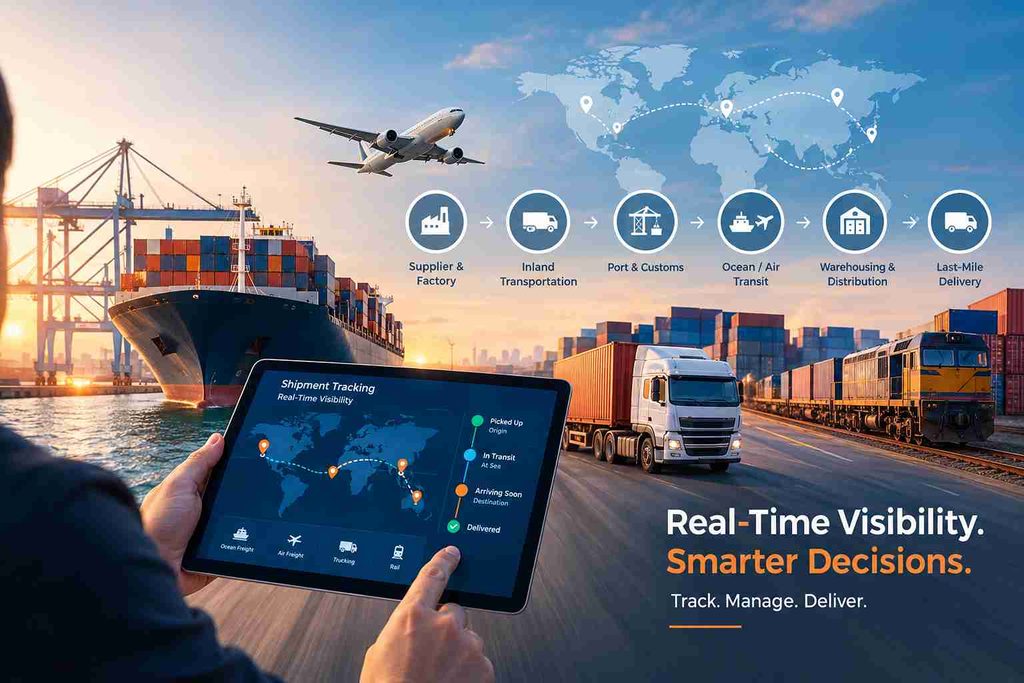
True end-to-end supply chain visibility covers every stage of the journey:

  • Supplier and factory production
  • Origin pickup and inland transportation
  • Port handling and customs clearance
  • Ocean or air transit
  • Warehousing and distribution
  • Last-mile delivery

The goal is not just to see data, but to turn that data into decisions. Visibility lets teams spot problems early, respond quickly, and keep customers informed.

Supply Chain Visibility

Supply Chain Visibility vs. Supply Chain Transparency

The two terms are often used interchangeably, but they differ slightly.

  • Supply chain visibility is operational. It focuses on tracking shipments, inventory, and status updates in real time.
  • Supply chain transparency is broader. It covers openness about sourcing, suppliers, compliance, and sustainability practices, often for customers, regulators, and stakeholders.

Strong visibility is usually the foundation for transparency. You cannot be transparent about what you cannot see.

Why Supply Chain Visibility Matters for Modern Logistics

Global logistics has become more complex. Goods often cross multiple countries, carriers, ports, and handoffs before they reach their destination. Each handoff is a place where information can be lost and delays can start.

Here is why visibility has become essential.

1. It Reduces Shipment Delays

Delays rarely come out of nowhere. A late vessel departure, a customs hold, a missed rail connection, or a congested terminal usually shows up in the data before it affects delivery. With real-time shipment tracking, your team can see these signals early and act, whether that means rerouting cargo, switching modes, or alerting customers before they ask.

2. It Improves ETA Accuracy

Reliable ETA tracking lets you plan warehouse labor, production schedules, and customer deliveries with confidence. Static estimates from booking documents go stale quickly. Dynamic ETAs, updated using vessel positions, flight status, and port conditions, give planners a far more accurate picture.

3. It Controls Costs

Poor visibility is expensive. Demurrage and detention charges, expedited freight, emergency air shipments, and idle warehouse labor often come from surprises that better information would have prevented. When you can see a container approaching a free-time deadline, you can act before the charges stack up.

4. It Strengthens Supply Chain Risk Management

Supply chain risk comes in many forms: weather events, port strikes, geopolitical disruption, carrier schedule changes, and supplier failures. Visibility doesn’t remove risk, but it shortens your reaction time. The earlier you detect a disruption, the more options you have.

5. It Improves Customer Experience

Customers increasingly expect Amazon-style tracking for B2B freight. Proactive updates, accurate delivery windows, and quick answers build trust and set you apart from competitors who can only say “we’re checking.”

6. It Enables Better Inventory Decisions

Inventory visibility connects inbound shipments with stock levels. When you know what is in transit and when it will land, you can avoid both stockouts and costly overstocking, and you can plan replenishment more intelligently.

Key Components of Supply Chain Visibility

A complete visibility strategy usually combines several layers.

Real-Time Shipment Tracking

This is the foundation. Real-time shipment tracking collects location and status data from carriers, vessels, aircraft, trucks, terminals, and telematics sources, so you can monitor cargo throughout the journey rather than only at a few milestones.

Ocean Freight Visibility

Ocean shipping involves long transit times and many variables. Ocean freight visibility typically covers:

  • Container milestone tracking (gate-in, loading, transshipment, discharge, gate-out)
  • Vessel schedule changes and rollovers
  • Port congestion and dwell times
  • Customs and release status
  • Free-time and demurrage deadlines

Because ocean transit can stretch across weeks, small disruptions can compound quickly. Early alerts make a real difference. Learn more about how we manage this through our ocean freight services.

Air Freight Visibility

Air cargo moves fast, so the margin for error is small. Air freight visibility covers flight status, airline handoffs, airport handling, and customs clearance, with the speed and precision that time-critical cargo demands. Explore our air freight solutions and TEU Skies for time-sensitive shipments.

Transportation Visibility

Transportation visibility extends across modes, including trucking, rail, and intermodal moves. It matters especially for first-mile and last-mile legs, where tracking gaps are common and where delays can quietly erode service levels.

Inventory and Warehouse Visibility

Visibility doesn’t end at the dock. Knowing what has arrived, what is being stored, and what is ready for dispatch completes the picture. Our warehousing and distribution services connect inbound freight data with inventory management, so you see the full flow from port to customer.

Exception Management

Exception management is where visibility becomes action. Instead of watching every shipment, teams focus on the ones that deviate from plan, such as a delayed vessel, a customs hold, a missed pickup, or an ETA that slips past a threshold. Automated alerts and clear escalation paths make sure the right person knows about the right problem at the right time.

Common Supply Chain Visibility Challenges

Even companies that want better visibility run into obstacles.

  • Fragmented data. Information is spread across carriers, forwarders, terminals, and internal systems, each using different formats.
  • Limited milestone updates. Some carriers or regions provide sparse tracking, leaving gaps between events.
  • Siloed teams. Procurement, logistics, warehousing, and customer service often work from different information.
  • Manual processes. Chasing updates by email and spreadsheet is slow and error-prone.
  • Lack of context. Raw tracking data without analysis or alerts creates noise instead of insight.

Solving these challenges takes the right combination of technology, process, and a logistics partner who can interpret what the data means.

Technology Behind Supply Chain Visibility

Modern supply chain visibility solutions draw on several technologies:

  • API and EDI integrations with carriers, airlines, and terminals
  • GPS, IoT sensors, and telematics for location and condition monitoring
  • Control tower dashboards that consolidate shipment data in one place
  • Predictive analytics that improve ETAs and flag likely delays
  • Automated alerts and workflows for exception handling

Many companies evaluate supply chain visibility software as a standalone purchase. Software is powerful, but it only delivers value when paired with accurate data sources and people who can act on the information. That is why many businesses get better results from a logistics partner that combines technology with hands-on freight expertise.

How to Improve Supply Chain Visibility: A Practical Approach

If you are starting from limited visibility, a staged approach works best.

  1. Map your supply chain. Identify every handoff, from supplier to final delivery, and note where information gaps exist.
  2. Define what you need to see. Decide which milestones, ETAs, and alerts matter most for your business.
  3. Centralize your shipment data. Bring tracking information into a single view instead of managing multiple portals.
  4. Set exception rules. Define thresholds for delays, dwell times, and deadlines so alerts focus attention where it counts.
  5. Connect visibility to inventory and warehousing. Link inbound shipment data with stock planning.
  6. Review and improve regularly. Use performance data to identify recurring bottlenecks, carriers, or lanes that underperform.
  7. Work with a logistics partner. An experienced freight forwarding provider can supply both the tracking technology and the operational support to act on it.

Benefits of End-to-End Supply Chain Visibility

When visibility is built into every stage, businesses typically see:

  • Fewer unexpected delays and faster response when they occur
  • More reliable delivery commitments
  • Lower demurrage, detention, and expediting costs
  • Better inventory planning and reduced safety-stock pressure
  • Reduced time spent chasing status updates
  • Stronger relationships with customers and suppliers
  • Data that supports continuous improvement and supply chain optimization

How TEU Supports Supply Chain Visibility

At TEU, visibility is built into how we move freight, not added as an afterthought. Whether you ship by sea or by air, our team combines real-time tracking with proactive communication so you always know where your cargo stands.

  • Ocean freight: milestone tracking, schedule monitoring, and early alerts on disruptions
  • Air freight and TEU Skies: fast, reliable visibility for time-critical shipments
  • Freight forwarding: coordinated end-to-end management across carriers, borders, and modes
  • Warehousing and distribution: inventory visibility from arrival through final dispatch
  • Supply chain optimization: analysis that turns tracking data into lasting improvements

FAQs 

What is supply chain visibility in simple terms?

It is the ability to see where your goods, inventory, and shipments are at any point in the supply chain, from supplier to customer, and to know when they will arrive.

What is the difference between shipment visibility and supply chain visibility?

Shipment visibility focuses on tracking individual shipments in transit. Supply chain visibility is broader and includes suppliers, inventory, warehousing, and delivery, giving a complete end-to-end picture.

Why is real-time supply chain visibility important?

Real-time data lets you detect delays and disruptions as they happen, so you can respond before they affect customers or increase costs.

How does freight visibility reduce costs?

By flagging problems early, freight visibility helps you avoid demurrage, detention, expedited shipping, and last-minute rerouting, which are common sources of unplanned expense.

Do I need supply chain visibility software?

Software can help centralize tracking and automate alerts, but its value depends on data quality and how well your team acts on it. Many businesses combine technology with a freight forwarder that provides tracking and operational support together.

How can small and mid-sized businesses improve visibility?

Start by centralizing shipment tracking, defining key milestones, and working with a logistics provider that offers proactive updates. You don’t need a large internal technology investment to get meaningful results.

Conclusion

Supply chain visibility is no longer optional for businesses that depend on dependable logistics. Real-time tracking, accurate ETAs, and strong exception management help companies reduce delays, control costs, manage risk, and keep customers confident.

The most effective approach combines good technology with experienced logistics support, so that data leads to action.

Ready to gain full visibility over your shipments? Contact TEU to learn how our ocean freight, air freight, and warehousing services can give you clearer, more controllable logistics from origin to destination.

READ MORE
Air freight shipping cargo at airport.
CargoLogisticsPackage
September 28, 2026 By TEU Global Editorial Team

Air Freight Shipping: The Complete Guide to Costs, Services and Choosing a Forwarder

When a shipment can’t wait weeks for an ocean carrier, air freight shipping is the fastest reliable way to move goods across borders. Whether you’re restocking inventory, meeting a production deadline, or sending high-value products overseas, understanding how air freight works helps you save money and avoid delays.

This guide covers how international air freight shipping works, what drives air freight cost, the services available, and how to track your cargo from origin to delivery.

Table of Contents

  • What Is Air Freight Shipping?
  • How International Air Freight Shipping Works
  • What Is Air Freight Forwarding?
  • Air Freight Transportation: What Can You Ship?
  • Air Freight Cost: What Affects Your Price?
    • Air Freight Services: Choosing the Right Option
    • Air Freight Tracking: Stay in Control of Your Cargo
  • How to Choose an Air Freight Forwarder
  • Ship Faster with TEU Global
    • Frequently Asked Questions
    • How long does air freight shipping take?
    • Is air freight more expensive than ocean freight?
    • How is air freight cost calculated?
    • Can I track my air freight shipment?
    • What is the difference between air freight and air cargo?

What Is Air Freight Shipping?

Air freight shipping is the transport of goods by aircraft, either on dedicated cargo planes or in the belly hold of passenger flights. It’s the go-to option for time-sensitive, high-value, or perishable cargo.

Compared with ocean freight, air cargo shipping offers:

  • Speed: Transit is measured in days, not weeks.
  • Reliability: Airlines run on fixed schedules with frequent departures.
  • Security: Airports and carriers apply strict handling and screening standards.
  • Lower inventory costs: Faster delivery means you can hold less stock.
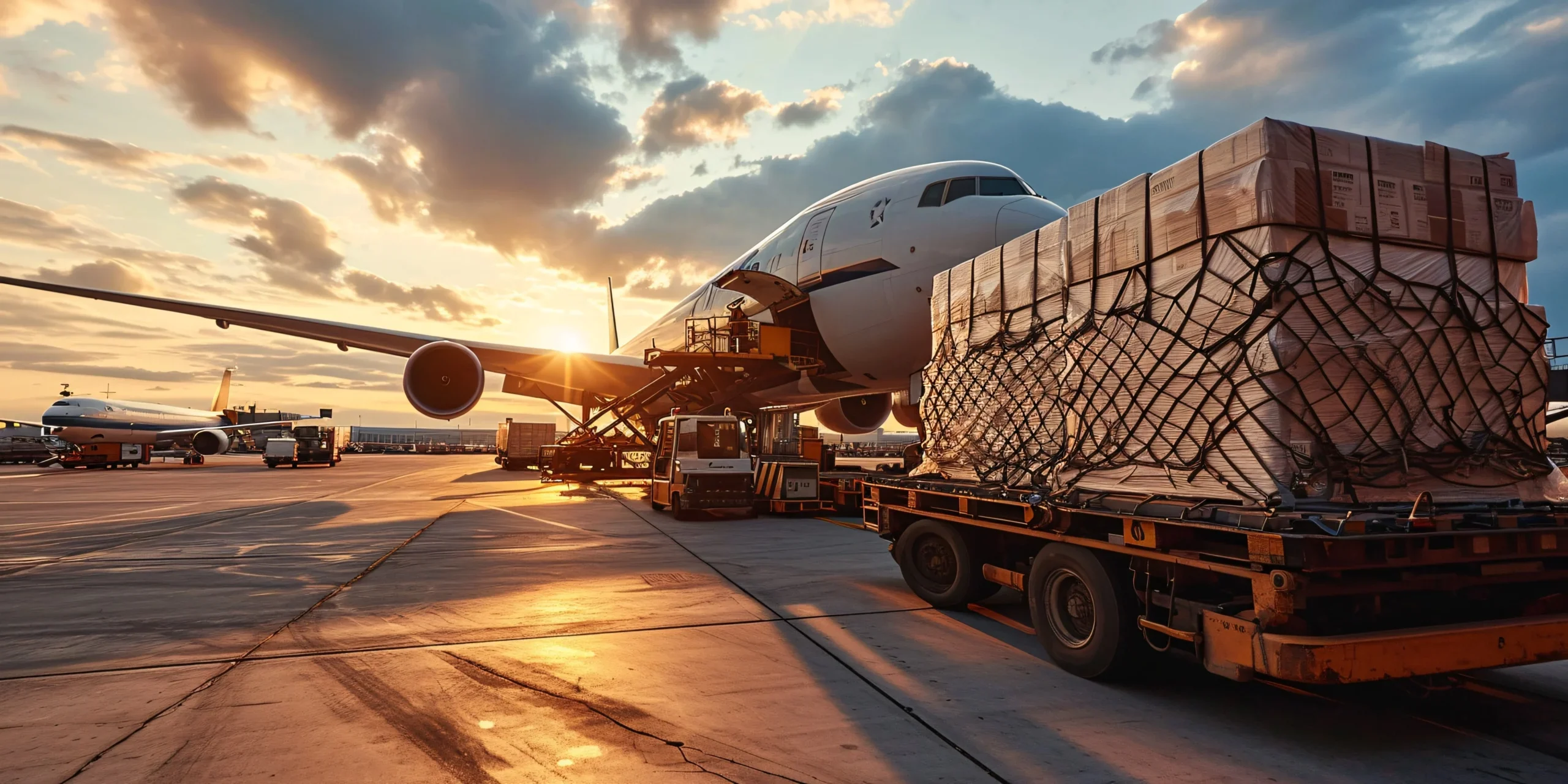
Air freight shipping with cargo containers and airplane

How International Air Freight Shipping Works

International air freight shipping typically follows these steps:

  1. Booking: Your shipment is booked with a carrier through a freight forwarder.
  2. Pickup and export handling: Cargo is collected, packed to airline standards, and prepared for export.
  3. Customs clearance (origin): Export documents are filed and the cargo is cleared to leave the country.
  4. Airport handling and flight: Goods are palletized or containerized, loaded, and flown to the destination.
  5. Customs clearance (destination): Import duties and taxes are assessed and cargo is released.
  6. Final delivery: The shipment is trucked from the airport to the consignee.

Documents usually include a commercial invoice, packing list, and the air waybill (AWB), which serves as the contract of carriage and the key to tracking your cargo.

What Is Air Freight Forwarding?

Air freight forwarding means using a specialist to manage your shipment from door to door. A forwarder books space with airlines, prepares documentation, arranges customs clearance, and coordinates ground transport on both ends.

Working with an experienced forwarder gives you:

  • Access to competitive carrier rates and capacity
  • Help with compliance and documentation
  • One point of contact instead of several vendors
  • Support when routes change, flights are delayed, or cargo needs rerouting

Air Freight Transportation: What Can You Ship?

Air freight transportation suits a wide range of cargo, including:

  • Electronics and technology components
  • Pharmaceuticals and medical supplies
  • Fashion, apparel and retail goods
  • Automotive and industrial spare parts
  • E-commerce inventory
  • Perishables and temperature-sensitive goods
  • Urgent documents and samples

Some items, such as dangerous goods and lithium batteries, require special declarations and packaging. Always confirm restrictions with your forwarder before booking.

Air Freight Cost: What Affects Your Price?

Air freight cost varies by route, season, and market conditions, but these factors drive most quotes:

Chargeable weight. Airlines bill on whichever is greater, actual weight or volumetric weight. A common formula is:

Volumetric weight (kg) = Length × Width × Height (cm) ÷ 6,000

Light but bulky cargo is often billed by volume, so efficient packaging can lower your bill.

Other cost factors:

  • Route and distance: Major lanes with frequent flights are usually cheaper than remote destinations.
  • Service level: Faster options cost more.
  • Fuel and security surcharges: These fluctuate with market conditions.
  • Origin and destination fees: Handling, customs brokerage, duties and taxes.
  • Seasonality: Peak periods such as the holiday season and major retail events tighten capacity and raise rates.
  • Cargo type: Special handling, such as temperature control, adds cost.

Ways to reduce cost: consolidate shipments, optimize packaging, book early, and plan around peak seasons where possible.

Air Freight Services: Choosing the Right Option

Not every shipment needs the same speed. Common air freight services include:

ServiceBest for
Standard air freightBalanced cost and speed for planned shipments
Expedited freight shippingUrgent cargo that must move on the next available flight
Consolidated air freightSmaller shipments sharing space to reduce cost
Door-to-door air freightBusinesses wanting one provider to handle pickup through delivery
Temperature-controlled air freightPharma, food and other sensitive goods

Expedited freight shipping is designed for emergencies such as a stalled production line, a missed replenishment window, or a time-critical launch. It costs more, but the cost of delay is often higher.

Air Freight Tracking: Stay in Control of Your Cargo

Modern air freight tracking lets you follow a shipment from origin airport to destination. Here’s how it usually works:

  • Use your AWB number (11 digits, starting with a 3-digit airline prefix) on the airline’s cargo tracking page or through your forwarder’s portal.
  • Watch key milestones: received from shipper, departed, arrived, customs cleared, and ready for delivery.
  • Set up proactive alerts so you can plan for delays instead of reacting to them.

Good visibility reduces uncertainty and helps you keep customers informed.

How to Choose an Air Freight Forwarder

Look for a partner that offers:

  • Strong airline relationships and capacity on your key lanes
  • Clear, transparent quotes with no hidden fees
  • Customs and compliance expertise
  • Reliable tracking and communication
  • Flexibility for both routine and urgent shipments

Ship Faster with TEU Global

At TEU Global, we help businesses move cargo across borders with speed and confidence. Our TEU Skies air freight service combines competitive air cargo shipping options, expert forwarding support, and end-to-end visibility so your shipments arrive when they’re supposed to.

Frequently Asked Questions

How long does air freight shipping take?

Transit is typically a few days once cargo is airborne, but total door-to-door time depends on the route, customs clearance, and pickup and delivery arrangements.

Is air freight more expensive than ocean freight?

Generally yes, per kilogram. But faster delivery can reduce warehousing costs, stock-outs, and lost sales, so total landed cost is sometimes competitive for high-value or urgent goods.

How is air freight cost calculated?

Carriers charge by chargeable weight (the greater of actual or volumetric weight), plus surcharges, handling fees, and customs charges.

Can I track my air freight shipment?

Yes. Use your air waybill number on the carrier’s site or your forwarder’s tracking portal.

What is the difference between air freight and air cargo?

The terms are largely interchangeable. Both refer to moving goods by aircraft.

READ MORE
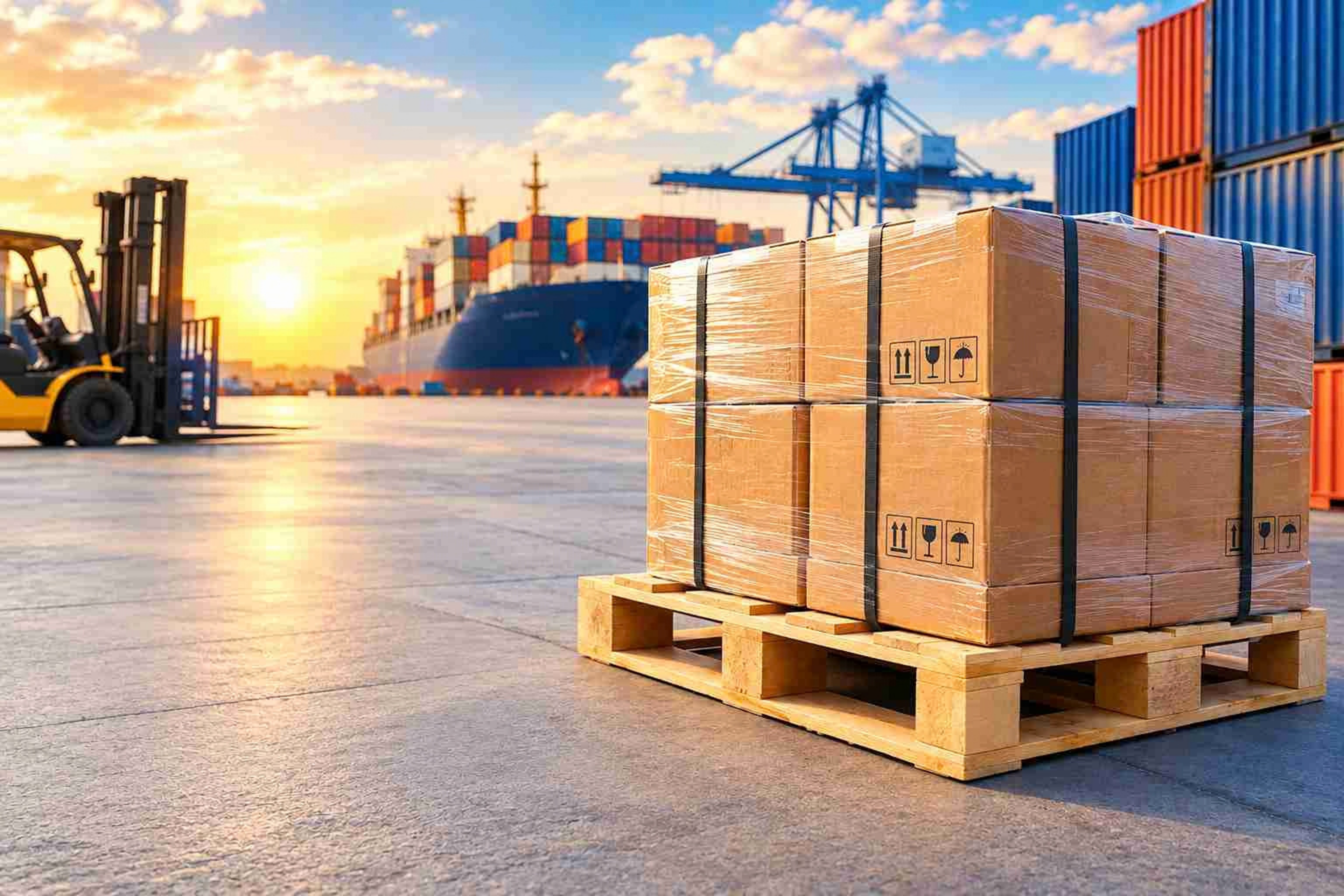
Pallet of boxes at a shipping port.
InformationalLogistics
September 18, 2026 By TEU Global Editorial Team

What Is a Pallet? The Complete Guide to Pallets in Shipping and Logistics

If you’ve ever ordered a bulk shipment, worked in a warehouse, or watched a forklift zip across a loading dock, you’ve seen a pallet in action — probably without giving it a second thought. But this simple, flat structure is one of the most important inventions in modern commerce. Without it, global shipping as we know it wouldn’t function.

In this guide, we’ll break down everything you need to know about pallets in shipping: what they are, the different types of shipping pallets, standard pallet sizes, how palletized freight works, and the age-old debate of pallet vs skid.

A pallet is a flat, portable platform — usually made of wood, plastic, or metal — used to stack, store, and transport goods safely and efficiently. Pallets are the backbone of palletized freight, allowing forklifts and pallet jacks to move large quantities of goods at once, reducing labor costs and shipping damage. 


What Is a Shipping Pallet? 

A shipping pallet is a structural foundation used to group, stack, and move goods as a single unit rather than handling individual boxes one by one. Pallets typically consist of two main parts:

  • Deckboards – the flat top (and sometimes bottom) surface where goods are placed
  • Stringers or blocks – the support beams underneath that create space for forklift forks or pallet jacks to slide in

This design allows heavy or bulky loads to be lifted, stacked, and transported with minimal manual handling — which is exactly why pallets are considered essential infrastructure in warehouses, ports, and distribution centers worldwide.

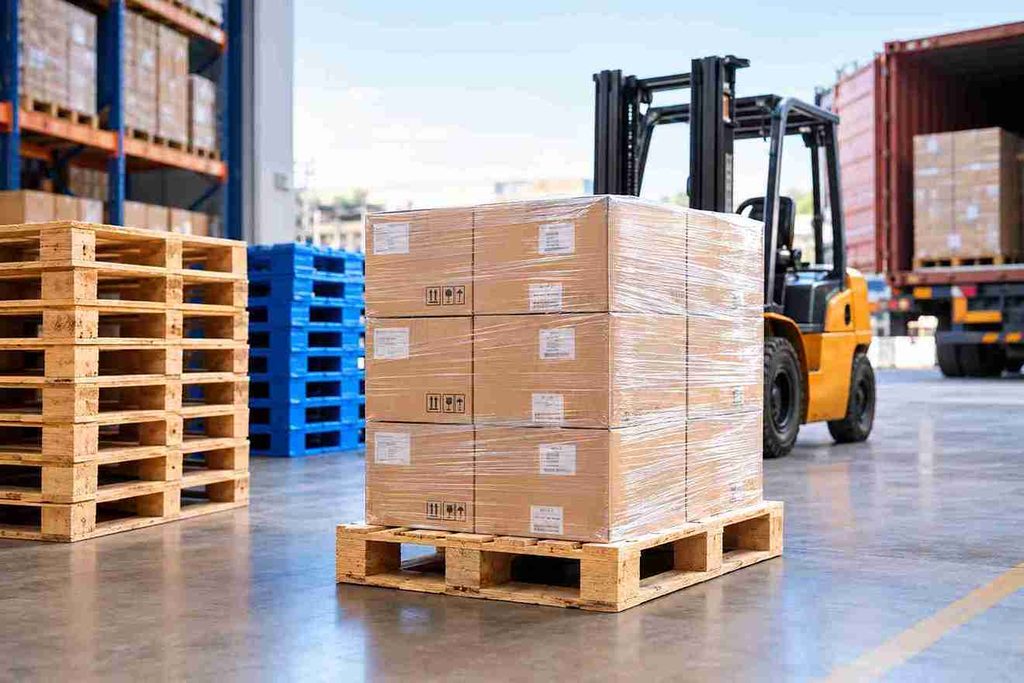
Packages in pallet

Did You Know?
Roughly 2 billion pallets are in circulation in the U.S. alone at any given time, and nearly 80% of all goods in the world are shipped on a pallet at some point in their journey. 

Why Pallets Matter in Shipping and Logistics

Pallets in logistics aren’t just a convenience — they’re a core efficiency tool that impacts nearly every stage of the supply chain.

Key Benefits of Using Pallets:

  • Faster loading/unloading — forklifts can move an entire pallet in seconds
  • Reduced product damage — items stay stacked securely and off the ground
  • Lower labor costs — fewer workers needed to handle bulk goods
  • Better space utilization — pallets stack cleanly in trucks, containers, and warehouse racks
  • Standardization — uniform sizes simplify planning across the entire supply chain

Pro Tip When choosing a pallet size, always match it to your shipping container or truck dimensions first. Mismatched pallet sizes waste space and increase freight costs 

Types of Shipping Pallets

Not all pallets are created equal. The right pallet depends on your industry, budget, load weight, and shipping distance. Here are the most common types of shipping pallets:

1. Wood Pallets

The most widely used pallet type globally. Wood pallets are affordable, repairable, and recyclable, making them ideal for domestic shipping and one-way or multi-use trips.

2. Plastic Pallets

Durable, lightweight, and resistant to moisture, chemicals, and pests. Plastic pallets are popular in the food, pharmaceutical, and export industries where hygiene standards are strict.

3. Metal Pallets

Made from steel or aluminum, these pallets are built for heavy-duty industrial loads, extreme durability, and long-term reuse — though they come at a higher cost.

4. Presswood/Molded Wood Pallets

Made from compressed wood fibers, these pallets are lightweight and consistent in size. Certain processed-wood pallets may be exempt from ISPM 15 treatment requirements depending on how they are manufactured and the applicable regulations.

5. Corrugated/Cardboard Pallets

Lightweight and cost-effective, ideal for lighter loads, air freight, or single-use shipments where reducing weight matters most.

Pallet TypeBest ForDurabilityCost
WoodGeneral/domestic shippingMedium-HighLow
PlasticFood, pharma, exportHighMedium-High
MetalHeavy industrial loadsVery HighHigh
PresswoodInternational exportMediumLow-Medium
CardboardLightweight/air freightLowVery Low

Standard Pallet Size Guide

One of the most searched questions in logistics is: “What is the standard pallet size?” The truth is, it depends on your region and industry.

Common Standard Pallet Sizes:

Pallet StandardDimensions (LxW)Common Region/Use
GMA Pallet (North America)48″ x 40″Most common in the U.S.
Euro Pallet1200mm x 800mmEurope
Australian Standard1165mm x 1165mmAustralia
Asia Pallet1100mm x 1100mmAsia-Pacific
Half Pallet24″ x 40″Retail/lighter loads

Global Insight The GMA (Grocery Manufacturers Association) pallet at 48″x40″ accounts for nearly 30% of all pallets used in North America, making it the unofficial “standard pallet size” in the U.S. shipping industry.

What Is Palletized Freight?

Palletized freight refers to goods that are loaded onto pallets before being shipped, rather than being shipped as loose, individual items. This method is widely used in LTL (Less Than Truckload) and FTL (Full Truckload) freight shipping.

Why Shippers Use Palletized Freight:

  • Simplifies freight classification and pricing
  • Speeds up dock-to-dock transfers
  • Minimizes handling touchpoints (less risk of damage/loss)
  • Improves tracking accuracy (each pallet = one trackable unit)

How It Works

  1. Goods are stacked and secured on a pallet (often with stretch wrap or strapping)
  2. The pallet is weighed and measured for freight class
  3. It’s loaded onto a truck, rail car, or shipping container
  4. At the destination, forklifts unload the entire pallet at once

Pallet vs Skid: What’s the Difference?

This is one of the most common points of confusion in logistics. So, pallet vs skid — are they the same thing?

Short answer: Not exactly.

FeaturePalletSkid
Bottom deckHas a bottom deck (double-face)No bottom deck (single-face)
StructureDeckboards on top and bottomOnly top deckboards on stringers/legs
StabilityMore stable for stackingLess stable for stacking
Common UseGeneral warehousing & shippingMoving heavy machinery/equipment short distances
CostSlightly higherGenerally lower

A skid is similar to a pallet but does not have a bottom deck. Because of this difference in construction, skids and pallets can serve different handling and storage purposes. 

Frequently Asked Questions About Pallets

Q: What is a pallet used for in shipping?

A pallet is used to consolidate multiple boxes or items into a single stackable unit, making loading, transport, and storage faster and safer.

Q: What is the most common standard pallet size?

In North America, the 48″ x 40″ GMA pallet is the most widely used standard size.

Q: Are wood or plastic pallets better?

Wood pallets are cheaper and more repairable, while plastic pallets are more durable, hygienic, and better suited for export or food-grade shipping.

Q: Can a pallet and a skid be used interchangeably?

In casual conversation, yes — but technically, a skid lacks a bottom deck, making it structurally different from a true pallet.

Q: How much weight can a standard pallet hold?

Most standard wood pallets can hold between 2,000–4,600 lbs statically, though capacity varies by material and construction.

Need Help With Your Freight Shipment?

Choosing the right pallet is only one part of moving your cargo efficiently. Whether you’re shipping palletized freight, coordinating domestic deliveries, or managing an international shipment, TEU Global can help you plan the right logistics solution for your cargo.

From freight forwarding and ocean freight to air freight, drayage, warehousing, and distribution, our team helps businesses move cargo safely and efficiently.

Ready to simplify your next shipment?
Request a Freight Forwarding Quote from TEU Global →

READ MORE
CTPAT supply chain security with secured shipping containers and digital lock icons
LogisticsInformational
September 9, 2026 By TEU Global Editorial Team

CTPAT: What Importers Need to Know About Supply Chain Security

If you import goods into the United States, you’ve probably seen the acronym CTPAT on a freight forwarder’s website or heard a customs broker mention it — usually right after “fewer inspections” and “faster clearance.” But what CTPAT actually is, who it applies to, and why it matters to your bottom line is often left unexplained.

This guide breaks down everything importers need to know: what CTPAT is, how CTPAT certification works, the real benefits behind the marketing language, and why partnering with a CTPAT certified freight forwarder like TEU Global can directly protect your supply chain — and your delivery timelines.

What Is CTPAT?

CTPAT — the Customs Trade Partnership Against Terrorism — is a voluntary supply chain security program run by U.S. Customs and Border Protection (CBP). It was created in the aftermath of the September 11 attacks to strengthen the security of the international supply chain while keeping legitimate trade moving efficiently

In simple terms, CTPAT is a partnership between CBP and private companies — importers, exporters, manufacturers, carriers, customs brokers, and freight forwarders — who agree to secure their own operations against tampering, smuggling, and other security risks. In exchange, CBP treats certified members as lower-risk participants in global trade.

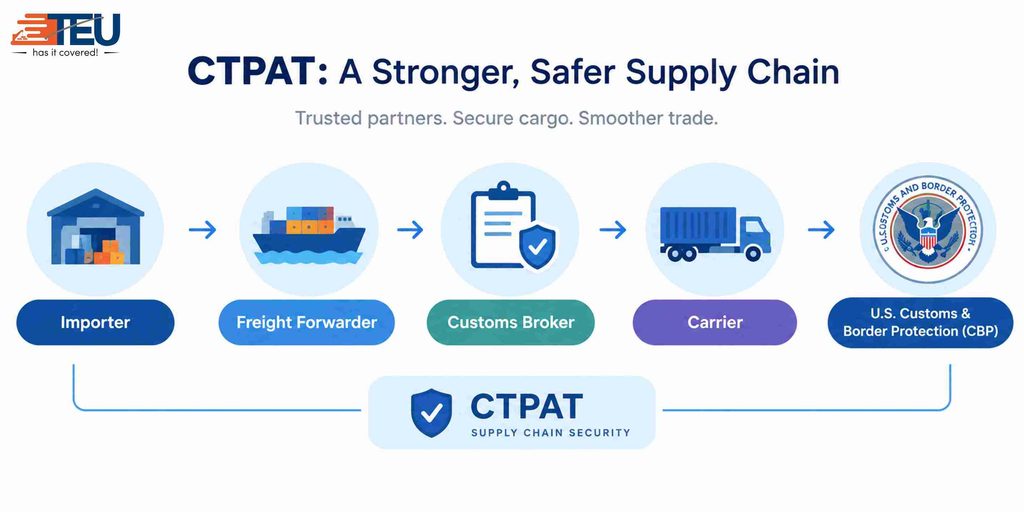
CTPAT supply chain security process for importers

CTPAT is not a license and not mandatory. But for companies that move consistent volume across borders, it has become close to an industry standard, because non-certified shipments face more scrutiny by default.

How CTPAT Certification Works

CTPAT certification is CBP’s formal recognition that a company has built, documented, and implemented a supply chain security program that meets CBP’s Minimum Security Criteria (MSC). The criteria vary slightly depending on your role in the supply chain — importer, carrier, broker, or logistics provider — but generally cover:

  • Physical security of facilities, containers, and cargo storage areas
  • Personnel security, including background screening and access controls
  • Procedural security, covering how shipments are documented, sealed, and tracked
  • Cybersecurity, protecting systems that manage shipment and trade data
  • Business partner requirements, extending security expectations to your vendors and carriers

The CTPAT Requirements Process

Getting certified isn’t a form you fill out once. The general process looks like this:

  1. Create an account in the CTPAT Portal and complete a Security Profile against the applicable Minimum Security Criteria.
  2. Submit supporting documentation showing the controls described in your profile are actually in place — not just written down.
  3. Undergo validation by a CBP Supply Chain Security Specialist, who may review your facilities, procedures, and in some cases your overseas partners.
  4. Maintain and update your security profile on an ongoing basis. CTPAT certification isn’t a one-time badge — CBP expects continuous compliance and periodic revalidation.

There’s no application fee, but the internal work — documenting procedures, training staff, and closing security gaps — is where most companies underestimate the effort involved.

CTPAT Benefits: What Certification Actually Gets You

The benefits CBP publishes for CTPAT members include:

  • Fewer customs examinations — certified shipments are generally treated as lower risk in CBP’s targeting systems
  • Front-of-line treatment when a certified shipment is selected for inspection
  • Faster processing at ports of entry and land border crossings
  • FAST lane eligibility at U.S.–Canada and U.S.–Mexico land crossings
  • A dedicated CBP Supply Chain Security Specialist as a point of contact
  • Priority admissibility review for shipments flagged under forced labor enforcement
  • Public recognition as a validated trusted trade partner, which carries weight with partners and customers

A word of caution worth passing on: you’ll see specific numbers floating around online — claims like “four to six times fewer inspections.” CBP doesn’t publish an exact multiplier, and those figures don’t trace back to an official source. What’s verifiable is the outcome that matters most to importers: fewer random holds, fewer surprise inspection fees, and more predictable transit times — which is exactly what protects your inventory planning and reduces demurrage and detention costs.

Who Should Pursue CTPAT for Importers

CTPAT is open to a wide range of supply chain participants, but it’s especially valuable for:

  • Importers who move regular international volume and want predictable clearance times
  • Manufacturers and exporters shipping components or finished goods across borders
  • Customs brokers and freight forwarders who want to offer clients a lower-risk shipping profile
  • Carriers operating across land, air, and ocean modes

If your business already deals with tight delivery windows, high-value cargo, or frequent cross-border shipments, CTPAT isn’t optional in practice — it’s a competitive necessity. Buyers and retail partners increasingly expect their logistics vendors to be certified.

CTPAT Compliance Is Ongoing, Not a One-Time Milestone

A common misconception is that CTPAT compliance ends once certification is granted. In reality, CBP expects members to:

  • Keep their Security Profile current as operations change
  • Extend security expectations to business partners and overseas vendors
  • Undergo periodic revalidation
  • Respond promptly to any security incidents or gaps identified during review

Companies that let their compliance lapse risk losing certified status — and the benefits that come with it — right when they need reliability the most.

Why CTPAT Supply Chain Security Matters More in 2026

Regulatory pressure around import security and importer-of-record accountability has increased. Recent policy direction has pushed for tighter vetting of importers and greater CTPAT participation across the supply chain, particularly for higher-risk trade lanes. For businesses relying on ocean freight, drayage, or cross-border trucking, that means working with partners who are already ahead of the compliance curve — not scrambling to catch up.

Why Work With a CTPAT Certified Freight Forwarder

This is where the practical value of CTPAT becomes clear for importers who don’t want to pursue certification themselves. When you ship through a CTPAT certified freight forwarder, some of that lower-risk treatment extends to your shipments, because your logistics partner has already met CBP’s security bar for handling, documenting, and moving your cargo.

TEU Global is CTPAT certified. That means when you route your freight forwarding, customs clearance, drayage and domestic trucking, or warehousing and distribution through TEU Global, you’re working with a partner whose security practices have already been validated by CBP — reducing the chances that your shipments get flagged, delayed, or held for avoidable reasons.

We also encourage our clients and eligible partners to pursue their own CTPAT certification. A secure supply chain is a shared responsibility, and working with a certified logistics partner is one of the simplest ways to strengthen your own compliance posture without building a security program from scratch.

FAQs About CTPAT

Is CTPAT mandatory?

No. CTPAT is a voluntary program, but many importers pursue it because non-certified shipments face more inspections and less predictable clearance times by default.

How long does CTPAT certification take?

CBP’s statutory goal is to complete Tier 1 certification within 90 days of a completed application, though this timeline depends on practicability and the complexity of your application.

Does CTPAT certification cost money?

There’s no CBP application or membership fee. The real cost is internal — the time and resources needed to document and implement the required security controls.

What’s the difference between CTPAT and a customs bond?

A customs bond is a financial guarantee required to import goods into the U.S. CTPAT is a voluntary security certification. They serve different purposes and aren’t interchangeable.

Can a freight forwarder be CTPAT certified on behalf of my business?

Not exactly — CTPAT certification applies to the entity that holds it. However, shipping through a CTPAT certified freight forwarder like TEU Global means your cargo benefits from that partner’s validated security practices at every touchpoint they handle

Ship Smarter With TEU Global: Your CTPAT-Certified Partner`

Whether you’re exploring certification for your own company or simply want a logistics partner who already meets CBP’s security standards, TEU Global’s CTPAT certification is built into how we handle every shipment — from ocean freight and customs clearance to drayage and warehousing.

Get a Quote or contact our team to see how working with a CTPAT certified freight forwarder can reduce delays and protect your supply chain.

READ MORE
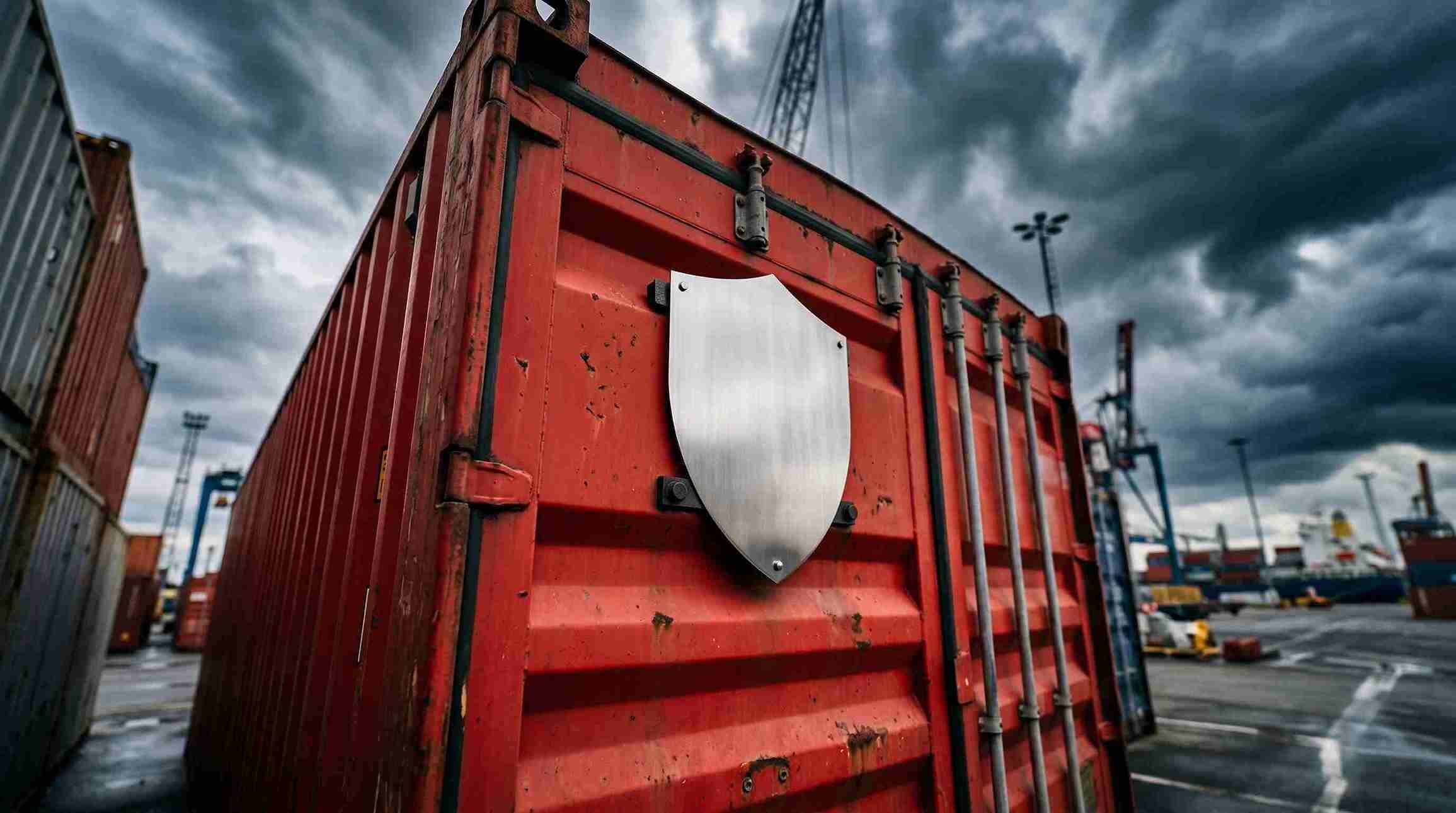
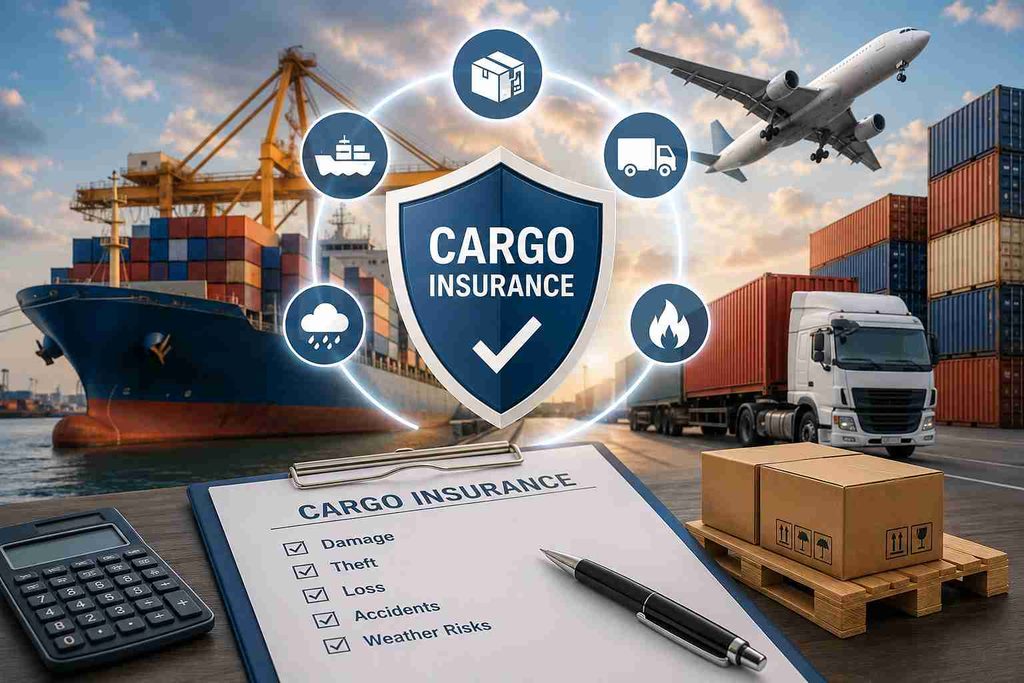
Shipping container stands in a port with a shield emblem
LogisticsCargoInformationalPackage
September 1, 2026 By TEU Global Editorial Team

Cargo Insurance for Importers: Coverage, Costs & Benefits

International shipping involves more than moving goods from one country to another. During transit, cargo can face risks such as damage, theft, loss, accidents, weather-related incidents, and handling issues. For importers, even a single damaged shipment can result in significant financial losses.

This is where cargo insurance becomes important.

Cargo insurance provides financial protection against covered risks that may affect goods while they are being transported. While insurance may not be mandatory for every shipment, it can help importers reduce the financial impact of unexpected events during international transportation.

In this guide, we’ll explain what cargo insurance is, why it matters, what it covers, how much it can cost, and what importers should consider before purchasing coverage.

What Is Cargo Insurance?

Cargo insurance is a type of insurance designed to protect goods against certain risks while they are being transported from one location to another.

Depending on the policy, coverage may apply during different stages of transportation, including ocean freight, air freight, trucking, rail transportation, and other parts of the supply chain.

For example, imagine an importer shipping $100,000 worth of products from Asia to the United States. If part of the shipment is damaged during transportation and the loss is covered by the insurance policy, the importer may be able to recover some or all of the insured value, subject to the policy’s terms, exclusions, and deductible.

Cargo insurance can therefore provide an additional layer of financial protection for businesses involved in international trade.

Why Is Cargo Insurance Necessary for Importers?

Importers face numerous risks throughout the transportation process. Cargo may pass through ports, warehouses, trucks, terminals, and other facilities before reaching its final destination.

Even when a shipment is handled by experienced logistics providers, unexpected events can still occur.

Here are some of the main reasons importers consider cargo insurance.

1. Protects Against Unexpected Financial Loss

International shipments can represent a significant investment. If cargo is damaged or lost, the importer may be responsible for replacing the goods, depending on the circumstances and contractual terms.

Insurance can help reduce the financial impact of covered losses.

2. Protects High-Value Shipments

The greater the value of your cargo, the greater the potential financial exposure.

Electronics, machinery, medical equipment, automotive parts, furniture, and other high-value products can represent substantial investments.

For these shipments, appropriate insurance coverage may provide additional financial security.

3. Covers Certain Risks During Transportation

Cargo can encounter risks at multiple points in the supply chain.

Depending on the policy, coverage may include certain losses resulting from events such as:

  • Accidental damage
  • Theft
  • Fire
  • Certain weather-related events
  • Transportation accidents
  • Loss of cargo
  • Handling-related incidents

However, coverage varies by policy, so importers should carefully review the specific terms and exclusions.

4. Provides Greater Financial Certainty

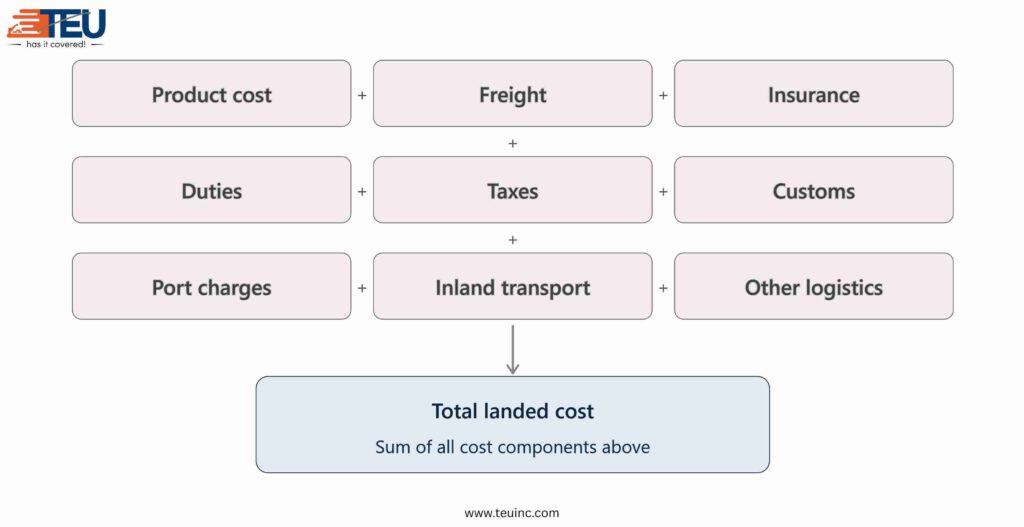
International trade already involves costs such as freight, customs clearance, duties, taxes, storage, handling, and transportation.

An unexpected cargo loss can add another major expense.

Having appropriate insurance can help businesses manage these risks and make financial planning more predictable.

5. Helps Importers Manage Supply Chain Risk

Cargo insurance is one part of a broader supply chain risk-management strategy.

Importers can combine insurance with proper packaging, freight forwarding, accurate documentation, shipment tracking, and appropriate transportation planning to reduce exposure to potential losses.

What Does Cargo Insurance Cover?

The exact coverage depends on the insurance policy, transportation method, cargo type, and applicable terms.

Depending on the policy, cargo insurance coverage may protect against risks such as:

  • Physical damage to goods
  • Theft
  • Loss during transportation
  • Fire
  • Certain accidents
  • Certain weather-related damage
  • Damage during handling or transportation

For example, if cargo is damaged in an accident while being transported and the incident falls within the policy’s covered risks, the importer may be able to submit a claim.

However, businesses should never assume that every type of damage is automatically covered.

Before purchasing a policy, review the coverage limits, exclusions, deductibles, claim requirements, and applicable conditions.

Alt text: Cargo insurance protecting international cargo during transportation.

What Does Cargo Insurance Not Cover?

Cargo insurance policies generally contain exclusions.

Depending on the policy, exclusions may involve situations such as:

  • Improper packaging
  • Normal wear and tear
  • Certain inherent characteristics of the goods
  • Intentional damage
  • Certain delays
  • Undeclared or improperly documented cargo
  • Specific excluded risks listed in the policy

This is why reading the policy before shipping is important.

An importer should understand exactly what is covered and what is not covered rather than assuming that insurance provides unlimited protection.

Cargo Insurance vs. Carrier Liability

One of the most important concepts for importers to understand is the difference between cargo insurance and carrier liability.

A carrier or transportation provider may have liability for cargo under applicable laws, contracts, tariffs, or shipping terms. However, that liability may be limited and may not equal the full commercial value of the goods.

For example, if a shipment containing expensive equipment is damaged, the amount recoverable from a carrier may depend on the applicable liability rules and contractual terms.

Cargo insurance, on the other hand, is specifically intended to provide coverage according to the terms of the insurance policy.

Therefore, importers should not automatically assume that carrier liability provides the same protection as comprehensive cargo insurance.

How Much Does Cargo Insurance Cost?

The cost of cargo insurance depends on several factors.

Insurance providers may consider:

  • Value of the shipment
  • Type of cargo
  • Origin and destination
  • Transportation method
  • Route
  • Packaging
  • Historical claims experience
  • Coverage level
  • Deductible
  • Specific risks associated with the shipment

For this reason, there is no single price that applies to every shipment.

A business importing low-value, low-risk products may have very different insurance costs from a company shipping high-value machinery or specialized equipment.

The best approach is to evaluate the potential financial loss against the cost of obtaining appropriate coverage.

When Should You Buy Cargo Insurance?

Importers should consider insurance before the shipment begins, rather than waiting until cargo is already in transit.

Planning ahead gives businesses time to:

  1. Determine the value of the shipment.
  2. Identify potential transportation risks.
  3. Review available coverage.
  4. Understand exclusions and deductibles.
  5. Confirm documentation requirements.
  6. Purchase appropriate coverage before transportation begins.

For recurring shipments, businesses can also explore insurance arrangements designed for multiple shipments rather than treating every shipment as a completely separate decision.

How to Choose the Right Cargo Insurance

Choosing the right policy requires more than looking for the cheapest option.

Importers should consider the following factors.

Understand the Coverage

Check exactly which risks are covered and whether the coverage applies to the entire transportation journey.

Review Exclusions

Pay close attention to situations the policy does not cover.

Check Coverage Limits

Make sure the policy limit is appropriate for the value of your cargo.

Consider the Deductible

A deductible is the amount the insured may have to pay before the insurer covers an eligible loss. Understand how the deductible applies before purchasing the policy.

Understand the Claims Process

Find out what documentation is required if cargo is damaged or lost.

Depending on the situation, documentation may include invoices, packing lists, bills of lading, photographs, inspection reports, and other relevant records.

Consider Your Cargo Type

Different products can have different risks. Fragile goods, temperature-sensitive products, high-value equipment, and other specialized cargo may require particular considerations.

Common Cargo Insurance Mistakes Importers Make

Even when businesses purchase insurance, mistakes can reduce the effectiveness of their coverage.

Assuming Carrier Liability Is Enough

Carrier liability may not provide protection equal to the full value of the shipment.

Choosing Coverage Based Only on Price

The cheapest policy may not provide the coverage your cargo actually requires.

Not Reading Exclusions

An importer may assume a particular loss is covered without checking the policy.

Underinsuring the Shipment

If the insured value does not adequately reflect the shipment’s value and applicable costs, the business may not receive the expected level of protection.

Waiting Until After Shipping Begins

Insurance arrangements should be made before the relevant transportation risk occurs.

Poor Documentation

Incomplete invoices, packing lists, shipping documents, photographs, or other records can complicate the claims process.

Frequently Asked Questions About Cargo Insurance

Is cargo insurance mandatory?

Cargo insurance is not automatically mandatory for every international shipment. Requirements can depend on the transaction, contract, financing arrangements, transportation terms, and applicable regulations.
However, many importers choose insurance to protect themselves against potential financial losses.

Is cargo insurance worth it?

For many importers, cargo insurance can be worthwhile when the potential financial loss from damaged or lost goods is significantly greater than the cost of coverage.
The decision depends on cargo value, risk, route, transportation method, and the business’s ability to absorb a potential loss.

Who is responsible for cargo insurance?

Responsibility can depend on the sales contract and the agreed Incoterms® rule. Some transactions require the seller to arrange insurance, while in others the buyer assumes the responsibility.
Importers should understand their specific contractual obligations before assuming who is responsible.

Does freight forwarding include cargo insurance?

Not necessarily. Freight forwarding and cargo insurance are different services.
A freight forwarder may help arrange transportation and logistics services, while insurance provides financial protection against covered cargo losses.
Importers should confirm whether insurance is included, optional, or arranged separately.

What happens if cargo is damaged during shipping?

If cargo is damaged, the importer should document the damage, notify the appropriate parties promptly, preserve relevant shipping and commercial documents, and follow the insurance policy’s claims procedure if the shipment is insured.
The exact process depends on the circumstances and policy terms.

Final Thoughts

International shipping always involves some level of risk. From transportation accidents and theft to handling damage and unexpected events, problems can occur even when a shipment is carefully planned.

Cargo insurance can help importers manage the financial consequences of covered losses and provide additional protection for valuable shipments.

However, insurance should not be viewed as a replacement for good logistics planning. Proper packaging, documentation, transportation planning, shipment monitoring, and working with experienced logistics professionals are also important parts of protecting your cargo.

For importers moving goods internationally, understanding your transportation risks and choosing the right protection can help create a more resilient supply chain.

Need help managing your international shipments? TEU Global can help with freight forwarding, customs clearance, transloading, and other logistics solutions for U.S. importers and exporters. Contact TEU Global to discuss your shipping needs.

READ MORE
Transloading warehouse with trucks and freight cargo ready for transfer
LogisticsInformational
August 26, 2026 By TEU Global Editorial Team

What Is Transloading? The Complete Guide for US Importers and Exporters (2026)

If you import goods into the United States, you’ve probably hit this wall: your container is sitting at the port, demurrage fees are ticking up by the day, and there’s no direct route to get your freight where it actually needs to go. This is exactly the problem transloading was built to solve.

Transloading is the process of transferring freight from one mode of transportation to another — for example, moving cargo out of an ocean container and reloading it onto a domestic truck, railcar, or smaller container for the next leg of its journey. It’s one of the most effective ways US shippers reduce costs, avoid port congestion, and keep freight moving without being locked into a single, often inefficient, shipping route.

In this guide, we’ll break down exactly how transloading works, when you need it, what it costs, and how to choose the right transloading partner in the US.

How Transloading Works: Step by Step

A typical transloading operation moves through five stages:

  1. Cargo receipt — Freight arrives at a port, rail terminal, or transload facility, and documentation is verified against the shipment.
  2. Unloading and inspection — The container is opened, and goods are checked, counted, and sorted by destination or SKU.
  3. Mode transfer — Freight is reloaded into domestic trailers, railcars, or smaller containers, depending on the most efficient route forward.
  4. Value-added handling — Many transload facilities also offer palletizing, labeling, kitting, or repackaging to meet retailer or distributor requirements.
  5. Final dispatch — The freight is shipped out via truckload, intermodal rail, or LTL (less-than-truckload) to its final destination.

The entire point is flexibility: instead of one rigid shipping mode from port to door, transloading lets you switch modes wherever it’s fastest or cheapest, making it an important part of effective freight forwarding services.

Transloading vs. Drayage vs. Cross-Docking

These three terms get confused constantly, so here’s the quick distinction:

TermWhat It Means
TransloadingTransferring freight between different transportation modes (e.g., ocean container to rail or truck), often with sorting or repackaging involved
DrayageShort-distance movement of a container, typically from a port to a nearby warehouse or rail yard — no mode change
Cross-dockingUnloading freight from an inbound truck/container and loading it directly onto an outbound vehicle with little to no storage in between
Transloading vs drayage vs cross-docking logistics comparison

Transloading is broader than both — it often includes a drayage move and can involve cross-docking, but its defining feature is the mode-to-mode transfer.

Why US Businesses Use Transloading

1. Avoiding Port Congestion and Demurrage Fees

West Coast and East Coast ports regularly face equipment shortages and yard congestion. Transloading lets you move freight out of the port quickly, cutting the demurrage and detention charges that stack up when a container sits too long, while supporting efficient drayage services.

2. Lower Transportation Costs

Ocean containers are often more expensive to move long distances by road than domestic trailers or rail. Transloading two ocean containers into three domestic 53-foot trailers, for instance, can reduce the number of trips needed and lower per-mile freight costs.

3. Overcoming Route and Infrastructure Limitations

Not every destination has direct rail or port access. Transloading bridges that gap — freight arrives by one mode and finishes its journey by whichever mode actually reaches the final delivery point.

4. Consolidation and Flexibility

Multiple partial shipments can be consolidated into a single outbound load, or one large shipment can be split across several smaller ones based on destination — improving efficiency on both ends.

5. Meeting Retailer and Compliance Requirements

Many retailers require specific labeling, palletizing, or packaging before freight reaches their distribution centers. A transload facility with value-added services handles this before the freight ever leaves.

What Does Transloading Cost?

Transloading costs vary based on cargo type, volume, and facility location, but generally include:

  • Handling fees — per-container or per-pallet unloading and sorting charges
  • Storage fees — if freight sits at the facility before the next mode is arranged (usually billed per day after a free period)
  • Value-added service fees — labeling, palletizing, kitting, or repackaging
  • Outbound transportation — the truck, rail, or LTL cost for the next leg

Because there’s no single fixed price, the most reliable way to budget for transloading is to work with a licensed 3PL that can quote your specific commodity, volume, and route — which is exactly where an NVOCC-licensed partner adds value: transparent, itemized quotes instead of bundled guesswork.

Who Needs Transloading Services?

Transloading makes sense if you:

  • Import through West Coast ports but need freight to reach East Coast or Midwest markets
  • Are consistently paying demurrage or detention fees due to port delays
  • Need to consolidate or split shipments across multiple destinations
  • Ship FDA-, USDA-, or other agency-regulated goods that require extra documentation handling
  • Work with retailers that have strict labeling or delivery-appointment requirements

Why Work With an NVOCC-Licensed, C-TPAT-Compliant Partner

Not every transload provider is built for the compliance side of US trade. TEU Global is Federal Maritime Commission NVOCC-licensed, C-TPAT-compliant, ISO-certified, IATA-licensed, and NCBFAA-registered — which matters because transloaded freight still has to clear US regulatory checkpoints correctly the first time. Errors in documentation or handling at the transload stage are a common cause of delays with FDA, USDA, and other participating government agencies.

TEU Global’s transloading services cover:

  • Port-to-rail and port-to-truck transloading across major US gateways
  • Warehousing and short-term storage
  • Freight consolidation and deconsolidation
  • Labeling, palletizing, and retailer-compliance packaging
  • Full visibility from port receipt to final delivery

Frequently Asked Questions

What is the difference between transloading and intermodal shipping?

Intermodal shipping refers to a shipment traveling in the same container across multiple transport modes (ship, rail, truck) without the freight itself being unloaded. Transloading specifically involves unloading and reloading the freight into a different container or mode.

Is transloading cheaper than direct shipping?

It can be, especially over long inland distances, since domestic trailers and rail are often more cost-effective than moving an ocean container the full distance. Savings depend on route, volume, and how much time freight would otherwise spend paying storage or demurrage fees at the port.

How long does transloading take?

Most transload operations take 24–72 hours from receipt to outbound dispatch, though this varies by facility volume, cargo type, and whether value-added services like palletizing are required.

Do I need a customs broker for transloading?

Yes — customs clearance typically needs to be completed before or during the transload process, especially for regulated goods. Working with a licensed 3PL that also handles customs clearance keeps this from becoming a bottleneck.

Ready to Move Your Freight Faster?

If port delays, demurrage fees, or rigid shipping routes are cutting into your margins, transloading is one of the most direct ways to fix it. TEU Global’s transload network, backed by NVOCC licensing and C-TPAT compliance, is built to get your freight moving — compliantly and on schedule.

Request a Free Quote → https://teuinc.com/services/logistics-consulting-services

READ MORE
Freight forwarding cost analysis with shipping containers and logistics charts.
InformationalLogistics
August 20, 2026 By TEU Global Editorial Team

How Much Does Freight Forwarding Cost in 2026?

If you’re importing or exporting goods internationally, “how much does freight forwarding cost in 2026?” is probably the first question on your mind — and the hardest one to get a straight answer to.

The answer: it depends. Your rate is shaped by your shipping route, cargo volume, transportation mode, container size, origin and destination charges, customs requirements, fuel costs, and current market conditions. A freight forwarding quote isn’t just “moving a box from Point A to Point B” — it can bundle ocean or air freight, documentation, port handling, customs clearance, drayage, warehousing, and insurance into one number.

In 2026, freight costs are moving fast. Ocean rates are being pushed and pulled by shifting demand, fuel prices, port congestion, geopolitical disruption, and new tariff policy. Right now, Asia–U.S. routes are running hot, while some Asia–Europe lanes are cooling off from earlier peaks. This guide breaks down exactly what drives freight forwarding pricing and what to check before you accept a quote.

What’s Included in Freight Forwarding Cost?

There’s no single “average” freight forwarding price — every shipment is priced differently. Here’s what typically shows up on your invoice:

  • Ocean, air, rail, or truck freight
  • Origin handling charges
  • Destination handling charges
  • Documentation fees
  • Customs clearance
  • Port and terminal charges
  • Fuel and security surcharges
  • Drayage and domestic transportation
  • Warehousing and storage
  • Cargo insurance
  • Duties and taxes
  • Demurrage and detention (when applicable)

Key takeaway: the cheapest-looking quote isn’t always the lowest total cost. Freightos points out that international freight quotes often contain multiple separate fees and surcharges — so understanding what’s actually included matters more than the headline rate.

What Is Freight Forwarding, Exactly?

Freight forwarding is the coordination of cargo transportation and logistics from origin to destination. A freight forwarder manages the moving pieces — carriers, documentation, customs, delivery — so you don’t have to juggle multiple vendors yourself.

For businesses importing into (or exporting from) the U.S., this reduces the delays that come from paperwork errors or compliance gaps. TEU Global handles freight forwarding alongside customs clearance, ocean freight, cargo insurance, drayage, warehousing, and purchase order management — all under one roof.

10 Factors That Drive Freight Forwarding Costs in 2026

1. Shipping Mode

Ocean, air, road, rail, or multimodal — your mode of transport is the single biggest cost lever. Ocean freight suits larger, less time-sensitive shipments; air freight is faster but pricier, especially for heavy cargo.

2. FCL vs. LCL Shipping

  • FCL (Full Container Load): you book the whole container (20-ft, 40-ft, or 40-ft high-cube), priced per container regardless of how full it is.
  • LCL (Less than Container Load): your cargo shares space with other shipments, typically priced by volume and/or weight.

Choosing FCL vs. LCL can swing your total freight forwarding cost significantly — more on this below.

3. Origin Charges

Costs incurred before your cargo even leaves the exporting country: pickup, export documentation, terminal handling, container loading, CFS/warehouse charges, and export clearance. These vary a lot by origin country and port.

4. Ocean or Air Freight Charges

This is usually the largest single line item — but it’s rarely the whole story once surcharges and local charges are layered on. As of August 2026, Freightos reported rates of roughly $7,400/FEU on Asia–U.S. West Coast lanes and about $9,400/FEU on Asia–U.S. East Coast lanes. That’s exactly why a generic “2026 freight cost” figure can be misleading — rates move by lane and by week.

5. Fuel Surcharges

Fuel costs remain a major variable in 2026. Maersk’s Q2 2026 results showed average bunker prices running well above last year, pushing ocean operating costs higher — which is why the rate you lock in today may not hold for your next shipment.

6. Port and Terminal Charges

Terminal handling, port fees, container handling, documentation, security, and equipment charges all vary by origin and destination port. A trustworthy quote spells out which of these are included versus billed separately.

7. Customs Clearance Costs

Brokerage, entry preparation, Importer Security Filing (ISF), classification, customs bonds, duties, and taxes — the total depends heavily on your commodity, country of origin, declared value, and HTS classification. TEU Global’s customs clearance services cover ISF, cross-border clearance, classification, and bond processing.

8. Drayage and Domestic Delivery

Once your container clears the port, it still needs to reach a warehouse, distribution center, or final destination. That short-haul move — drayage — should be factored into your total logistics budget, not treated as an afterthought.

9. Warehousing and Storage

Pallet count, storage duration, location, and handling requirements all affect warehousing costs, which matter most for businesses managing ongoing inventory flow.

10. Cargo Insurance

Insurance adds a line item, but it protects the value of your goods against loss or damage in transit. Coverage needs depend on cargo type, transport mode, and value.

Sample Freight Forwarding Cost Breakdown

Cost ComponentWhat It Covers
Ocean FreightMain international transportation
Origin ChargesHandling and services at origin
DocumentationShipping and administrative paperwork
Terminal ChargesPort and container handling
Customs ClearanceImport entry and compliance
Duties & TaxesGovernment-imposed charges
DrayagePort-to-warehouse transportation
WarehousingStorage and handling
Cargo InsuranceProtection against covered losses
Additional SurchargesFuel, security, congestion, or other fees

Don’t budget off the advertised ocean freight rate alone — it’s one line among many.

Why One Freight Quote Can Look So Different From Another

Ask three forwarders for a quote and you’ll likely get three different numbers. That’s not necessarily overcharging — it usually comes down to differences in carrier contracts, consolidation options, port arrangements, transit routes, and what’s actually bundled into the price. One quote might be door-to-door with customs included; another might only cover port-to-port. Always compare full scope of service, not just the headline rate.

6 Ways to Reduce Freight Forwarding Costs in 2026

  1. Plan shipments in advance — last-minute bookings limit your options and your negotiating leverage.
  2. Consolidate shipments — smaller loads may benefit from LCL consolidation instead of multiple separate shipments.
  3. Compare FCL and LCL every time — don’t assume LCL is automatically cheaper; at higher volumes, FCL often wins.
  4. Optimize packaging — tighter packaging improves container utilization and can lower dimensional-weight charges.
  5. Avoid demurrage and detention — know your free-time windows and return equipment on schedule.
  6. Work with an experienced freight forwarder — the goal isn’t the lowest rate, it’s the best balance of cost, reliability, transit time, compliance, and visibility.

Freight Forwarding Cost vs. Total Landed Cost

The biggest mistake importers make is comparing freight rates in isolation. Your real cost is your total landed cost:

Total Landed Cost = Product Cost + Freight + Insurance + Duties + Taxes + Customs + Port Charges + Inland Transportation + Other Logistics Costs

Freight forwarding cost breakdown infographic.

A shipment with a lower ocean freight rate can still end up more expensive once you add higher destination charges, extra handling fees, or costly inland transport. Compare the full landed cost — not just the sticker price on freight.

How 2026 Market Conditions Are Moving Freight Rates

2026 shipping costs are being shaped by fuel prices, port congestion, geopolitical disruption, shifting trade routes, seasonal demand, tariff changes, carrier capacity, and canal/waterway disruptions. In Freightos’s August 11, 2026 weekly update, Asia–U.S. West Coast rates rose 11% while Asia–U.S. East Coast rates rose 1% — and Asia–Northern Europe rates had already pulled back from their July peak. Translation: evaluate a quote by shipment date and trade lane, not by an outdated “average” you saw online.

Questions to Ask a Freight Forwarder Before You Book

  1. What exactly is included in the quoted price?
  2. Is the rate port-to-port or door-to-door?
  3. Are origin charges included?
  4. Are destination charges included?
  5. Is customs clearance included?
  6. Are duties and taxes included?
  7. Are fuel and security surcharges included?
  8. How much free time is available before demurrage/detention kicks in?
  9. What are the expected transit times?
  10. Are drayage and final delivery included?
  11. What happens if the shipment is delayed?
  12. Are there any potential additional charges I should know about now?

Getting clear answers up front is the single easiest way to avoid a surprise invoice.

How TEU Global Helps You Control Freight Forwarding Costs

At TEU Global, freight forwarding is one piece of a full 3PL solution built to simplify international logistics: freight forwarding, ocean freight, customs clearance, cargo insurance, drayage and domestic delivery, warehousing and distribution, purchase order management, and customs compliance coaching — coordinated through one partner instead of five.

Final Thoughts: What Will Freight Forwarding Cost You in 2026?

There’s no single price tag that fits every shipment. Your final number depends on your origin, destination, cargo type and volume, container size, transport mode, season, carrier, fuel costs, port charges, customs requirements, and inland transportation needs.

2026 freight markets are volatile — which makes a shipment-specific quote far more useful than any generic online estimate. The smartest move is to compare total logistics cost, know exactly what’s included in your quote, and partner with a forwarder who can coordinate transportation, customs, and delivery under one roof.

Request a Freight Forwarding Quote from TEU Global →https://teuinc.com/services/freight-forwarding

Frequently Asked Questions

How much does a freight forwarder charge?
It varies by shipment. Charges typically include transportation, documentation, handling, customs, surcharges, warehousing, and delivery services.

Is freight forwarding expensive?
It depends on the shipment and scope of service. Forwarder fees add a cost, but professional coordination often prevents far costlier delays, documentation errors, and inefficient routing.

What is included in freight forwarding costs?
Depending on your quote: freight transportation, origin and destination handling, documentation, customs clearance, port charges, surcharges, drayage, warehousing, and delivery.

Is ocean freight cheaper than air freight?
For large or non-urgent shipments, generally yes. The right choice depends on weight, dimensions, urgency, destination, and current market rates.

Can freight forwarding rates change?
Yes — fuel prices, carrier capacity, seasonality, port congestion, geopolitical events, trade policy, and supply/demand shifts can all move rates quickly.

How can I get an accurate freight forwarding cost?
Request a shipment-specific quote with your origin, destination, cargo type, dimensions, weight, volume, container size, shipping mode, and delivery requirements.

Need a freight forwarding solution for your next shipment? Contact TEU Global for a customized logistics quote.

READ MORE
  • 1
  • 2
  • 3
  • …
  • 6
TEU Global

TEU Global is a 3PL company, with a top reliable global agent network. From freight forwarding and customs clearance to warehousing and purchase order management, we provide the best services with extra personal care.

Services

Ocean Freight Shipping

US Handling Agent

Canada Handling Agent

Freight Forwarding

Customs Clearance

Cargo Insurance

Drayage & Domestic Truck Delivery

Warehousing and Distribution

Purchase Order Management

Logistics Consultants

Customs Compliance Coaching

Branches

CANADA Inc

51 Village Centre Place, Mississauga, Ontario, Canada 

Email : canada@teuinc.com
Phone : (+1) 732-564-6919
Phone : (+1) 437 326 1269


MIAMI

Distribution & Dispatch facility

5855 NW 159th St,

Miami Lakes FL 33014
Email : Mia@teuinc.com
Phone : 305-851-7818


UAE

Office No: 2311, The Prime Tower Business Bay, Dubai
Email: Gulf@teuinc.com
Phone: 971-4-422-1046


MALAYSIA

Teu Global Sdn. Bhd
B109 Kelana Square  No.17 Jalan SS 7/26, 47301 Petaling Jaya, Selangor MALAYSIA

Email: Malaysia@teuinc.com

Malaysia Landline : +60-36-789-2285

Phone : +60-12-656-8642


Head Office

NEW JERSEY

242 Old New Brunswick Road,
Suite 145 Piscataway, NJ 08854 USA

Email : info@teuinc.com
Phone : 732-515-9040
Fax # : 732-856-5008
Toll free: 877-414-8381

TwitterFacebookInstagramYoutubeLinkedin

Copyright © 2015-2026. TEU Global – All Rights Reserved.

Privacy Policy | Terms & Conditions