
LogisticsInformational
Selecting the right freight forwarding partner is one of the most important decisions for any importer or exporter. Whether you’re shipping products domestically or internationally, the right logistics partner can reduce costs, prevent delays, and ensure your cargo reaches its destination safely.
With hundreds of logistics companies available, choosing the best freight forwarder can feel overwhelming. This guide explains what to look for, the questions to ask, and the common mistakes to avoid before making your decision.
What Is a Freight Forwarder?
A freight forwarder is a logistics company that manages the transportation of goods on behalf of importers and exporters. Instead of moving cargo themselves, freight forwarders coordinate shipments through carriers such as shipping lines, airlines, rail operators, and trucking companies.
Professional freight forwarding services typically include:
- Shipment planning
- Carrier selection
- Cargo booking
- Customs documentation
- Customs clearance
- Warehousing
- Cargo insurance
- Shipment tracking
- Final delivery coordination
The goal is to simplify the entire freight forwarding process while ensuring compliance with international shipping regulations.
Why Choosing the Right Freight Forwarder Matters
Your logistics partner directly impacts your supply chain performance.
Choosing the right freight forwarding company helps you:
- Reduce shipping costs
- Minimize customs delays
- Improve delivery times
- Avoid compliance issues
- Gain better shipment visibility
- Reduce operational risks
- Scale international business confidently
On the other hand, an inexperienced provider may cause shipment delays, unexpected charges, documentation errors, and dissatisfied customers.
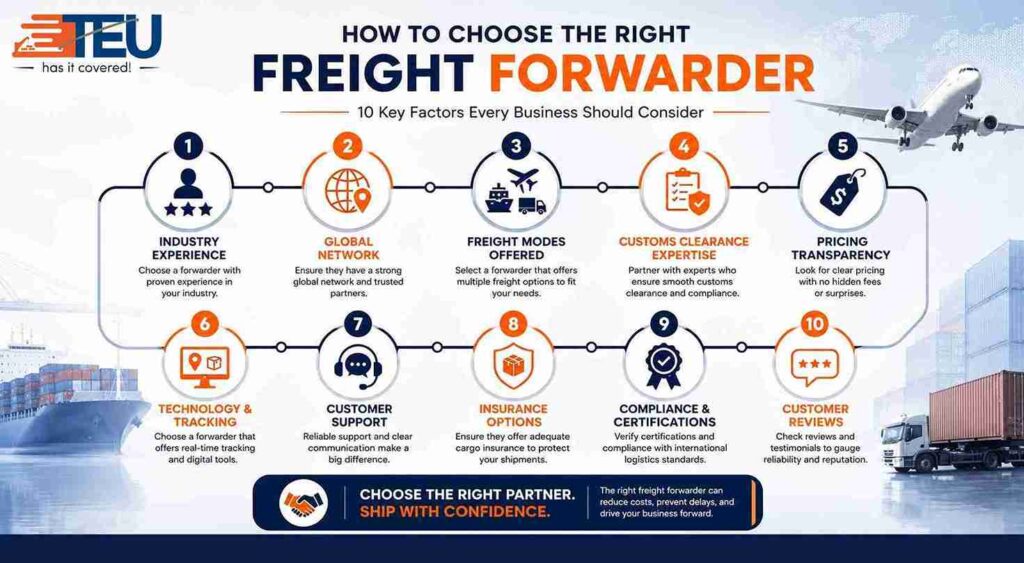
10 Factors to Consider When Choosing a Freight Forwarder
1. Industry Experience
Experience matters in logistics.
Look for a company that has handled shipments similar to yours. Businesses shipping electronics, automotive parts, food products, chemicals, or oversized cargo all have different requirements.
Experienced freight forwarding professionals understand:
- Country-specific regulations
- Documentation requirements
- Import/export restrictions
- Industry compliance
- Risk management
The more experienced your logistics partner, the fewer surprises you’ll encounter. Working with a trusted provider of freight forwarding services helps businesses navigate complex international shipping requirements while minimizing delays and unexpected costs.
2. Global Network
A strong international network is essential for successful international freight forwarding.
Choose a provider with trusted global agents and carrier partnerships across major ports and airports.
A well-connected freight forwarder can:
- Secure better shipping rates
- Offer flexible routing options
- Reduce transit times
- Handle customs efficiently
- Resolve issues quickly
Global coverage becomes especially important when shipping across multiple countries.
3. Freight Modes Offered
Every shipment is different.
The best freight forwarding companies provide multiple transportation options, including:
Ocean Freight
Ideal for large shipments with lower transportation costs.
Air Freight
Best for urgent, high-value, or time-sensitive cargo.
Truck Freight
Suitable for domestic transportation and regional distribution.
4. Customs Clearance Expertise
Customs clearance is one of the most complex parts of international logistics.
Documentation errors can result in:
- Shipment delays
- Customs holds
- Storage fees
- Financial penalties
Choose a freight forwarder with proven customs clearance expertise who can assist with:
- Commercial invoices
- Packing lists
- Bills of lading
- Certificates of origin
- Import permits
- Duty calculations
Efficient customs management keeps your supply chain moving.
5. Pricing Transparency
Low shipping rates can sometimes hide additional costs.
Before selecting a freight forwarding provider, request a detailed quotation that clearly outlines:
- Freight charges
- Fuel surcharges
- Customs fees
- Documentation fees
- Handling charges
- Warehousing costs
- Insurance costs
Transparent pricing helps businesses avoid unexpected expenses.
Remember that the cheapest quote isn’t always the best value.
6. Technology & Shipment Tracking
Modern logistics depends on real-time visibility.
Choose freight forwarding services that offer:
- Online shipment tracking
- Automated status updates
- Digital documentation
- Customer portals
- Electronic invoicing
- Shipment notifications
Technology improves communication while allowing businesses to monitor cargo throughout the shipping journey.
7. Customer Support
Shipping challenges can happen at any time.
Reliable customer service is essential when dealing with:
- Port congestion
- Weather disruptions
- Customs inspections
- Delivery delays
- Documentation questions
A responsive freight forwarder provides proactive communication and timely updates instead of leaving customers searching for information.
8. Insurance Options
Even carefully planned shipments carry some level of risk.
Cargo insurance protects businesses against losses caused by:
- Damage
- Theft
- Natural disasters
- Accidents
- Cargo mishandling
Ask your freight forwarding provider about available insurance coverage and whether additional protection is recommended for your cargo.
9. Compliance & Certifications
Choose a freight forwarding company that follows international logistics standards.
Important certifications and memberships may include:
- FMC Registration
- WCA
- IATA Certification
- CTPAT Participation
- Licensed Customs Broker
- ISO Certifications
Compliance demonstrates professionalism and reduces regulatory risks.
10. Customer Reviews
Reputation often reveals what marketing cannot.
Before choosing a freight forwarder, review:
- Google Reviews
- Industry directories
- Customer testimonials
- Case studies
- Long-term client relationships
Look for consistent positive feedback regarding:
- Delivery reliability
- Communication
- Pricing honesty
- Problem resolution
- Professionalism
Satisfied customers are usually a strong indicator of dependable service.
Questions to Ask Before Hiring a Freight Forwarder
Before signing an agreement, ask potential freight forwarding partners these important questions:
- Do you offer cargo insurance, and what does it cover?
- What experience do you have shipping goods like ours?
- Which trade lanes and freight modes do you specialize in?
- How do you handle customs documentation and compliance issues?
- Can you provide references from clients in our industry?
- What does your pricing structure include, and are there additional fees?
- How will we track our shipments, and how often will we receive updates?
- What happens if a shipment is delayed, damaged, or lost?
- These questions help determine whether the provider is the right fit for your logistics needs.
Mistakes to Avoid When Choosing a Freight Forwarder
Not every freight forwarding company provides the same level of service.
Watch for these warning signs:
- Extremely low shipping prices
- Hidden fees
- Poor communication
- No shipment tracking
- Lack of customs expertise
- No customer references
- Limited international network
- Unclear contracts
- Delayed responses
- Negative customer reviews
If a provider cannot clearly explain their freight forwarding process, it may be wise to consider other options.
Why TEU Global Is a Trusted Freight Forwarding Partner
At TEU Global, we understand that every shipment is critical to your business.
Our comprehensive freight forwarding services are designed to simplify domestic and international shipping while reducing costs and improving efficiency.
We offer:
- Ocean Freight Solutions
- Air Freight Services
- Trucking & Inland Transportation
- Customs Clearance Support
- Warehousing & Distribution
- Shipment Tracking
- Cargo Insurance Assistance
- Global Logistics Network
- Experienced Logistics Professionals
- Personalized Customer Support
Whether you’re importing raw materials, exporting finished products, or managing a complex international supply chain, TEU Global delivers dependable logistics solutions tailored to your business.
Our focus is on transparency, reliability, and long-term customer success.
FAQs
What does a freight forwarder actually do?
A freight forwarder arranges and coordinates the transportation of goods on behalf of a shipper, managing carrier bookings, documentation, customs clearance, and tracking without owning the transport vehicles themselves.
How much does freight forwarding cost?
Costs vary based on shipment size, mode of transport, distance, and additional services like insurance or customs brokerage. A transparent forwarder will provide an itemized quote reflecting all expected charges.
What’s the difference between a freight forwarder and a carrier?
A carrier physically transports goods (ships, planes, trucks), while a freight forwarder coordinates the logistics, books space with carriers, and manages documentation and compliance on the shipper’s behalf.
Do I need a freight forwarder for small shipments?
Yes — even small or infrequent shippers benefit from a freight forwarder’s carrier relationships, consolidated freight options, and customs expertise, often at a lower total cost than managing logistics independently.
How do I switch freight forwarders?
Review your current contract terms, gather your shipping history and documentation, and communicate a clear transition timeline to your new forwarder to avoid gaps in service during peak shipping periods.