InformationalTrade & Tariffs
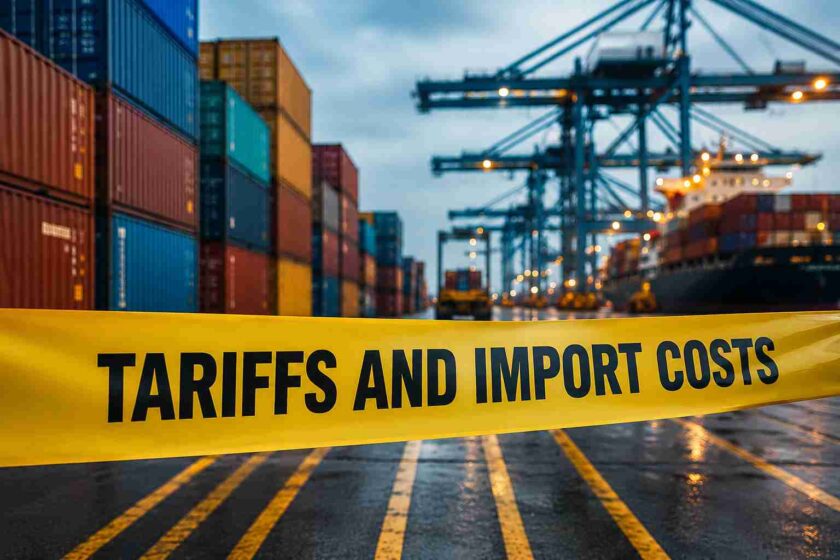
In today’s global marketplace, importing products provides businesses with access to competitive pricing, diverse supplier networks, and expanded growth opportunities. However, import duties remain one of the most significant factors affecting import costs.
For importers, these tariffs are more than just government charges – they directly influence product pricing, landed costs, profit margins, cash flow, and supply chain decisions. Whether you’re importing consumer goods, industrial equipment, raw materials, or eCommerce products, understanding tariffs is essential for maintaining profitability and avoiding unexpected costs.
At TEU Global, we help businesses navigate international shipping, customs clearance, and import compliance to ensure smooth and cost-effective trade operations. This guide explains how import duties and customs charges work, how they affect import costs, and how importers can manage their impact effectively.
What Are Tariffs?
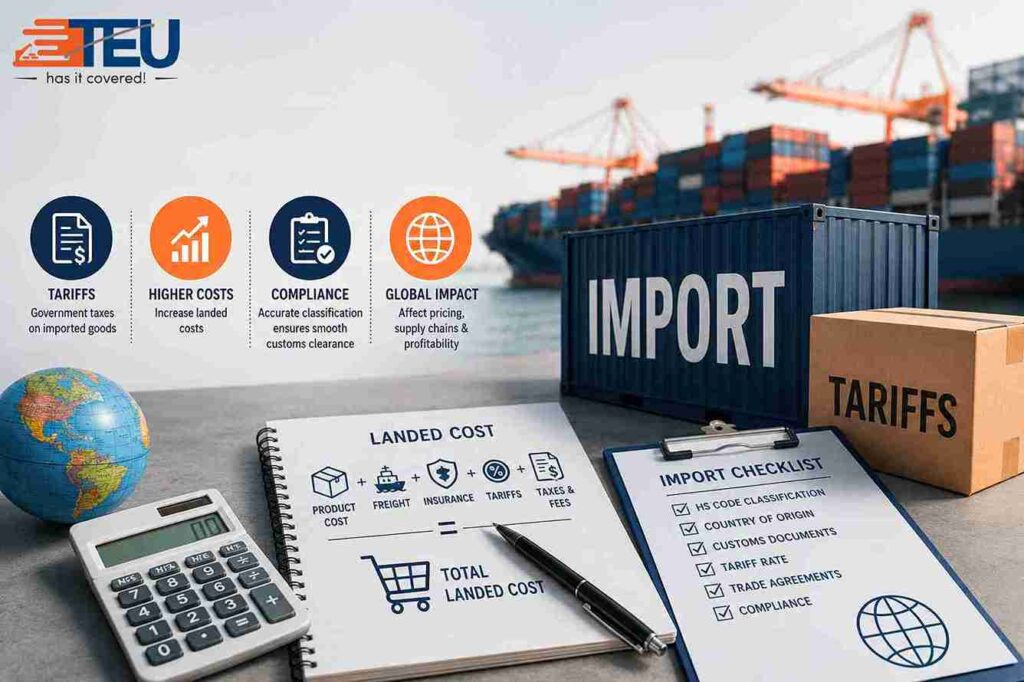
Tariffs are taxes imposed by governments on imported goods entering a country. These charges are typically paid before customs authorities release shipments for delivery.
Governments implement these import duties for several reasons:
- Protect domestic industries from foreign competition
- Generate government revenue
- Regulate international trade
- Encourage local manufacturing
- Influence trade relationships between countries
From an importer’s perspective, these customs charges increase the overall cost of bringing goods into a market. The amount payable depends on factors such as:
- Product classification (HS/HTS Code)
- Country of origin
- Product value
- Applicable trade agreements
- Current trade policies
Major Factors That Affect Tariff Rates:
| Factor | Impact on Tariff |
| HS Code Classification | Determines applicable duty rate |
| Country of Origin | May qualify for trade agreement benefits |
| Product Type | Different products have different rates |
| Trade Policies | Governments may increase or decrease tariffs |
| Customs Valuation | Affects total duty calculation |
Source: World Customs Organization (WCO)
Understanding import duty requirements before importing allows businesses to make informed sourcing and pricing decisions.
Why Should Importers Care About Tariffs?
Many importers focus primarily on supplier pricing and freight expenses. However, tariffs can significantly impact the total cost of imported goods and directly affect profitability.
Higher Landed Costs
Tariffs increase the total landed cost of a shipment.
Landed cost typically includes:
- Product purchase price
- Ocean freight or air freight charges
- Insurance costs
- Customs duties and tariffs
- Taxes and government fees
Even a modest increase in tariff rates can significantly raise overall import costs.
Reduced Profit Margins
Higher import costs can directly reduce profit margins.
When tariffs rise, businesses generally have three options:
- Absorb the cost
- Increase product prices
- Find alternative sourcing solutions
Absorbing tariff costs may reduce profitability, while increasing prices can affect competitiveness.
Increased Product Prices
When import costs rise, businesses frequently pass those expenses to customers.
This can result in:
- Higher retail prices
- Reduced customer demand
- Competitive disadvantages
- Lower sales volumes
Importers must carefully balance pricing strategies to maintain market share.
Cash Flow Challenges
Tariffs are generally paid during customs clearance before products are released.
For importers moving large shipment volumes, tariff payments can create significant cash flow pressures.
Effective financial planning helps businesses mitigate disruptions caused by unexpected customs-related expenses.
How Tariffs Affect International Shipping
Tariffs impact more than just taxes. They influence multiple areas of international logistics and supply chain management.
Customs Clearance
Customs authorities evaluate shipments based on:
- Product descriptions
- HS codes
- Country of origin
- Declared value
Incorrect tariff calculations can lead to:
- Customs delays
- Additional inspections
- Fines and penalties
- Shipment holds
Accurate documentation is essential for efficient customs clearance.
Import Documentation
Tariff assessments rely on complete and accurate paperwork.
Required documents may include:
- Commercial invoices
- Packing lists
- Bills of lading
- Certificates of origin
- Product specifications
Missing or incorrect information can delay shipments and increase costs.
Supply Chain Planning
Changes in tariff policies can force businesses to reassess:
- Supplier locations
- Manufacturing strategies
- Inventory management
- Distribution networks
Importers that proactively monitor tariff developments can adapt more effectively and strengthen supply chain resilience.
Freight Budgeting
Tariffs should always be included when calculating shipping expenses.
Many businesses budget for:
- Freight costs
- Warehousing
- Insurance
But overlook customs duties and tariffs, leading to unexpected financial burdens.
How Importers Calculate Tariffs
Understanding tariff calculations helps businesses estimate import costs accurately.
Step 1: Determine Product Value
Customs value is generally based on:
- Product cost
- Freight charges
- Insurance costs
Step 2: Identify the Correct HS/HTS Code
Every imported product is assigned a Harmonized System (HS) code.
This code determines:
- Applicable tariff rates
- Regulatory requirements
- Import restrictions
Incorrect classification can result in:
- Overpayment
- Underpayment
- Compliance issues
- Customs penalties
Step 3: Determine the Tariff Rate
Assume the applicable tariff rate is 10%.
Calculation:
$10,000 × 10% = $1,000
Tariff Due = $1,000
Step 4: Calculate Total Landed Cost
Total landed cost represents the complete expense of importing goods, not just the product purchase price. Importers should account for all costs associated with moving products from the supplier to the final destination, including freight charges, insurance, customs duties, tariffs, taxes, and other applicable fees.
Calculating landed cost accurately helps businesses evaluate profitability, set appropriate pricing, manage budgets, and make informed sourcing decisions before placing import orders.
Common Tariff Mistakes Importers Make
Using Incorrect HS Codes
One of the most common importing mistakes is assigning the wrong product classification.
This can result in:
- Overpayment of duties
- Customs audits
- Delays
- Regulatory penalties
Underestimating Landed Costs
Many businesses focus only on product pricing while ignoring:
- Freight charges
- Customs duties
- Taxes
- Administrative fees
This leads to inaccurate pricing and lower profitability.
Ignoring Trade Policy Changes
Tariff rates and trade regulations can change rapidly.
Businesses that fail to monitor updates may experience:
- Unexpected costs
- Compliance risks
- Supply chain disruptions
Choosing Suppliers Based Only on Product Cost
A lower purchase price does not necessarily translate into lower overall landed costs.
Importers should evaluate:
- Freight expenses
- Tariff rates
- Transit times
- Customs requirements
The lowest supplier price may not deliver the lowest landed cost.
How Importers Can Reduce Tariff Impact
Although tariffs cannot always be avoided, businesses can minimize their impact through strategic planning and informed sourcing decisions.
Diversify Sourcing Locations
Sourcing from multiple countries helps reduce dependency on regions subject to high tariff rates.
Regular supplier evaluations can uncover more cost-effective alternatives.
Ensure Accurate Product Classification
Correct HS code classification helps businesses:
- Avoid penalties
- Prevent overpayment
- Improve customs compliance
- Speed up clearance processes
Utilize Free Trade Agreements
Many countries have trade agreements that provide:
- Reduced duty rates
- Preferential treatment
- Duty-free imports for qualifying products
Understanding trade agreement eligibility can generate substantial savings.
Consolidate Shipments
Combining multiple shipments into one freight movement can:
- Reduce transportation costs
- Improve inventory planning
- Increase logistics efficiency
Work with Experienced Freight Forwarders
Professional freight forwarders and logistics providers help importers:
- Manage customs documentation
- Ensure compliance
- Calculate duties accurately
- Navigate changing tariff regulations
This minimizes costly mistakes and improves operational efficiency.
| Challenge | How TEU Global Help |
| Tariff Calculation | Provides guidance on import costs |
| Customs Clearance | Supports compliant documentation |
| Shipping Delays | Coordinates efficient freight movement |
| Cost Management | Identifies logistics optimization opportunities |
| Supply Chain Visibility | Improves shipment tracking and planning |
How TEU Global Helps Importers Manage Tariffs
Managing tariffs and customs regulations can be complex, especially for growing businesses expanding internationally.
At TEU Global, we support importers through:
Customs Clearance Support
Our team helps ensure shipments comply with customs regulations and avoid unnecessary delays.
Documentation Management
We assist with preparing and reviewing critical shipping documents to reduce compliance risks.
Freight Forwarding Solutions
From ocean freight and air freight to multimodal transportation, TEU Global helps businesses move cargo efficiently across global markets.
Supply Chain Optimization
We help importers analyze shipping routes, sourcing strategies, and logistics costs to improve overall supply chain performance.
Import Cost Visibility
By understanding duties, tariffs, and landed costs upfront, businesses can make smarter purchasing decisions and improve profitability.
FAQs
How are tariffs calculated on imports?
Tariffs are usually calculated as a percentage of the customs value of imported goods.
Do tariffs affect freight costs?
No. Tariffs are separate from freight charges but increase overall import costs.
Can freight forwarders help with tariff compliance?
Yes. Freight forwarders help with documentation, classification, and customs compliance.
What is the difference between tariffs and customs duties?
Tariffs are taxes on imports, while customs duties is a broader term for import-related charges.
How do tariffs affect landed cost?
Tariffs increase landed cost by adding extra charges to imported goods.
Conclusion
Tariffs play a critical role in international trade and directly affect import costs, profit margins, pricing strategies, and supply chain operations. Businesses that understand tariff structures and proactively account for their impact are better positioned to maintain competitiveness and profitability.
By accurately calculating landed costs, staying informed about trade regulations, and working with experienced logistics partners, importers can reduce risk and improve operational efficiency.
TEU Global helps businesses navigate tariffs, customs requirements, freight forwarding, and international shipping complexities with confidence.
Stay informed about changing tariff regulations and global trade developments. Visit the TEU Global blog regularly for the latest insights on tariffs, customs compliance, international shipping, and supply chain management to help you make smarter importing decisions.
Need help managing import costs and customs requirements? Contact TEU Global today to speak with our logistics experts.