
Logistics
There are few invoices an importer hates more than a demurrage and detention bill. The cargo arrived. The container was picked up. Everyone did their job. And yet, somehow, you owe thousands of dollars in fees you did not budget for. If you have ever stared at one of those invoices and wondered how it got so big so fast, you are not alone.
At TEU Global, we work with importers every day to keep these charges as low as possible, and where we can, to avoid them entirely. The truth is that demurrage and detention are not unavoidable. They are predictable, manageable, and in most cases preventable. This guide breaks down what these fees actually are, why they are climbing in 2026, where they come from, and what you can do to protect your margins.
What Are Demurrage and Detention Fees?
Demurrage and detention are two separate charges, even though they often show up on the same invoice. Importers tend to bundle them together in conversation, but they are triggered by different events and apply at different stages of the move.
Demurrage in Plain English
Demurrage is what you pay when your container sits inside the marine terminal longer than the free time the steamship line allowed. The terminal wants the container off its yard. Every extra day you take to pick it up costs you.
Detention in Plain English
Detention starts the moment your container leaves the terminal and ends when the empty is returned. Steamship lines lend you the container for a set number of days. If you keep it longer, detention applies. The line wants its equipment back.
Per Diem (The Cousin You Will Hear About)
Per diem is sometimes used interchangeably with detention, especially in domestic intermodal moves. It is the daily charge for keeping equipment beyond its allowed free time. Different carriers use the term slightly differently, so always check your contract.
Why These Fees Are So Expensive in 2026
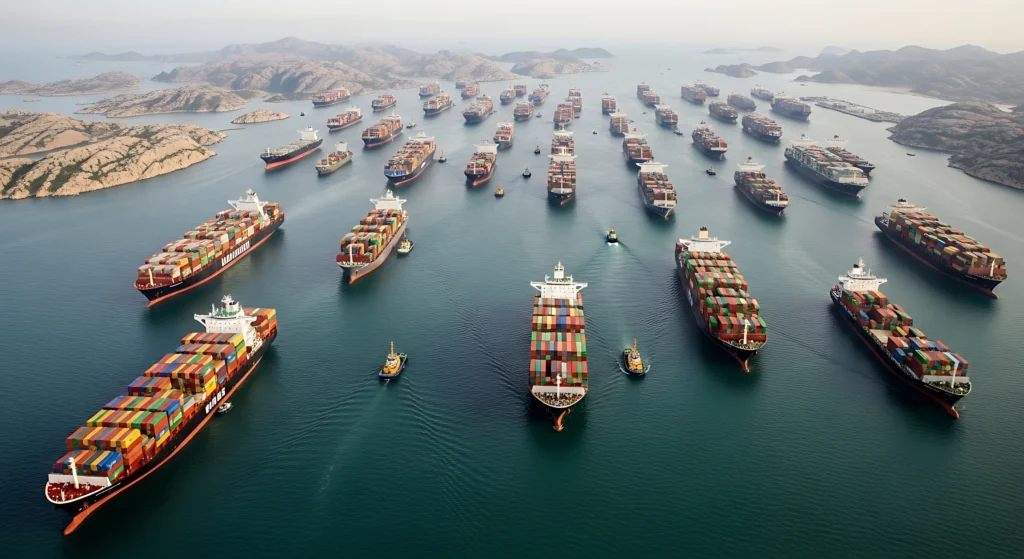
Demurrage and detention have been climbing for years, and 2026 is no exception. A few forces are pushing rates higher across most U.S. ports.
- Tighter free time. Many steamship lines and terminals have shortened the free days they offer, especially during peak season.
- Stricter return rules. Empty container return appointments are harder to get at certain ports, which makes detention almost automatic in some cases.
- Tiered pricing. Charges often start moderate and then escalate fast after a few days, sometimes doubling within a week.
- Equipment imbalance. When chassis and containers are misallocated, importers pay the price even when delays are not their fault.
- Port congestion. Vessel bunching, labor shortages, and weather still trigger short-term spikes that push containers past their free time.
The Federal Maritime Commission has been actively reviewing these charges, especially under the Ocean Shipping Reform Act of 2022. Importers now have more recourse than they used to, but the best strategy is still to avoid the fees in the first place.
How Free Time Works at U.S. Ports
Free time is the window the steamship line and the terminal give you to handle the container without being charged. Each carrier sets its own rules and they vary by port and trade lane, but the basic structure usually looks like this:
- Demurrage free time: typically 3 to 5 calendar days from the time the container is discharged or made available for pickup.
- Detention free time: typically 4 to 7 calendar days from the time the container leaves the terminal until the empty is returned.
- Combined free time: some lines offer a combined demurrage and detention package, which gives more flexibility on either side.
Weekends and holidays sometimes count, sometimes do not. This is where reading the fine print really pays off, because what looks like a generous free time window on paper can be tighter than expected once non-working days are excluded or included.
Common Reasons Importers Get Hit with These Charges
After years of helping clients fight and prevent these charges, we see the same root causes again and again.
Late or Incorrect Customs Documentation
If your Importer Security Filing, commercial invoice, packing list, or arrival notice is missing or wrong, customs cannot release the container. Every day lost in clearance is a day eating into free time. Our deep dive on the customs clearance process explains how to keep documentation tight from the start.
Customs Examinations
If U.S. Customs and Border Protection flags your container for an exam, it can sit for several days. Most lines do not pause demurrage during exams unless you have a specific tariff exemption.
Missed Appointments
Most major U.S. ports require pre-booked terminal appointments. If your trucker cannot get an appointment within free time, demurrage starts even though no one missed a deadline on purpose. This is one reason why drayage coordination and customs clearance need to live under one roof.
Slow Receivers
If your warehouse cannot unload the container quickly, you are paying detention every extra day. Live unloads are especially risky during peak season, which is why warehouse management and dock scheduling matter so much.
Empty Return Bottlenecks
Some terminals limit which empties they accept on which days. A container ready to return on Friday might not be welcomed back until Tuesday, and detention runs the whole time.
Communication Breakdowns
When the customs broker, the trucker, the steamship line, and the warehouse are not aligned, somebody drops the ball. Most demurrage and detention bills can be traced back to a missing message somewhere in this chain.
Practical Ways to Avoid Demurrage and Detention
The best time to fight these charges is before they happen. These are the steps that consistently make the biggest difference for our clients.
- File ISF on time. The Importer Security Filing has to be submitted at least 24 hours before the cargo is loaded onto the vessel at origin. Late ISF is a common reason cargo gets flagged.
- Pre-clear with customs. Send commercial invoices and packing lists to your broker as soon as you have them, not when the vessel arrives. Pre-clearance can save days.
- Track vessel ETAs daily. Vessel arrivals shift constantly. Your trucker and broker should be working from the latest ETA, not last week’s schedule.
- Pre-pull when needed. If your warehouse cannot unload right away, pre-pulling the container to a yard near the port can stop demurrage even though the freight has not been delivered yet.
- Negotiate free time. Larger volume importers can often negotiate longer free time as part of their service contract with the steamship line.
- Plan for empties. Know where and when each port accepts empty returns. Build the return into your dispatch plan, not as an afterthought.
- Use one coordinated partner. The fewer hand-offs in the chain, the fewer chances for the ball to drop.
What to Do If You Are Already Facing Charges
Sometimes the bill arrives anyway. When it does, do not just pay it. Many demurrage and detention invoices contain charges that can be disputed or reduced.
- Audit the invoice line by line. Make sure free time was calculated correctly, including weekends, holidays, and the actual day the container became available.
- Pull the proof. Gate-in and gate-out timestamps, customs release dates, and exam records are your evidence. Get them quickly.
- Identify carrier-side delays. If the line did not provide a chassis, did not accept the empty return, or canceled an appointment, you have a case for credit.
• Check FMC guidance. The Federal Maritime Commission has issued rules on what counts as a reasonable charge under the Ocean Shipping Reform Act. Charges that do not align with that guidance can sometimes be challenged.
- Submit a formal dispute. Most carriers have a written dispute process. File within their stated window, with documentation, and follow up in writing.
How a 3PL Like TEU Global Helps You Avoid These Fees
Most demurrage and detention problems are coordination problems. The container is not stuck because anyone wants it stuck. It is stuck because someone in the chain did not have the information they needed at the time they needed it. That is exactly the gap a strong 3PL closes.
At TEU Global, we manage ocean freight, customs clearance, drayage, and warehousing as part of one connected end-to-end distribution model. When a vessel is delayed, our customs team already knows. When a container is released, our drayage dispatchers see it instantly. When the warehouse is running tight on dock space, we adjust pickups before detention starts. Our clients pay less in demurrage and detention not because we negotiate harder, but because we prevent the situations that cause the fees.
We also help clients audit invoices, file disputes, and recover charges when something does slip through. The combination of prevention and recovery is usually where the real savings live.
FAQs About Demurrage and Detention
1. Are demurrage and detention the same thing? No. Demurrage applies while the container is inside the terminal. Detention applies after the container leaves the terminal and before the empty is returned.
2. How much do these fees usually cost? Daily charges vary by port and carrier, often starting at a few hundred dollars per container per day and escalating after the first few days. On a single container, totals can climb into the thousands quickly.
3. Does free time include weekends and holidays? It depends on the carrier and the port. Some count calendar days, others count working days. Always check the specific tariff that applies to your shipment.
4. Can demurrage charges be disputed? Yes. If you have evidence that the carrier or terminal caused the delay, or that the invoice itself is calculated wrong, charges can often be reduced or waived.
5. How does TEU Global help reduce these charges? We coordinate ocean freight, customs, drayage, and warehousing as a single service so containers move before free time runs out, and we audit and dispute charges when they do appear.
Final Thoughts
Demurrage and detention feel inevitable, but they are not. Most of the bills we see could have been avoided with better timing, better information, and better coordination. The importers who win at this game are not the ones with the lowest ocean rates. They are the ones who keep their containers moving, their paperwork clean, and their dispatch tight.
If you are tired of seeing surprise charges on your monthly statements, the best move is to look at where in your chain those delays actually start. Once you know that, you can fix it, and the savings show up fast.