Compliance & Regulations
At TEU Global, we deal with the customs clearance process every single day. It’s one of the most important parts of international logistics, and it’s also one of the most misunderstood. Many companies see customs as paperwork that just needs to be filed. From our experience, it’s far more than that.
Customs clearance is where preparation, accuracy, and judgment all come together. When it’s handled correctly, shipments move smoothly. When it isn’t, delays and unexpected costs tend to follow. Over the years, we’ve learned that success at customs starts long before cargo arrives at the border.
How We View the Customs Clearance Process
To us, the customs clearance process is not just a regulatory step. It’s a risk-management function. Every shipment tells a story through its documents, and customs authorities are trained to read that story closely.
We focus on consistency. Product descriptions, declared values, and classifications need to align not just within one shipment, but across multiple entries over time. When customs sees clear, repeatable information, they ask fewer questions. That consistency builds credibility, and credibility keeps cargo moving.
Where We See Most Customs Issues Originate
Most customs problems don’t come from serious violations. They come from small oversights.
We often see issues caused by:
- Vague or overly generic product descriptions
- HS codes reused without proper review
- Minor value discrepancies between documents
- Assuming regulations haven’t changed
These details may seem minor, but they can slow the customs clearance process quickly. That’s why we place so much emphasis on reviewing documentation before a shipment is ever filed.
What Happens When Cargo Arrives
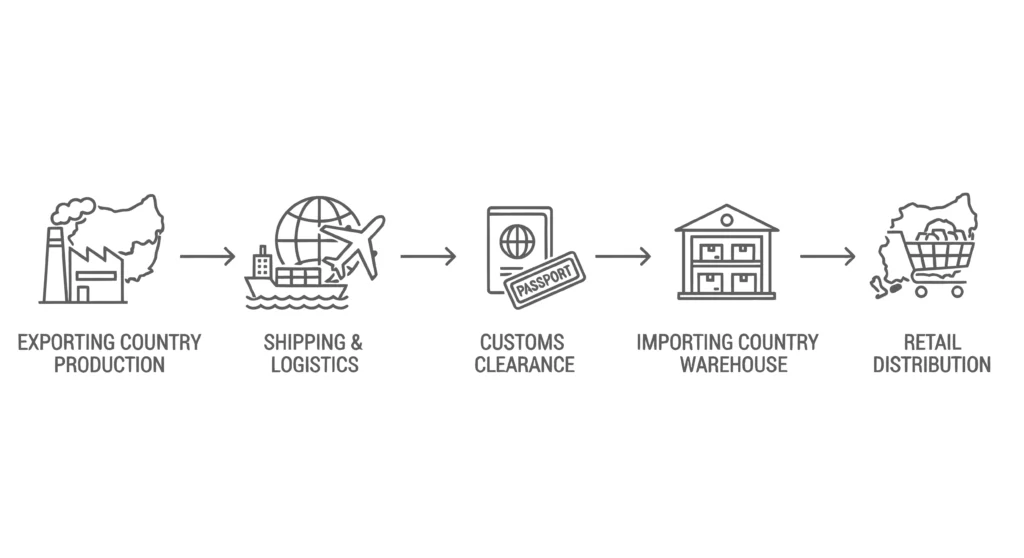
Once cargo arrives at a port or airport, the carrier submits a manifest to customs. A customs declaration is then filed, either by the importer or through a licensed customs broker.
From our experience, inspections are not truly random. Shipments with clear documentation and a solid compliance history tend to move faster. Customs authorities rely on risk profiling, and accurate data plays a major role in how that risk is assessed.
Over time, we’ve seen that preparation reduces friction at this stage of the customs clearance process.
Duties, Taxes, and Cargo Release
After reviewing the declaration, customs assesses duties and taxes based on classification, value, and applicable trade rules. Once payment is completed, the shipment is released.
When documentation is accurate and complete, this step is straightforward. When it isn’t, even small corrections can delay release. That’s why we treat duty assessment as part of planning, not an afterthought.
How We Support Customs Clearance at TEU Global
At TEU Global, our role is to make the Customs Clearance Process predictable and manageable for our clients. Through our dedicated customs clearance services, we support importers by reviewing classifications, validating documentation, and coordinating directly with customs authorities.
We don’t just focus on clearing a shipment. We focus on reducing the likelihood of issues on future shipments. That long-term approach is what helps our clients maintain consistency and avoid unnecessary delays.
Because customs is closely tied to transportation and compliance, our team works in coordination with other logistics functions. Clients can learn more about our broader capabilities through the TEU Global website.
Common Challenges We See in Customs Clearance
Even well-managed shipments can face challenges.
Regulations evolve constantly. Tariffs, sanctions, and documentation requirements change, sometimes with little notice. We also see delays caused by port congestion or inspections that are outside anyone’s control.
What makes the difference is how prepared a shipment is when those challenges arise. Clear documentation and strong compliance history often shorten resolution time.
How We Help Improve the Customs Clearance Process Over Time
We believe customs clearance improves with discipline and consistency.
We help clients standardize product descriptions, review classifications regularly, and maintain organized compliance records. When something isn’t clear, we address it early instead of making assumptions.
We also stay aligned with global and national guidance. Standards from the World Customs Organization influence how customs administrations operate worldwide. For U.S. imports, we closely follow updates from U.S. Customs and Border Protection to ensure our clients remain compliant.
Our goal isn’t perfection. It’s predictability and control.
Frequently Asked Questions
How long does the customs clearance process usually take?
When documentation is complete and accurate, clearance can often be completed within one business day. Inspections or missing information can extend that timeline.
Does customs clearance apply to exports as well?
Yes. Export shipments also go through a customs clearance process to meet regulatory and security requirements.
Can customs clearance be completed before cargo arrives?
In many cases, advance filing is possible and can significantly speed up the release process once cargo arrives.
What causes most customs delays?
The most common causes we see are incomplete documentation, incorrect classification, unpaid duties, and regulatory changes.
Is customs clearance only important for large importers?
No. Small and mid-sized businesses face the same customs requirements, and delays can have an even greater impact on their operations.
How does TEU Global reduce customs clearance risks?
We focus on proactive review, accuracy, and compliance consistency, helping our clients avoid avoidable delays and penalties.
Final Thoughts
At TEU Global, we see the customs clearance process as a critical part of successful global trade. When customs is treated as an afterthought, delays and costs increase. When it’s treated as part of a broader logistics strategy, it becomes far more manageable.
By combining experience, preparation, and regulatory awareness, we help our clients move goods across borders with greater confidence and fewer disruptions. Over time, that reliability becomes a competitive advantage.