LogisticsInformational
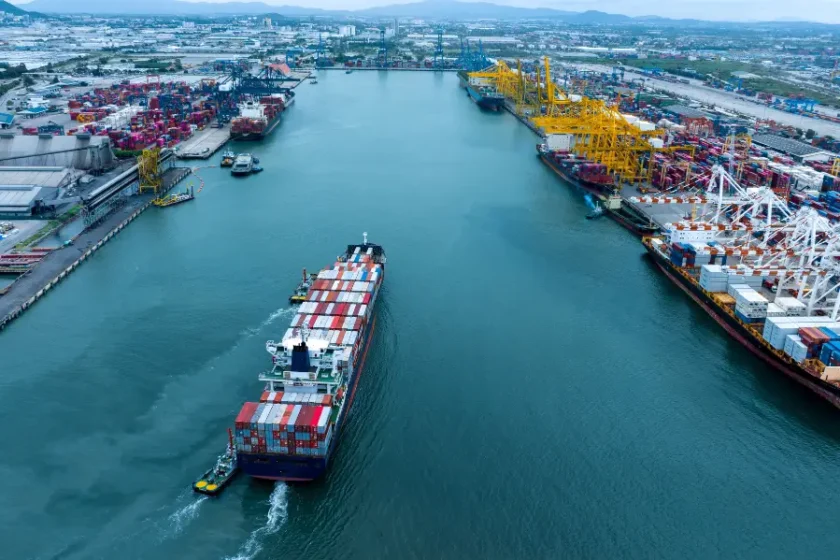
If you import goods into the United States, you’ve probably hit this wall: your container is sitting at the port, demurrage fees are ticking up by the day, and there’s no direct route to get your freight where it actually needs to go. This is exactly the problem transloading was built to solve.
Transloading is the process of transferring freight from one mode of transportation to another — for example, moving cargo out of an ocean container and reloading it onto a domestic truck, railcar, or smaller container for the next leg of its journey. It’s one of the most effective ways US shippers reduce costs, avoid port congestion, and keep freight moving without being locked into a single, often inefficient, shipping route.
In this guide, we’ll break down exactly how transloading works, when you need it, what it costs, and how to choose the right transloading partner in the US.
How Transloading Works: Step by Step
A typical transloading operation moves through five stages:
- Cargo receipt — Freight arrives at a port, rail terminal, or transload facility, and documentation is verified against the shipment.
- Unloading and inspection — The container is opened, and goods are checked, counted, and sorted by destination or SKU.
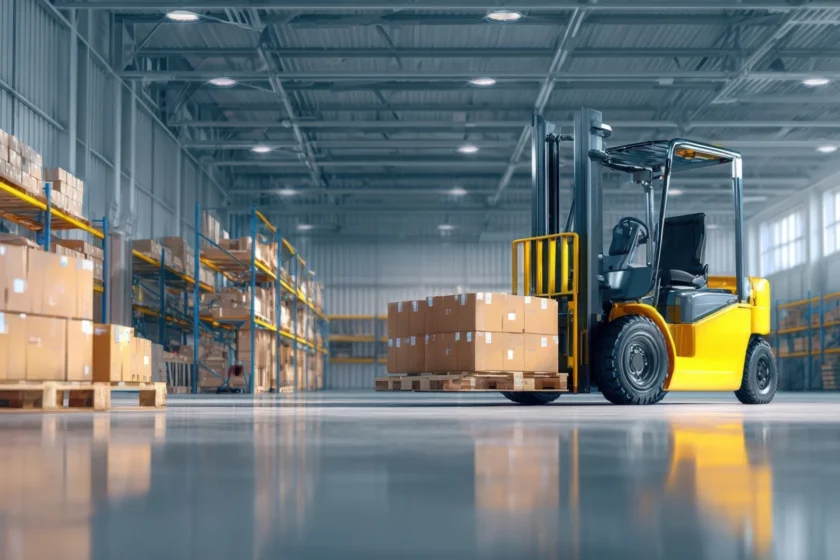
- Mode transfer — Freight is reloaded into domestic trailers, railcars, or smaller containers, depending on the most efficient route forward.
- Value-added handling — Many transload facilities also offer palletizing, labeling, kitting, or repackaging to meet retailer or distributor requirements.
- Final dispatch — The freight is shipped out via truckload, intermodal rail, or LTL (less-than-truckload) to its final destination.
The entire point is flexibility: instead of one rigid shipping mode from port to door, transloading lets you switch modes wherever it’s fastest or cheapest, making it an important part of effective freight forwarding services.
Transloading vs. Drayage vs. Cross-Docking
These three terms get confused constantly, so here’s the quick distinction:
| Term | What It Means |
| Transloading | Transferring freight between different transportation modes (e.g., ocean container to rail or truck), often with sorting or repackaging involved |
| Drayage | Short-distance movement of a container, typically from a port to a nearby warehouse or rail yard — no mode change |
| Cross-docking | Unloading freight from an inbound truck/container and loading it directly onto an outbound vehicle with little to no storage in between |
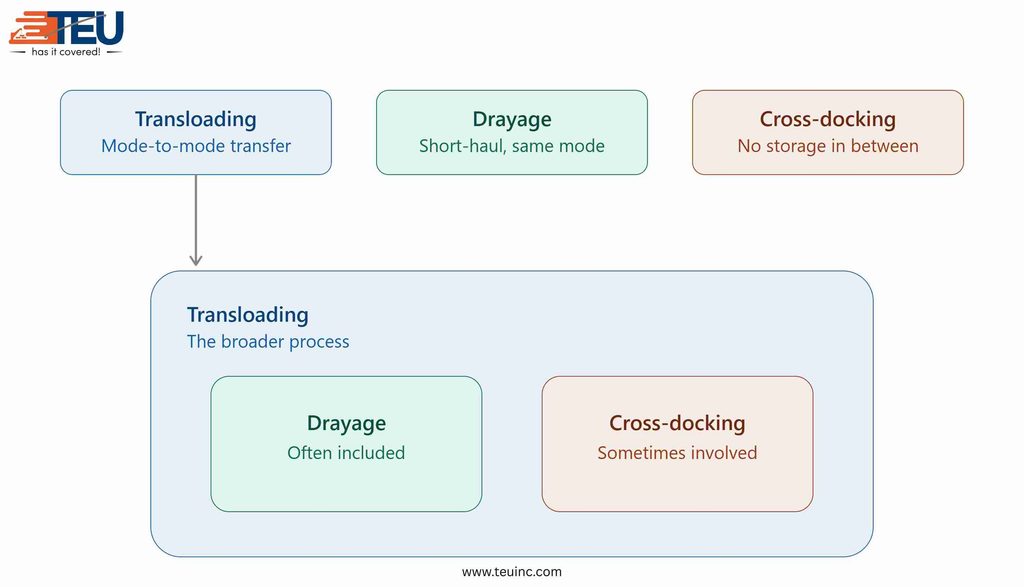
Transloading is broader than both — it often includes a drayage move and can involve cross-docking, but its defining feature is the mode-to-mode transfer.
Why US Businesses Use Transloading
1. Avoiding Port Congestion and Demurrage Fees
West Coast and East Coast ports regularly face equipment shortages and yard congestion. Transloading lets you move freight out of the port quickly, cutting the demurrage and detention charges that stack up when a container sits too long, while supporting efficient drayage services.
2. Lower Transportation Costs
Ocean containers are often more expensive to move long distances by road than domestic trailers or rail. Transloading two ocean containers into three domestic 53-foot trailers, for instance, can reduce the number of trips needed and lower per-mile freight costs.
3. Overcoming Route and Infrastructure Limitations
Not every destination has direct rail or port access. Transloading bridges that gap — freight arrives by one mode and finishes its journey by whichever mode actually reaches the final delivery point.
4. Consolidation and Flexibility
Multiple partial shipments can be consolidated into a single outbound load, or one large shipment can be split across several smaller ones based on destination — improving efficiency on both ends.
5. Meeting Retailer and Compliance Requirements
Many retailers require specific labeling, palletizing, or packaging before freight reaches their distribution centers. A transload facility with value-added services handles this before the freight ever leaves.
What Does Transloading Cost?
Transloading costs vary based on cargo type, volume, and facility location, but generally include:
- Handling fees — per-container or per-pallet unloading and sorting charges
- Storage fees — if freight sits at the facility before the next mode is arranged (usually billed per day after a free period)
- Value-added service fees — labeling, palletizing, kitting, or repackaging
- Outbound transportation — the truck, rail, or LTL cost for the next leg
Because there’s no single fixed price, the most reliable way to budget for transloading is to work with a licensed 3PL that can quote your specific commodity, volume, and route — which is exactly where an NVOCC-licensed partner adds value: transparent, itemized quotes instead of bundled guesswork.
Who Needs Transloading Services?
Transloading makes sense if you:
- Import through West Coast ports but need freight to reach East Coast or Midwest markets
- Are consistently paying demurrage or detention fees due to port delays
- Need to consolidate or split shipments across multiple destinations
- Ship FDA-, USDA-, or other agency-regulated goods that require extra documentation handling
- Work with retailers that have strict labeling or delivery-appointment requirements
Why Work With an NVOCC-Licensed, C-TPAT-Compliant Partner
Not every transload provider is built for the compliance side of US trade. TEU Global is Federal Maritime Commission NVOCC-licensed, C-TPAT-compliant, ISO-certified, IATA-licensed, and NCBFAA-registered — which matters because transloaded freight still has to clear US regulatory checkpoints correctly the first time. Errors in documentation or handling at the transload stage are a common cause of delays with FDA, USDA, and other participating government agencies.
TEU Global’s transloading services cover:
- Port-to-rail and port-to-truck transloading across major US gateways
- Warehousing and short-term storage
- Freight consolidation and deconsolidation
- Labeling, palletizing, and retailer-compliance packaging
- Full visibility from port receipt to final delivery
Frequently Asked Questions
What is the difference between transloading and intermodal shipping?
Intermodal shipping refers to a shipment traveling in the same container across multiple transport modes (ship, rail, truck) without the freight itself being unloaded. Transloading specifically involves unloading and reloading the freight into a different container or mode.
Is transloading cheaper than direct shipping?
It can be, especially over long inland distances, since domestic trailers and rail are often more cost-effective than moving an ocean container the full distance. Savings depend on route, volume, and how much time freight would otherwise spend paying storage or demurrage fees at the port.
How long does transloading take?
Most transload operations take 24–72 hours from receipt to outbound dispatch, though this varies by facility volume, cargo type, and whether value-added services like palletizing are required.
Do I need a customs broker for transloading?
Yes — customs clearance typically needs to be completed before or during the transload process, especially for regulated goods. Working with a licensed 3PL that also handles customs clearance keeps this from becoming a bottleneck.
Ready to Move Your Freight Faster?
If port delays, demurrage fees, or rigid shipping routes are cutting into your margins, transloading is one of the most direct ways to fix it. TEU Global’s transload network, backed by NVOCC licensing and C-TPAT compliance, is built to get your freight moving — compliantly and on schedule.
Request a Free Quote → https://teuinc.com/services/logistics-consulting-services