

LogisticsInformational
When goods are shipped internationally, they don’t always go straight from one port to another. Sometimes, cargo stops at an intermediate port and is transferred to another vessel before continuing its journey. This is called transshipment.
What does transshipment mean in shipping?
Transshipment is the process of moving cargo from one vessel, vehicle, or mode of transportation to another before it reaches its final destination.
For example, a container traveling from China to the United States may not go directly to the U.S. Instead, it could first arrive at a major shipping hub such as Singapore, where it is transferred from one vessel to another vessel heading toward the United States. This transfer is known as transshipment.
Understanding transshipment can help importers and exporters make better sense of shipping routes, transit times, tracking updates, and potential delays.
What Does Transshipment Mean in Shipping?
Transshipment means transferring cargo from one transportation carrier or vessel to another during its journey to the final destination.
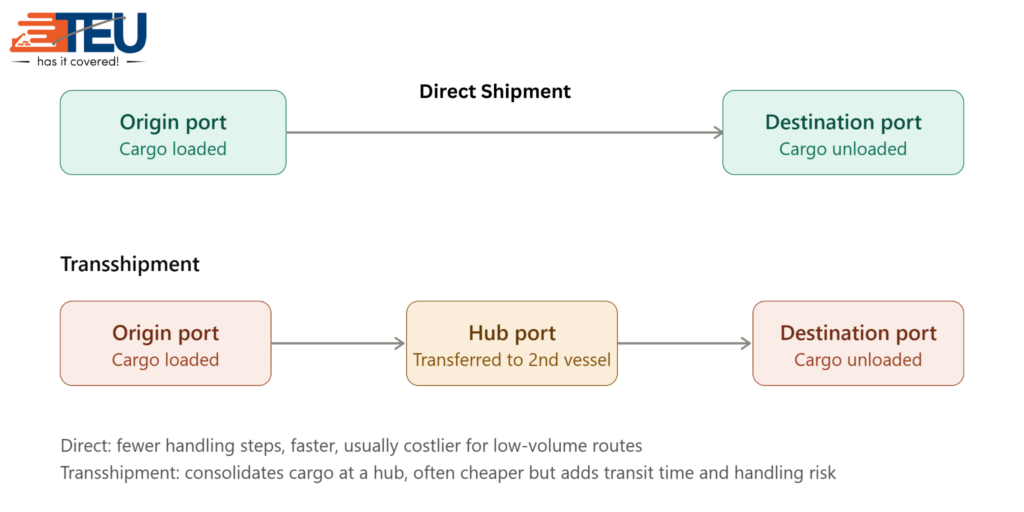
Unlike a direct shipment, where cargo travels from the origin port to the destination port without being transferred to another vessel, a transshipment shipment involves an intermediate location.
A simple example:
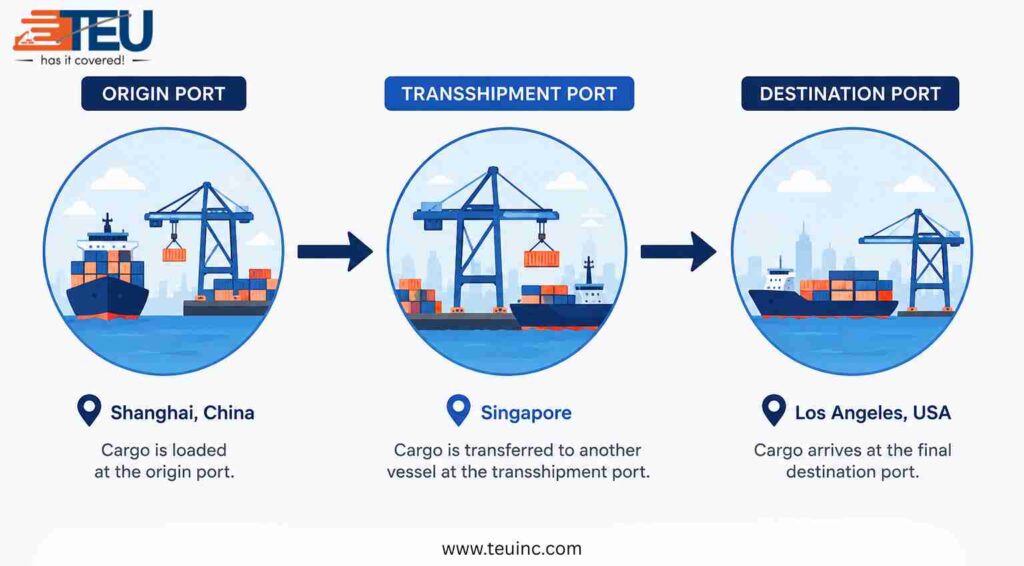
Imagine you are shipping a container from Shanghai to New York.
Instead of traveling directly:
Shanghai → New York
The container might travel:
Shanghai → Singapore → New York
The container is transferred to another vessel in Singapore. Singapore is therefore the transshipment port, and the transfer is the transshipment process.
How Does Transshipment Work?
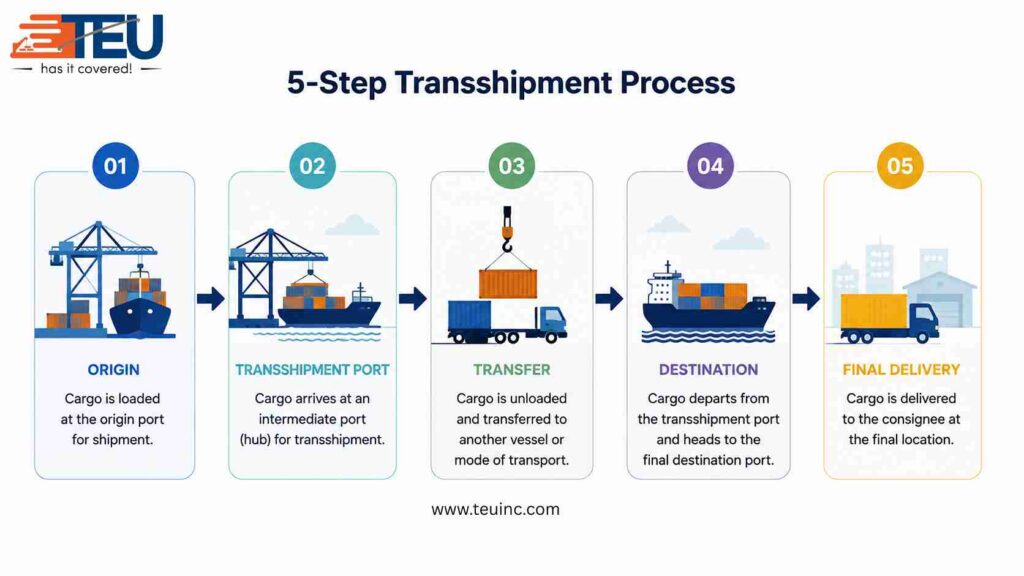
The transshipment process generally involves several steps:
1. Cargo Leaves the Origin Port
The shipment begins its journey at the port where the cargo is originally loaded.
For example, an exporter in China may send a container to the Port of Shanghai.
2. Cargo Arrives at a Transshipment Port
Instead of continuing directly to the final destination, the vessel arrives at an intermediate port.
This port acts as a connection point between different shipping routes.
3. Cargo Is Transferred
The container is unloaded from the first vessel and transferred to another vessel or transportation service.
The container itself may remain sealed while it is transferred between vessels.
4. Cargo Continues to the Destination
Once the container is loaded onto the next vessel, it continues toward its final destination.
For example:
Shanghai → Singapore → Los Angeles
In this example, Singapore is the transshipment point.
5. Cargo Arrives at the Final Destination
The container eventually reaches the destination port, where it can proceed through customs clearance and continue to the importer.
Why Is Transshipment Used?
Transshipment is common in international shipping because not every port has direct connections with every other port.
Shipping carriers use major ports and transportation hubs to connect different routes.
Some common reasons for using transshipment include:
Connecting Different Shipping Routes
A shipping line may not operate a direct service between two ports. Transshipment allows carriers to connect those locations through a major hub.
Accessing Smaller Ports
Large vessels may not call at smaller ports. Cargo can be transported to a major hub and then transferred to a smaller vessel serving the final destination.
Improving Network Efficiency
Shipping companies can organize vessels around major hubs and routes, allowing them to move large volumes of cargo efficiently.
Serving Global Trade Routes
Major transshipment hubs connect different regions of the world and play an important role in international supply chains.
What Is a Transshipment Port?
A transshipment port is a port where cargo is transferred from one vessel or transportation service to another before reaching its final destination.
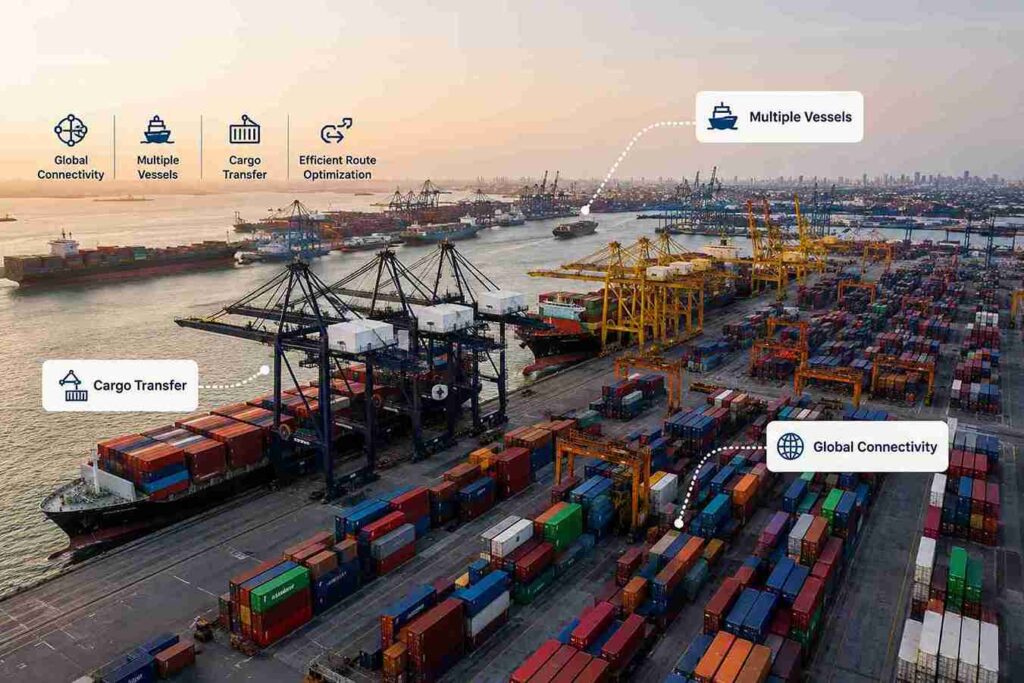
These ports are often strategically located along major international trade routes.
For example, a container might travel:
Port A → Transshipment Port → Port B
The transshipment port serves as an intermediate connection between the origin and destination.
Major global shipping hubs can handle large volumes of containers and connect multiple international routes.
Transshipment Example
Let’s look at a simple example.
Suppose a company in the United States imports products from Vietnam.
The shipment could follow this route:
Ho Chi Minh City → Singapore → Los Angeles
Here is what happens:
- The cargo is loaded onto a vessel in Vietnam.
- The vessel arrives at Singapore.
- The container is transferred to another vessel.
- The second vessel sails toward Los Angeles.
- The container arrives at the destination port.
- The shipment proceeds through customs and final delivery.
The transfer in Singapore is the transshipment.
Transshipment vs Direct Shipment
The main difference between transshipment and direct shipment is whether the cargo is transferred during its journey.
| Transshipment | Direct Shipment |
| Cargo is transferred at an intermediate port | Cargo travels without an intermediate vessel transfer |
| Usually involves multiple vessels or carriers | Usually uses one direct service |
| May have a longer transit time | Often has a shorter transit time |
| Can provide more route options | May have fewer available routes |
| Common in global shipping networks | Available when a direct service exists |
A transshipment route is not necessarily a problem. In many international shipments, it is a normal part of the transportation network.
Does Transshipment Increase Shipping Time?
Transshipment can increase transit time, but the impact depends on the shipping route, carrier schedule, port congestion, and connection between vessels.
When a container arrives at a transshipment port, it may need to wait for the next vessel before continuing its journey.
For example, if the connecting vessel is scheduled to depart several days later, the shipment may spend additional time at the intermediate port.
However, transshipment can also make shipping possible when a direct service is unavailable.
Can Transshipment Cause Delays?
Yes. Although transshipment is a standard part of international shipping, delays can occur.
Possible causes include:
- Port congestion
- Vessel schedule changes
- Bad weather
- Customs or documentation issues
- Missed vessel connections
- Equipment shortages
- Operational disruptions at the transshipment port
For this reason, importers should consider the entire route when estimating delivery times.
Is Transshipment the Same as Transloading?
No. Transshipment and transloading are related but different logistics processes.
Transshipment generally refers to transferring cargo from one vessel or transportation service to another during its journey.
Transloading usually involves moving goods from one mode of transportation or container to another, often when the cargo itself is transferred between equipment.
For example:
Transshipment:
Container ship → Container ship
Transloading:
Container → Truck → Warehouse or another container
The exact terminology can vary depending on the logistics operation and industry context.
What Does “Transshipment” Mean on a Tracking Update?
If you see “transshipment” or a similar status while tracking your shipment, it generally means your cargo is being routed through an intermediate location before continuing to its final destination.
It does not automatically mean that your shipment has a problem.
For example, a tracking route may show:
Origin → Transshipment Port → Destination
The shipment may simply be waiting for its connecting vessel or transportation service.
If the shipment remains at the transshipment location longer than expected, it may be worth contacting your carrier or freight forwarder for an updated estimated arrival time.
Advantages of Transshipment
Transshipment provides several benefits to global supply chains.
More Shipping Options
It allows carriers to connect ports that do not have direct services.
Wider Global Coverage
Shipping lines can use major hubs to connect different regions and markets.
Better Network Utilization
Cargo can be consolidated and moved through established shipping routes.
Access to Smaller Markets
Cargo can reach destinations that may not be directly served by large ocean vessels.
Disadvantages of Transshipment
Despite its benefits, transshipment can also introduce additional complexity.
Longer Transit Times
Waiting for a connecting vessel can increase the total journey time.
Greater Risk of Delays
A delay at one port can affect the next leg of the shipment.
Additional Handling
Every transfer creates another stage in the transportation process.
More Complex Tracking
Tracking information can sometimes become more difficult to understand when a shipment moves through multiple ports.
Why Should Importers Understand Transshipment?
For importers and exporters, understanding transshipment in shipping is important because it can affect the expected arrival date, transportation route, and shipment tracking.
Before booking a shipment, businesses should consider:
- Whether the route is direct or involves transshipment
- The expected transit time
- The transshipment port
- Carrier schedules
- Potential port congestion
- Customs requirements
- The reliability of the connecting service
Knowing how your shipment moves from origin to destination can make it easier to plan inventory and avoid unexpected delays.
Frequently Asked Questions About Transshipment
What is transshipment in simple words?
Transshipment is when cargo is transferred from one vessel, carrier, or transportation service to another before reaching its final destination.
What is an example of transshipment?
A container traveling from China to the United States may move from Shanghai to Singapore and then from Singapore to Los Angeles. The transfer in Singapore is transshipment.
Is transshipment the same as a direct shipment?
No. A direct shipment travels from the origin to the destination without an intermediate vessel transfer. A transshipment shipment uses an intermediate port or hub.
Does transshipment mean my shipment is delayed?
Not necessarily. Transshipment is often a normal part of the shipping route. However, waiting for a connecting vessel or operational problems at the intermediate port can cause delays.
Why do shipping companies use transshipment?
Shipping companies use transshipment to connect different routes, serve ports without direct services, and efficiently move cargo through global transportation networks.
Final Thoughts
Transshipment is an important part of modern international shipping. It allows cargo to move between different shipping routes and connect ports that may not have direct services.
The easiest way to remember the term is:
Transshipment = Cargo transferred at an intermediate location before reaching its final destination.
So, if your container travels from Shanghai → Singapore → Los Angeles, the transfer at Singapore is the transshipment stage.
Understanding terms like transshipment can help importers, exporters, and supply chain professionals better understand shipping routes, tracking updates, and transit times.