

LogisticsInformational
If you’re importing or exporting goods by sea, one of the first decisions you’ll face is FCL vs LCL shipping — and getting it wrong can quietly cost you thousands in wasted space, storage fees, or delayed cargo. Whether you’re shipping a handful of pallets or scaling up to full truckloads of inventory, understanding the difference between Full Container Load (FCL) and Less than Container Load (LCL) is the first step to shipping smarter in 2026.
In this guide, we’ll break down what FCL and LCL actually mean, compare cost and transit time side by side, and help you figure out exactly when to use each — so your next shipment doesn’t cost you more than it should.
Understanding FCL vs LCL shipping before booking your cargo can help you reduce costs, improve transit times, and choose the most efficient shipping method.
What Is FCL in Shipping?
Full Container Load (FCL) means your cargo has an entire shipping container — usually a 20ft or 40ft unit — booked exclusively for your goods. Nobody else’s cargo shares that container. It moves under one bill of lading, gets sealed at origin, and stays sealed until it reaches you.
Best for:
- Shipments over 15 CBM (cubic meters)
- High-value or fragile goods that need minimal handling
- Businesses that want predictable transit times
- Regular shippers with consistent volume
What Is LCL in Shipping?
Less than Container Load (LCL) means your shipment doesn’t fill a full container, so it’s consolidated with cargo from other shippers at a Container Freight Station (CFS), then deconsolidated at destination. You only pay for the space your goods actually occupy.
Best for:
- Smaller shipments under 15 CBM
- Businesses testing a new supplier or market
- Startups and SMBs not yet shipping at volume
- Non-fragile, non-time-sensitive goods
FCL vs LCL Cost Comparison
When comparing FCL vs LCL shipping costs, it’s important to consider handling fees and destination charges—not just the base freight rate. This is where most importers get tripped up. LCL looks cheaper on paper — you’re only paying for the space you use — but the full cost picture includes more than the freight rate.
In the FCL vs LCL shipping comparison, FCL is usually the better choice for larger, high-volume shipments.
| Factor | FCL | LCL |
| Pricing model | Flat rate per container | Priced per CBM |
| Best value at | 15+ CBM | Under 15 CBM |
| Handling fees | Lower (single shipper) | Higher (CFS consolidation/deconsolidation) |
| Damage risk | Lower | Slightly higher (shared handling) |
| Hidden costs | Minimal | Storage, CFS, and destination handling can add up fast |
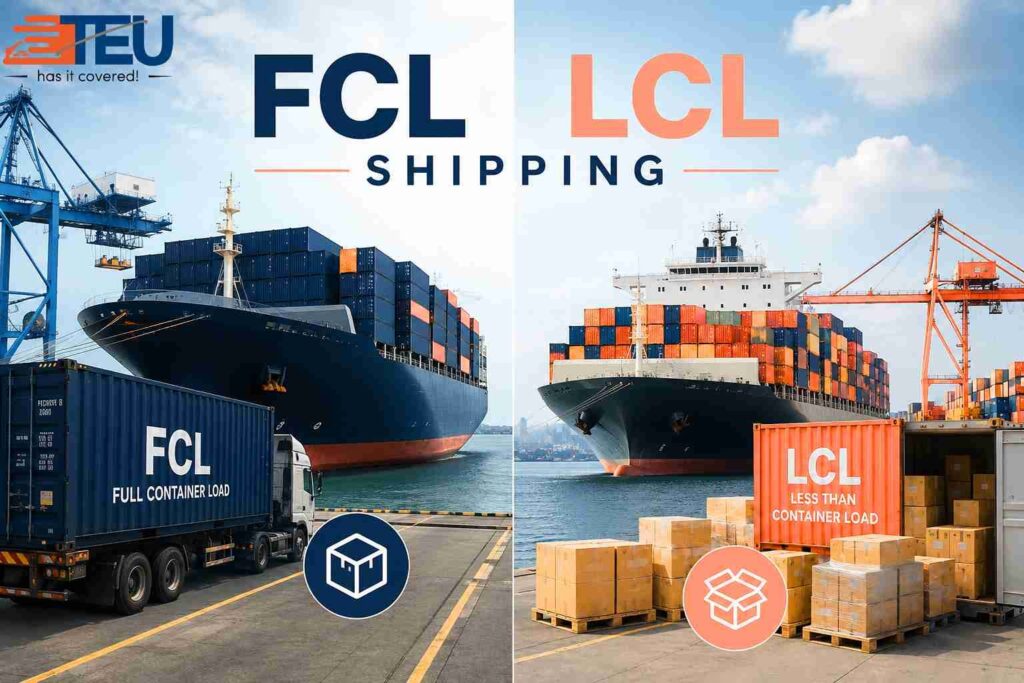
FCL vs LCL: FCL offers lower handling and better value for larger shipments, while LCL is ideal for smaller cargo but may involve additional destination charges.
FCL LCL Transit Time
Speed is often the deciding factor for businesses working against tight delivery windows.
- FCL ships as soon as your container is sealed and loaded — no waiting on other shippers.
- LCL requires your cargo to be consolidated with other shipments before the container departs, and deconsolidated again at destination. This adds days on both ends — sometimes a week or more, depending on the port and consolidation schedule.
If your supply chain runs on tight lead times, that extra week can be the real cost of choosing LCL.
When to Use FCL or LCL?
Ask yourself these three questions before booking:
- How much cargo am I shipping?
Under 15 CBM leans LCL; above it, FCL usually wins on cost-per-unit. - How time-sensitive is this shipment?
If deadlines matter, FCL avoids consolidation delays. - How fragile or high-value is my cargo?
More handling touchpoints in LCL means more risk — FCL keeps your goods untouched from origin to destination.
There’s no universal right answer — the right call depends on your volume, your timeline, and your risk tolerance on any given shipment.
FCL vs LCL for Small Businesses and E-Commerce
If you’re a growing e-commerce brand or SMB importer, you’ll likely start with LCL while your order volumes are still small — and that’s the right move. But as your volume grows past the 15 CBM mark, or as consolidation delays start affecting your inventory planning, it’s usually time to shift toward FCL, even if you’re not filling the container completely. Many growing businesses run a hybrid strategy: FCL for their core recurring shipments, LCL for smaller top-up or trial orders.
Ship Smarter With TEU Global
Whether you need a full container or a consolidated LCL shipment, TEU Global’s ocean freight and drayage teams handle the entire journey — booking, documentation, customs, and final-mile delivery — so you don’t have to juggle it yourself.
Get an FCL or LCL Quote Today
Not sure which option fits your next shipment? Our team will run the numbers for you — real cost, real transit time, no guesswork. Request a Free Quote →
Explore Our Ocean Freight Services
FCL and LCL booking across major global trade lanes, backed by our CTPAT-certified network. View Ocean Freight Shipping
Need It Moved From the Port?
Pair your FCL or LCL shipment with reliable drayage and domestic delivery once it lands. View Drayage & Domestic Truck Delivery →
Follow TEU Global for Logistics Insights
Get the latest freight, shipping, customs, and supply chain updates.
FAQ’s: FCL vs LCL Shipping
These common questions about FCL vs LCL shipping can help you make a more informed decision.
Is FCL cheaper than LCL?
Not always — it depends on volume. FCL is cheaper per unit above roughly 15 CBM; below that, LCL is usually more cost-effective, provided you factor in CFS and handling fees.
What is the minimum cargo volume for FCL?
There’s no strict minimum — you can book a full container even for a small shipment if speed or security matters more than cost efficiency.
Is LCL riskier than FCL?
LCL involves more handling touchpoints (consolidation and deconsolidation), which slightly increases the risk of damage or delay compared to a sealed FCL container.
Can I switch between FCL and LCL as my business grows?
Yes — many businesses start with LCL and transition to FCL as order volumes increase. A good freight forwarder will help you time that switch based on your actual shipping data.




Comment(01)