
InformationalLogistics
Drayage plays a critical role in modern supply chains, connecting ports, rail terminals, warehouses, and distribution centers through short-distance transportation. Although often overlooked, drayage is essential for ensuring containers move efficiently between different modes of transport and reach their destinations on time.
In this guide, we’ll explain what is drayage in shipping, explore different types of drayage services, compare drayage vs trucking, break down common drayage costs, and discuss how TEU supports businesses with reliable drayage solutions across major U.S. logistics hubs.
What Is Drayage in Shipping? (Complete Explanation)
Drayage Meaning
The term drayage originated from the word “dray,” a low, flat-bed cart historically used to transport goods over short distances. Today, drayage refers to the transportation of shipping containers or freight over relatively short distances, typically within a port area, rail yard, or local distribution network.
What Is Drayage in Shipping in Logistics?
Drayage is the movement of cargo between transportation nodes, such as:
- Ports and warehouses
- Ports and rail terminals
- Rail yards and distribution centers
- Container yards and fulfillment facilities
This is a key part of understanding what is drayage in shipping within modern supply chains. These short-haul movements form a critical link in the broader supply chain and support seamless intermodal transportation.
Drayage Definition
The short-distance transportation of freight containers between ports, rail terminals, warehouses, and other logistics facilities.
Without efficient drayage operations, cargo can experience delays, increased storage costs, and supply chain disruptions.
Types of Drayage Services
Different shipping requirements call for different drayage solutions. Understanding these categories helps businesses choose the right service for their cargo.
Intermodal Drayage
Intermodal container transportation involves moving freight containers between different transportation modes, such as ships, trains, and trucks. It enables efficient long-distance freight movement while minimizing handling and transportation costs.
Port Drayage Services USA
U.S. port container transportation services are designed to move shipping containers between seaports and nearby logistics facilities. These services are especially important at major ports such as Los Angeles, Long Beach, Newark, Savannah, Houston, and Miami.
Port drayage helps importers and exporters quickly move cargo away from congested terminals and into distribution networks.
Expedited Drayage
Expedited drayage prioritizes urgent shipments requiring immediate pickup and delivery. This service is commonly used for time-sensitive cargo, retail inventory replenishment, and high-value goods.
Shuttle Drayage
Shuttle drayage is used when containers must be moved between facilities due to terminal congestion, lack of storage space, or operational constraints. It helps maintain cargo flow and prevents delays.
Domestic Drayage
Domestic drayage focuses on container transportation within the United States. These movements often support regional distribution, warehouse transfers, and inland logistics operations.
Common Drayage Terms Every Shipper Should Know
Before comparing drayage and trucking services, it’s helpful to understand several common logistics terms frequently used in container transportation. These terms can impact shipment planning, tracking visibility, and overall transportation costs.
| Terms | Meaning |
| Container Available | The container has been released by the port, rail terminal, or shipping line and is ready for pickup. |
| Last Free Day (LFD) | The final day a container can remain at a terminal or facility before additional charges begin to apply. |
| Container Yard (CY) | A designated storage area where containers are held before pickup, delivery, or return. |
| Customs Hold | A temporary shipment delay caused by customs inspection, documentation review, or compliance checks. |
| Detention | Charges incurred when drivers or equipment are delayed beyond the allotted free time during pickup or delivery. |
| Per Diem | Daily fees charged when containers are retained outside the terminal beyond the shipping line’s free-use period. |
Drayage vs Trucking: What’s the Difference?
Many businesses use the terms interchangeably, but there are important distinctions between the difference between drayage and trucking.
| Drayage | Trucking |
| Short-distance container transport | Long-distance freight transportation |
| Typically under 100 miles | Regional or Nationwide routes |
| Connects transportation hubs | Direct cargo delivery across destinations |
| Often part of Intermodal logistics | Can operate independently |
Comparing drayage vs trucking helps clarify what is drayage in shipping and how short-haul transport differs from long-haul logistics.
Drayage Trucking
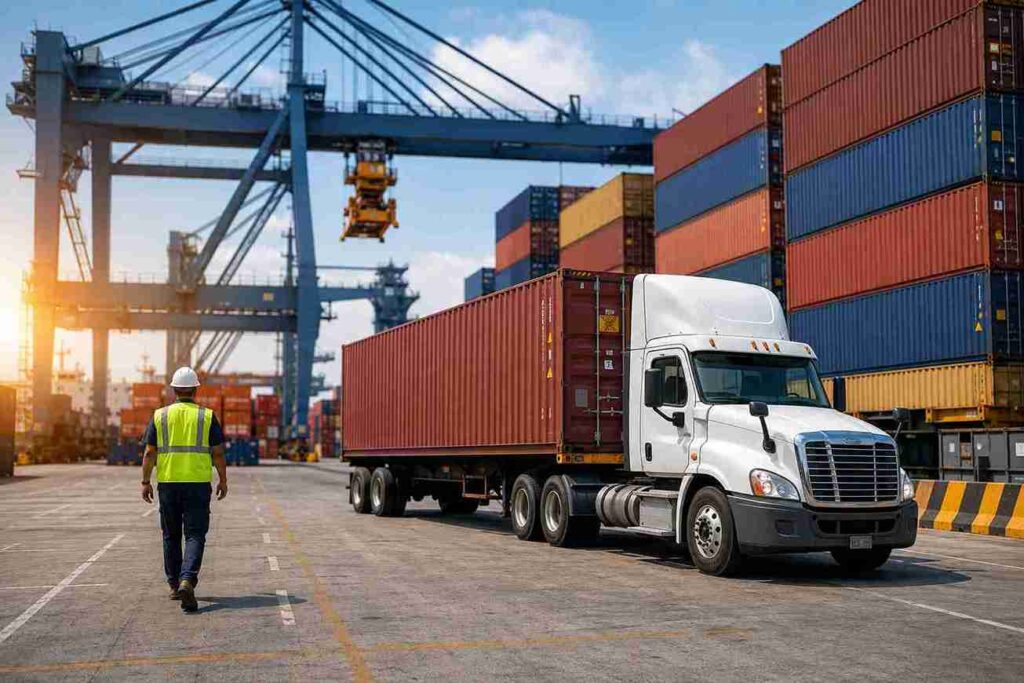
Specialized trucks and chassis to transport shipping containers between ports, rail terminals, and warehouses.
Short Haul Container Transport
Drayage is often considered short haul container transport because it covers relatively brief distances while supporting larger supply chain movements.
Drayage Carrier
A drayage carrier is a transportation provider specializing in container movement and intermodal freight operations. Choosing an experienced drayage carrier helps reduce delays, detention charges, and equipment shortages.
Drayage Costs & Common Fees Explained
One of the most common questions shippers ask is how much drayage costs and what fees are involved.
Drayage Fees Explained
Several factors influence drayage pricing:
- Distance traveled
- Port congestion
- Fuel costs
- Container type
- Equipment availability
- Driver wait times
- Terminal operating conditions
These cost factors are important when evaluating what is drayage in shipping for your supply chain operations.
Drayage Cost Per Container
Container transportation expenses vary based on the market, travel distance, and specific service requirements.
Typical factors affecting container pricing include:
- Local trucking rates
- Port access fees
- Chassis availability
- Delivery windows
- Special handling requirements
Chassis Fee Shipping
A common charge in container transportation is the chassis fee shipping cost. A chassis is the wheeled frame used to transport shipping containers on public roads.
If a carrier must provide chassis equipment, additional rental or usage fees may apply.
Drayage Detention Charges
Additional fees may be assessed when truck drivers are required to wait beyond the designated free time during container pickup or delivery operations. These delays can increase transportation costs and disrupt supply chain efficiency.
Common causes include:
- Warehouse delays
- Terminal congestion
- Documentation issues
- Labor shortages
Common causes include:
- Warehouse delays
- Terminal congestion
- Documentation issues
- Labor shortages
Per Diem Charges Drayage
Per diem charges drayage fees are assessed when containers remain outside the terminal beyond the free-use period provided by the shipping line.
These charges can accumulate quickly and significantly increase transportation costs if containers are not returned promptly.
Comprehensive Drayage Services for Modern Supply Chains
Reliable drayage services are essential for keeping freight moving efficiently between ports, rail terminals, warehouses, and distribution centers. Businesses across various industries rely on experienced logistics providers to ensure containers are transported safely, on time, and with complete visibility throughout the supply chain.
Professional drayage solutions support:
- Port-to-warehouse transportation
- Rail-to-distribution center movements
- Intermodal container transfers
- Time-sensitive freight deliveries
- Container repositioning and shuttle services
- Integrated third-party logistics (3PL) operations
By combining transportation expertise, real-time shipment tracking, and scalable logistics solutions, drayage providers help businesses reduce delays, control costs, and improve overall supply chain performance.
3PL Drayage Services
As a comprehensive logistics partner, TEU offers integrated 3PL drayage services that connect transportation, warehousing, freight management, and supply chain operations into one streamlined solution.
Container Drayage Near Me
Businesses seeking dependable container transport services require logistics partners with local market knowledge and nationwide reach. TEU delivers comprehensive drayage solutions through an extensive network that connects key ports, rail hubs, and distribution centers across the United States, ensuring efficient container movement and supply chain continuity.
Why Businesses Choose TEU for Drayage Services
TEU helps customers optimize container transportation through:
- Nationwide drayage coverage
- Port and rail terminal expertise
- Intermodal transportation solutions
- Real-time shipment visibility
- Dedicated logistics support
- Scalable 3PL capabilities
- Reduced detention and storage costs
Our experienced team works closely with customers to ensure containers move efficiently through every stage of the supply chain.
Conclusion
Industry organizations such as the American Trucking Associations emphasize the importance of efficient freight transportation and supply chain connectivity. Understanding what is drayage in shipping is essential for businesses involved in container transportation, intermodal logistics, and global trade. Drayage serves as a critical connection between ports, rail terminals, warehouses, and distribution centers, ensuring freight moves efficiently through every stage of the supply chain. Whether supporting intermodal transportation, reducing transit delays, or improving cargo visibility, drayage plays a vital role in modern logistics operations.
By understanding the different types of drayage services, common industry terminology, and the factors that influence drayage costs, businesses can make more informed transportation decisions and improve overall supply chain performance. Investing in reliable drayage solutions helps optimize freight movement, control costs, and maintain a more efficient, resilient, and competitive logistics network.
FAQ’s
What is drayage in shipping and how does it work?
Drayage in shipping is the short-distance transport of containers between ports, rail terminals, warehouses, and distribution centers. It connects different transport modes in the supply chain. It works by picking up containers from a port or rail yard, moving them by truck to a nearby facility, and then returning the empty container or equipment back to the terminal.
What industries commonly use drayage services?
Drayage services are widely used by retailers, manufacturers, importers, exporters, e-commerce companies, and third-party logistics providers (3PLs) to move containers between ports, rail terminals, warehouses, and distribution centers.
Why is drayage important in intermodal transportation?
Drayage serves as the critical link between different transportation modes, including ships, trains, and trucks. Without efficient drayage, containers cannot move smoothly through the intermodal supply chain.
How can businesses reduce drayage costs?
Businesses can reduce drayage costs by improving shipment planning, minimizing detention time, returning containers before per diem charges apply, and working with experienced drayage providers that offer efficient routing and real-time visibility.
What factors affect drayage transit times?
Drayage transit times depend on distance, port congestion, carrier availability, and customs clearance. Delays can also occur when shipments are marked “in transit”, which you can learn more about here: What does in transit mean.
How do I choose a reliable drayage carrier?
When selecting a drayage carrier, businesses should evaluate service coverage, port and rail expertise, equipment availability, shipment visibility, safety record, and experience handling intermodal freight.