LogisticsCargoInformational
If you import goods regularly, you already know the real cost of a missed purchase order isn’t the paperwork — it’s the container that leaves without your cargo, the customer order you can’t fulfill, or the warehouse slot that sits empty while a shipment is still stuck at the factory.
Purchase order (PO) management is the discipline that prevents that. Done well, it connects your buying decisions to your shipping schedule so nothing falls through the cracks between “order placed” and “goods received.” Done poorly, it’s the single biggest reason importers deal with stockouts, demurrage charges, and strained supplier relationships.
This guide covers what PO management actually involves, where it breaks down for most importers, and how to build a process that scales as your order volume grows.
What Is Purchase Order Management?
Purchase order management is the process of creating, tracking, and reconciling purchase orders from the moment they’re issued to a supplier through to final delivery and payment. For domestic buying, that’s usually a simple three-step loop: order, receive, pay.
For importers, it’s considerably more layered. A single PO might touch:
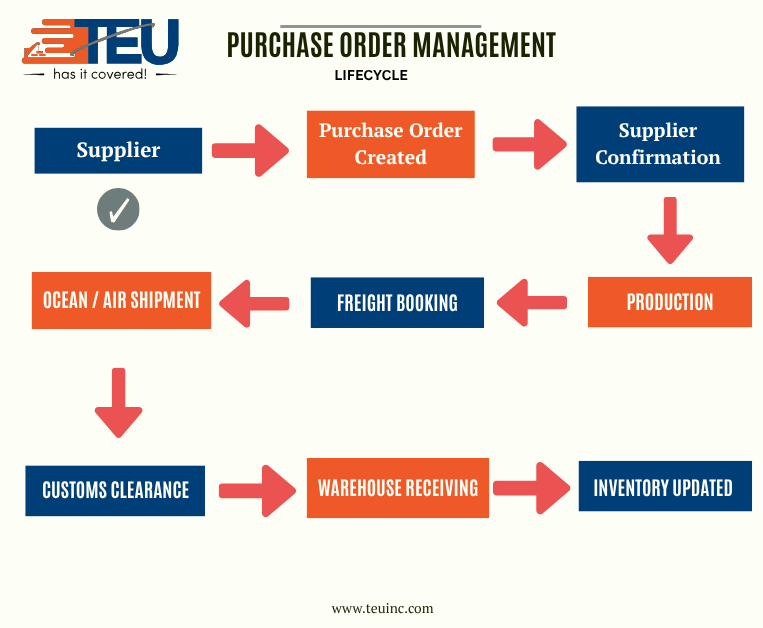
- Supplier confirmation and production timelines
- Partial shipments or split POs across multiple containers
- Booking with a freight forwarder for ocean or air transport
- Customs documentation tied to the specific PO and HTS codes
- Warehouse receiving against the original order
- Discrepancy resolution when quantities, SKUs, or costs don’t match
Every one of those steps is a place where a PO can get out of sync with what’s actually happening in your supply chain. Good PO management is really just visibility — knowing at any moment which POs are open, which are in production, which are in transit, and which are late.
Why Purchase Order Management Breaks Down
Most importers don’t lack a process. They lack a connected one. Here’s where it typically falls apart:
Spreadsheets that don’t talk to shipping data. A PO gets created in an ERP or a spreadsheet, but nobody updates it once the goods leave the factory. By the time the container arrives, the PO status is fiction.
Split shipments confuse the record. A single PO ships across two or three containers because of production timing or space constraints. If your system tracks POs as one line item, you lose visibility into which portion has shipped and which hasn’t.
No single owner. Purchasing, freight, and warehousing are often three different teams (or three different people wearing three hats). When a PO changes — a delay, a quantity cut, a substitution — the update doesn’t reliably reach everyone who needs it.
Manual reconciliation at receiving. Warehouse staff receive a shipment and have to manually match it against the original PO, often without full visibility into partial shipments or amendments made in transit.
Each of these is fixable, but only if you treat PO management as a supply chain function, not a back-office data entry task.
Core Elements of a Working PO Management System
A PO management process that actually holds up under real shipping volume needs a few essential parts:
1. A single source of truth
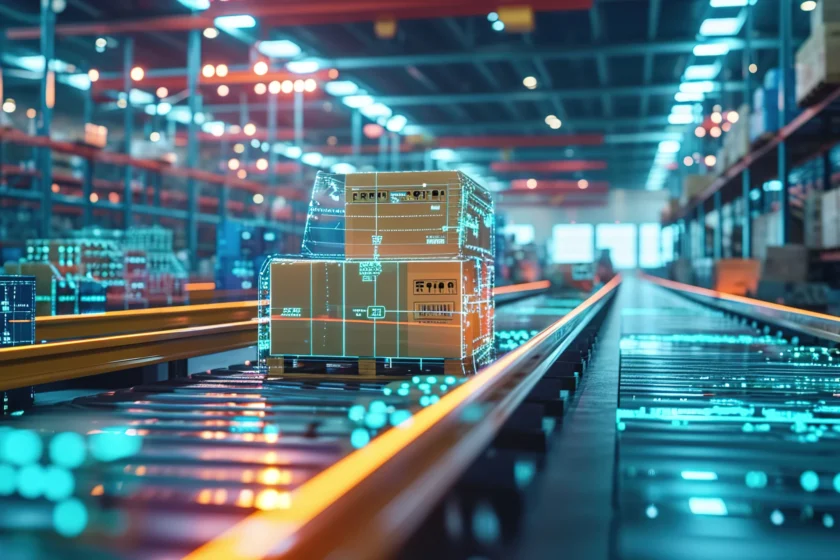
Every PO needs one authoritative record that updates as it moves through production, booking, transit, and customs. Whether that’s an ERP, a TMS, or your freight forwarder’s platform, the key is that everyone touching the order — purchasing, freight, warehouse — is looking at the same status.
2. PO-level tracking, not just shipment-level tracking
Container tracking tells you where a box is. PO tracking tells you which specific order is inside it, what percentage has shipped, and what’s still outstanding. For importers running dozens or hundreds of open POs at once, this distinction is what prevents “we thought that was already in stock” conversations.
3. Built-in exception alerts
The goal isn’t to review every PO manually — it’s to be alerted automatically when something needs attention: a delayed production date, a partial shipment, a customs hold, or a quantity mismatch at receiving.
4. Clear reconciliation at receiving
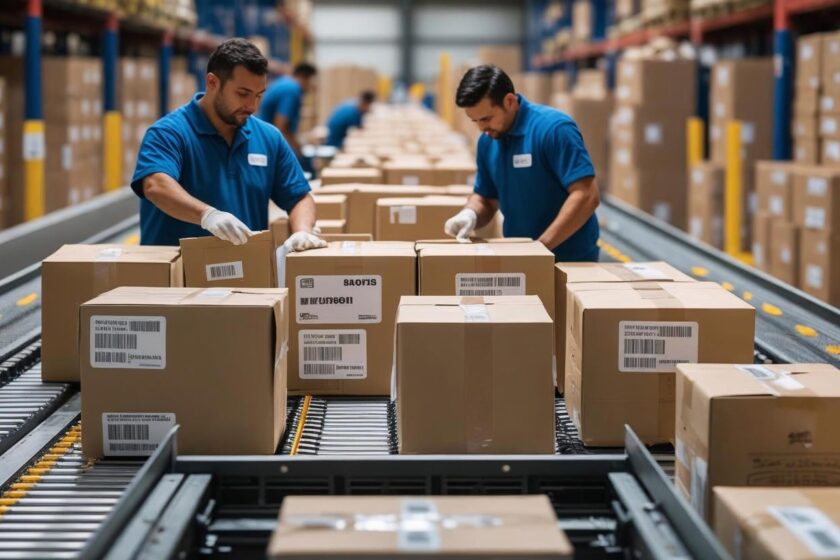
When goods arrive, receiving staff should be checking against the live PO record, not a printed copy from three weeks ago. Discrepancies (short shipments, damaged goods, wrong SKUs) need a defined process for resolution, not an ad hoc email chain.
5. Reporting that connects PO status to business decisions
Open PO reports should answer real questions: What’s overdue? What’s at risk of missing a sales window? What’s tied up in customs? This is where PO management stops being administrative and starts protecting revenue.
How Freight Forwarders Fit Into PO Management
This is the piece most importers underestimate. Your freight forwarder isn’t just booking space on a vessel — they’re often the only party with visibility into every PO from the moment it leaves the factory floor to the moment it clears customs.
A forwarder that offers real PO management support can:
- Consolidate multiple POs into a single shipment when it makes sense, and flag when it doesn’t
- Track partial shipments against the original PO so nothing gets “lost” between containers
- Flag customs documentation issues tied to a specific PO before they cause a hold
- Coordinate with your warehouse or distribution point so receiving matches what’s actually arriving
This is why PO management is worth asking about when you’re vetting a freight forwarder or 3PL partner, alongside the usual questions about rates and transit times. A forwarder who treats your POs as line items in a spreadsheet is not the same as one who treats them as the backbone of your supply chain visibility.
Common Mistakes to Avoid
- Waiting until receiving to catch problems. By the time goods are on the dock, it’s too late to fix a production delay or a documentation gap. Catch issues at the booking and customs stage instead.
- Treating every PO the same way. High-value or time-sensitive POs (holiday inventory, contractual delivery windows) need tighter tracking than routine restocks.
- No documented process for amendments. Quantities and dates change. If there’s no clear way to log and communicate a change, the original PO becomes unreliable the moment it’s amended.
- Disconnected systems across departments. If purchasing, freight, and warehousing each keep their own version of “what’s happening,” none of them are actually accurate.
Building a PO Management Process That Scales
If you’re outgrowing spreadsheets, start with these steps:
- Map your current PO lifecycle. Write down every step a PO goes through today, from creation to final receiving, and who owns each step.
- Identify where visibility breaks. Usually it’s the handoff points — supplier to forwarder, forwarder to customs, customs to warehouse.
- Centralize tracking at those handoff points first. You don’t need to overhaul everything at once. Fixing the weakest link often solves most of the problem.
- Loop in your freight forwarder early. If they’re already tracking your shipments, ask what PO-level visibility they can offer before you invest in a separate system.
- Set exception thresholds. Decide what counts as “needs attention” — a delay past X days, a shipment under X% of ordered quantity — so your team isn’t manually reviewing every open PO.
The Bottom Line
Purchase order management isn’t a back-office task — it’s the connective tissue between what you bought and what actually shows up. Importers who treat it as an afterthought end up reacting to problems at the dock or the warehouse door. Importers who build real visibility into the process catch those same problems weeks earlier, when they’re still cheap and easy to fix.
If you’re evaluating how your freight forwarder or 3PL partner supports PO visibility, that’s a conversation worth having before your next peak season, not during it.
How TEU Global Can Help
At TEU Global, PO management isn’t an afterthought bolted onto freight booking — it’s built into how we track every shipment, from the moment your supplier confirms production through customs clearance and final delivery to your warehouse.
- Request a Quote — Get PO-level visibility built into your next shipment, whether it’s ocean freight, air freight, or a multi-container split order.
- Talk to a Logistics Specialist — Ask us how we track your open POs against production timelines, transit, and customs status in real time.
- Explore Our Services — See how PO management works alongside our ocean freight, customs clearance, and warehousing & distribution solutions.
Don’t wait until peak season to find out your PO tracking has gaps. Contact TEU Global today and see what full supply chain visibility actually looks like.
FAQ’s
Why is purchase order management important?
It helps importers improve supply chain visibility, reduce delays, prevent stockouts, and ensure orders are delivered accurately and on time.
What is the difference between PO tracking and shipment tracking?
PO tracking monitors individual purchase orders, while shipment tracking shows the location and status of the freight carrying those orders.
Can a purchase order be split across multiple shipments?
Yes. Import purchase orders are often divided across multiple containers or shipments due to production schedules or space availability. Effective PO management keeps every shipment linked to the original order.
How can a freight forwarder support purchase order management?
A freight forwarder helps track purchase orders, coordinate shipments, manage customs documentation, and improve visibility from production to final delivery.
What are the benefits of purchase order management?
Effective purchase order management improves inventory planning, reduces supply chain disruptions, enhances supplier communication, and gives businesses better control over international shipments.